
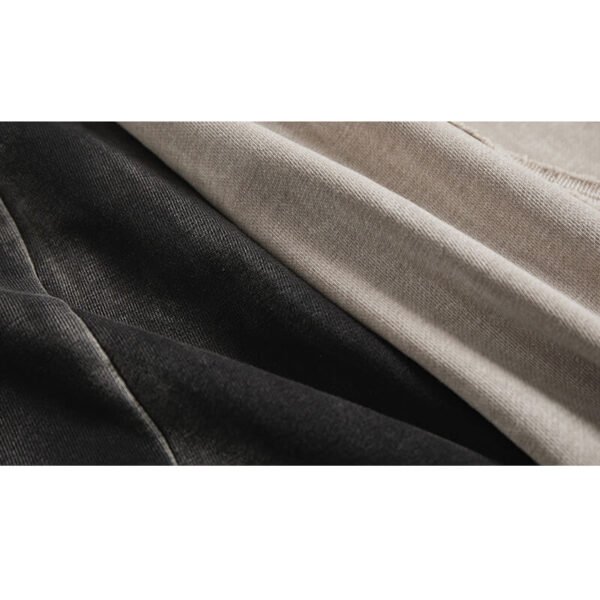
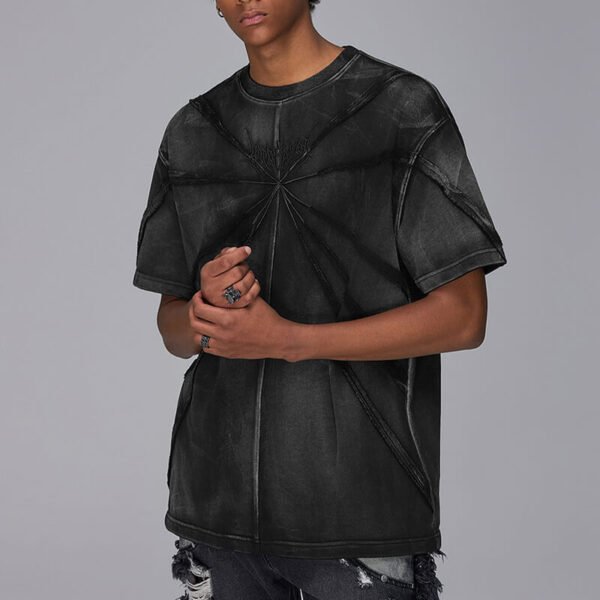
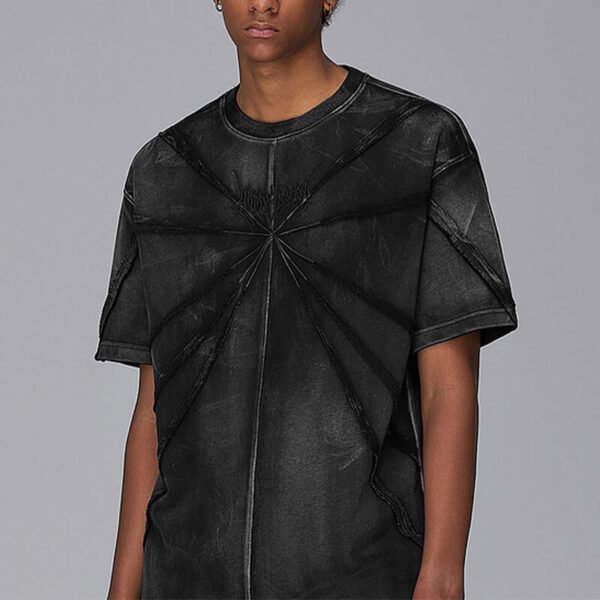
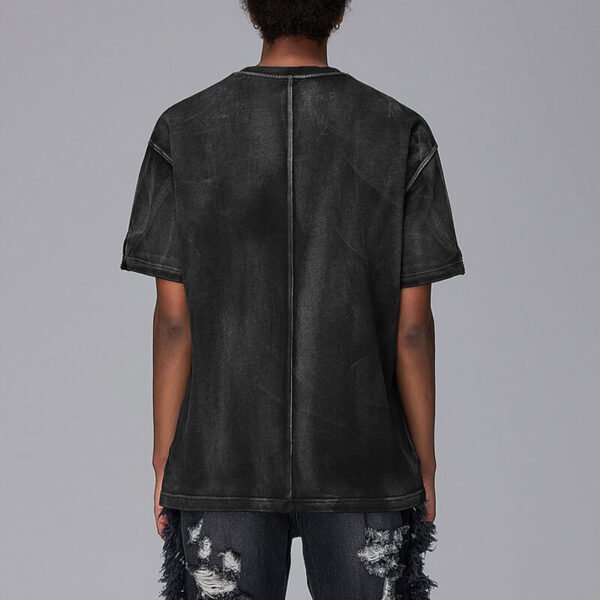
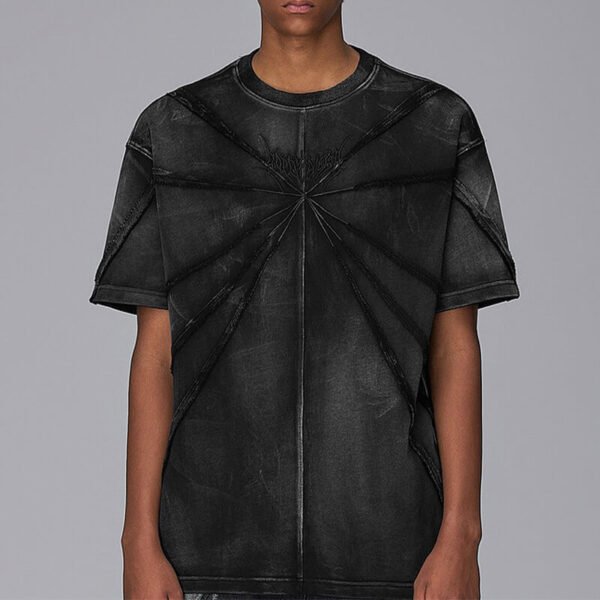
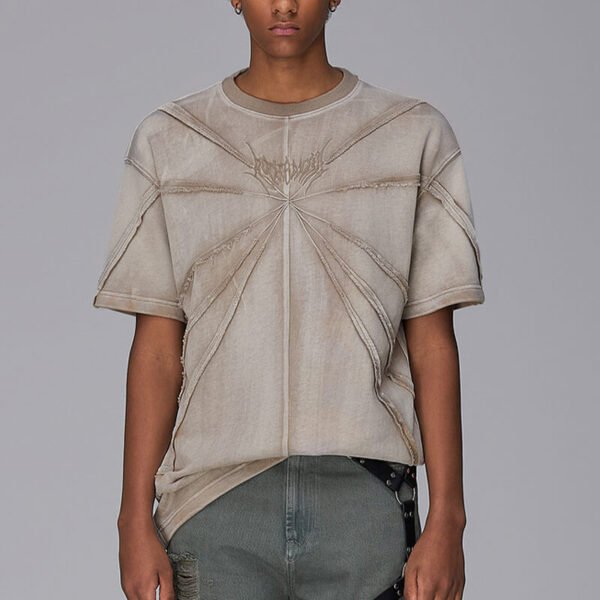
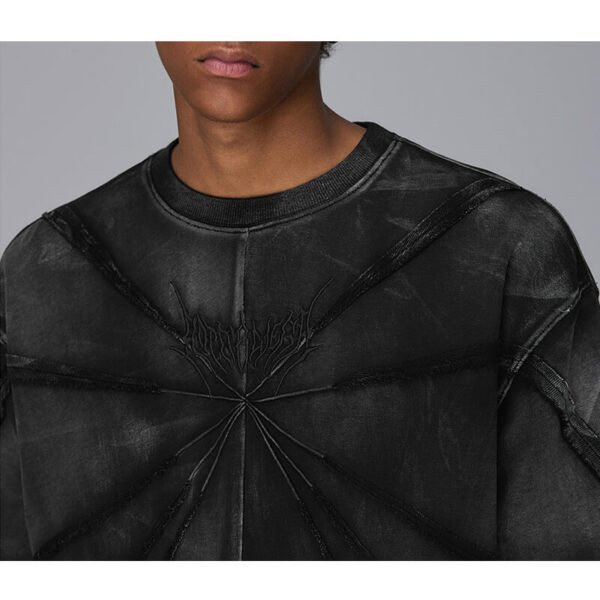
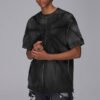
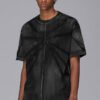
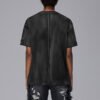
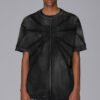
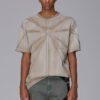
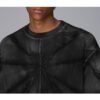
This T-shirt centers on how material weight and panel interruption affect hem behavior. The supplied image shows substantial-looking knit surfaces in black, charcoal, and light taupe, while the source wording references 260GSM, dirty wash, split patchwork, and a box fit.
Hem Level Controls the Box Fit
A box-fit T-shirt relies on a relatively squared relationship between width and length. When a heavier fabric is divided into panels, the hem can appear lower, denser, or less even, especially where seams interrupt the body's natural fall.
The supplied wording identifies 260GSM and patchwork, making hem level a primary approval variable. Set the target length from shoulder point to hem, then inspect the garment on-body to confirm the lower edge supports the intended square outline.
Weight Changes the Garment Hang
The fabric image shows broad folds across black, charcoal, and light taupe surfaces, providing visual evidence of a substantial textile study and pronounced tonal variation. Those folds indicate why material behavior must be assessed alongside the pattern rather than separately.
A heavier hand may help the box fit hold its shape, but it can also reduce fluidity and amplify seam drag. Buyers should evaluate front, back, and side views after panel joining, checking whether the hem hangs evenly without pulling.
Patchwork Makes Seams Structural
Split patchwork is not only a decorative arrangement; each join can redirect tension toward the hem. The visible tonal boundaries in the supplied image suggest that panel direction and seam placement will influence how the garment settles during wear.
Keep major panel transitions away from points that need uninterrupted drop unless the design deliberately uses them as anchors. Confirm seam allowance, joining order, and pressing direction during development so the hem remains visually level after construction.
Production Workflow for This Argument
VeeWen's workflow should translate the hem-and-hang thesis into a construction brief covering finished length, panel map, seam orientation, and wash sequence. A first assembled sample can reveal whether the selected fabric weight supports the intended box profile.
Fit review should compare pre-wash and post-wash appearance where washing is part of the approved design direction. The buyer checkpoint is a controlled sample decision on hem level, panel balance, and surface consistency before grading proceeds.
Trade-Offs in a Dense Patchwork Tee
Higher referenced fabric weight can give the style a more substantial presence, yet additional mass may increase heat retention and make the garment feel less flexible. More panel divisions create visual character while increasing seam complexity and alignment risk.
A compact hem can preserve the square silhouette, but an overly narrow opening may restrict movement or make the body appear cropped. Buyers should choose the preferred balance through wear testing and side-view inspection, not front photography alone.
Approval Gate Before Bulk Cutting
The style is ready for bulk planning when the assembled sample holds a consistent hem level, the box fit remains squared, and patchwork seams do not create visible collapse. Inspect the garment flat and worn, because each view reveals different hang behavior.
Record approved body length, hem opening, panel dimensions, seam details, wash appearance, and tolerance expectations in the technical pack. This decision confirms that the 260GSM reference supports the silhouette instead of overwhelming its proportions.
Buyer Questions
Is 260GSM independently verified?
It is explicit in the supplied source wording, but final fabric weight, tolerance, composition, and test documentation remain To Confirm during development.
Why is hem level important here?
Patchwork seams and heavier material can redirect tension, so hem level determines whether the box-fit body hangs squarely or appears collapsed.
Does the image confirm embroidery?
No. Embroidery appears in source wording, but the supplied image primarily shows fabric surfaces; stitch design and execution require separate visual approval.
What is the commercial minimum?
The commercial minimum for this development record is MOQ: 100 pieces per style, subject to approved materials, construction, and technical specifications.
Approve the Hem and Hang
Share your target hem level, panel layout, and wash direction with VeeWen for sample development, then approve the assembled garment before grading and MOQ: 100 pieces per style planning.


Reviews
There are no reviews yet.