

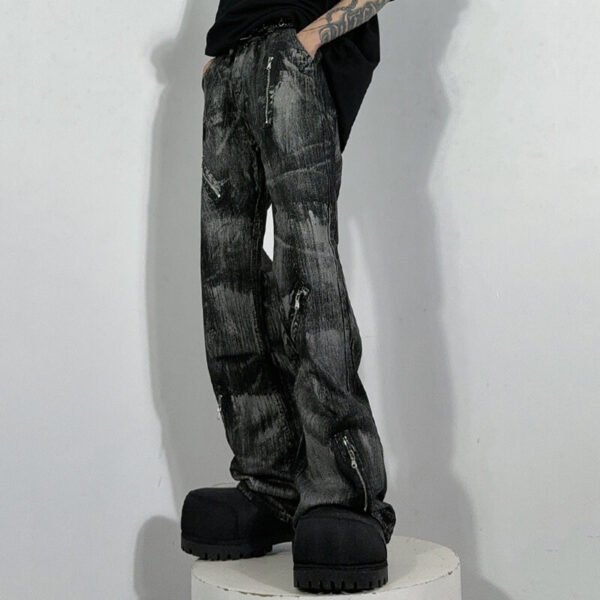
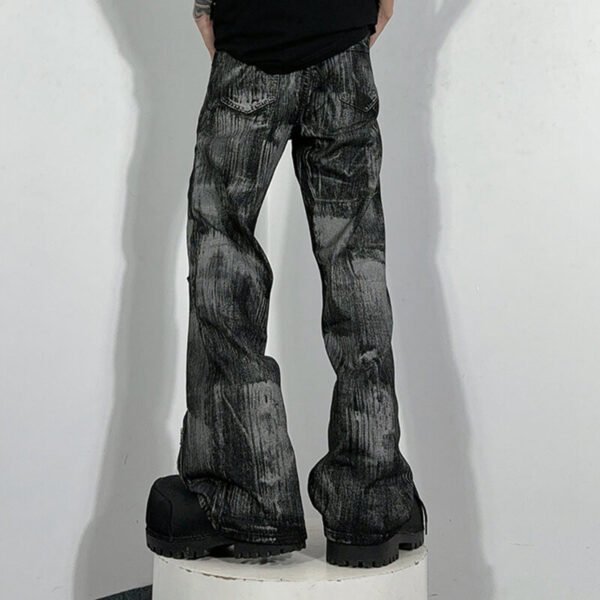


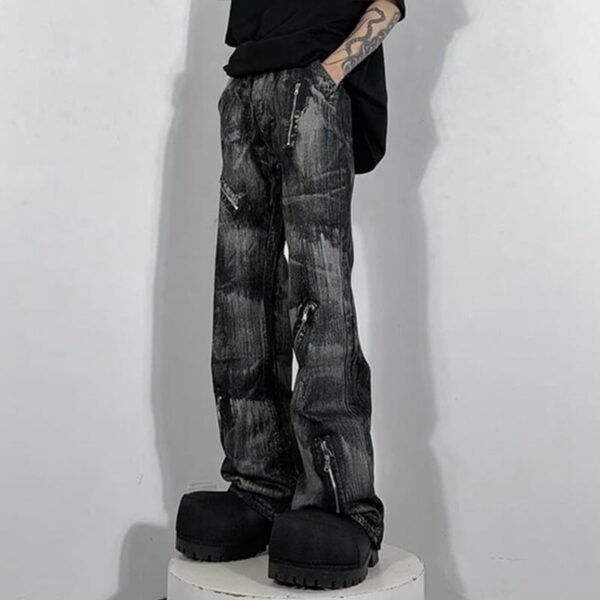
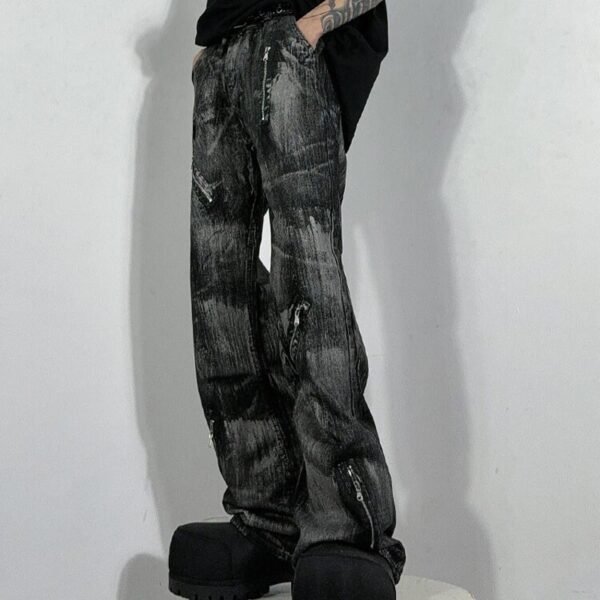

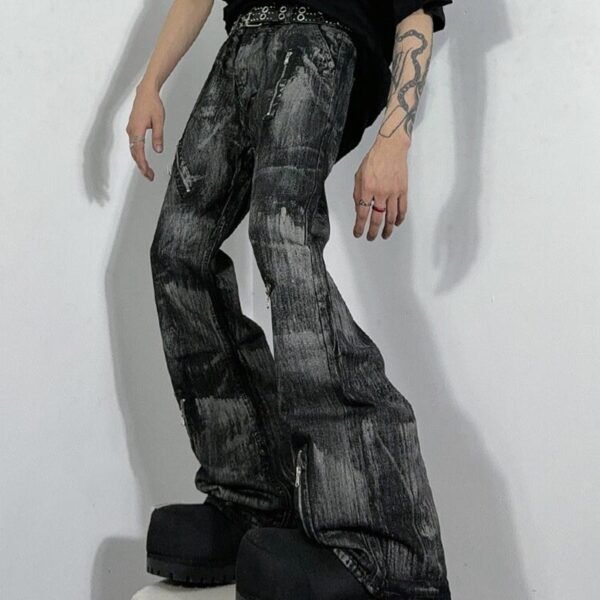



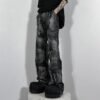

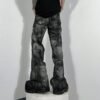
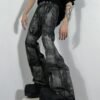
This custom flare jean is developed around a specific tension: a softened washed hand should feel approachable, while the leg must retain its controlled widening and visual architecture. The supplied image supports a charcoal denim direction with irregular tonal depth, reinforced by strategically placed zipper details.
Softness Must Be Designed, Not Assumed
The washed appearance suggests a more relaxed surface than rigid raw denim, but visual softness does not prove physical softness. VeeWen should define the target hand through approved swatches, documenting pliability, surface friction, and acceptable variation before the flare pattern is finalized.
A stronger wash can increase comfort perception and vintage depth, yet excessive abrasion may weaken yarns, flatten seam definition, or distort the leg opening. The development checkpoint is a paired comparison between untreated construction panels and washed samples, judged for feel and structural clarity.
Flare Balance Depends on Recovery
The image shows a controlled upper leg transitioning into a visibly wider lower leg, so shape retention is central to the product argument. Any softening process must be evaluated for knee growth, hem spread, and the ability to return toward the approved silhouette after wear.
VeeWen's pattern review should measure the flare at several vertical points before and after laundering, then compare left and right panels. This makes softness a managed input rather than an isolated finish goal, protecting the proportion that gives the jean its recognizable stance.
Irregular Wash Needs Repeatable Boundaries
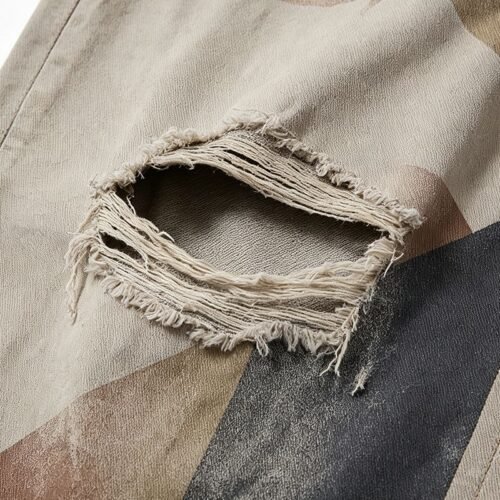
The charcoal surface contains uneven grey-black variation that creates depth across the thighs, knees, and lower legs. That irregularity is commercially useful only when the wash boundaries remain intentional enough for repeated production, especially around pocket openings, zippers, seams, and the flare transition.
During product development, VeeWen can map high-contrast zones onto the tech pack and identify areas where tonal movement is welcomed or restricted. The buyer should approve a tolerance range for shade placement, because identical artwork cannot guarantee identical denim absorption across every panel.
Zippers Add Weight to Softened Panels
Several diagonal and vertical zippers visibly punctuate the front panels, giving the jeans a technical streetwear character. Their tapes, sliders, and stops introduce concentrated weight, stiffness, and seam stress that may become more noticeable when surrounding denim is softened by washing.
The construction review should therefore compare zipper alignment, opening function, and panel drape before and after the planned finish. VeeWen's sample team should isolate whether reinforcement is needed, while the buyer confirms that added support does not interrupt the intended flare movement.
Construction Must Follow the Wash Path
A washed jean is not simply a finished pattern; laundering can change seam torque, pocket positioning, leg length, and hem spread. The visible structure around the waistband and upper legs means construction tolerances must anticipate finishing movement rather than treating it as cosmetic treatment afterward.
VeeWen's workflow should connect pattern engineering, sewing sequence, hardware placement, and wash testing in one approval loop. The buyer should sign off on a sewn-and-washed prototype, because a clean pre-wash sample cannot fully represent the final balance of softness and shape.
Approve the Trade-Off at Size-Set Stage
The central trade-off is clear: more softness can make the garment feel less rigid, while stronger structure can protect the dramatic flare. The correct balance depends on the buyer's intended wear experience, wash intensity, and tolerance for natural denim variation.
Before bulk release, VeeWen should review a size set using the approved fabric and finish, checking hand-feel, rise comfort, knee placement, hem symmetry, zipper usability, and shade distribution. Approval should record which visual irregularities are characteristic and which defects require correction.
Buyer Questions
Is the denim composition confirmed?
No. The supplied evidence identifies denim but does not verify fiber percentages, weight, or stretch. VeeWen should confirm these properties through the selected development fabric.
What creates the product's main silhouette?
The main silhouette comes from a structured upper leg that widens toward the hem. The flare measurements must be approved before and after washing.
Can the irregular wash vary between pieces?
Yes. Washed denim naturally shows tonal variation, so the buyer should approve mapped shade tolerances defining acceptable movement and unacceptable contrast during production.
What should be approved before bulk production?
Approve the sewn-and-washed prototype and size set, including hand-feel, flare recovery, zipper operation, hem symmetry, shade placement, and final material details.
Develop the Softness-to-Shape Balance
Send VeeWen your target measurements, wash references, hardware preferences, and size range for review. We will organize the development checkpoints needed to approve this flare jean direction at MOQ: 100 pieces per style.


Reviews
There are no reviews yet.