








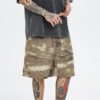
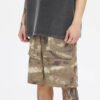


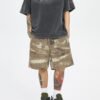




These custom camouflage work shorts are developed around a specific balance: utility detailing should add function and visual structure without making the straight silhouette feel rigid, heavy, or uneven during wear. The approval focus is pocket placement, reinforcement, and total embellishment loading.
Why Pocket Weight Changes the Drape
Every pocket, flap, bartack, and reinforcement adds local mass to the shell. On shorts, that mass sits near the hip and upper thigh, where it can pull the side seam outward or interrupt the intended straight fall. The development target is balanced loading.
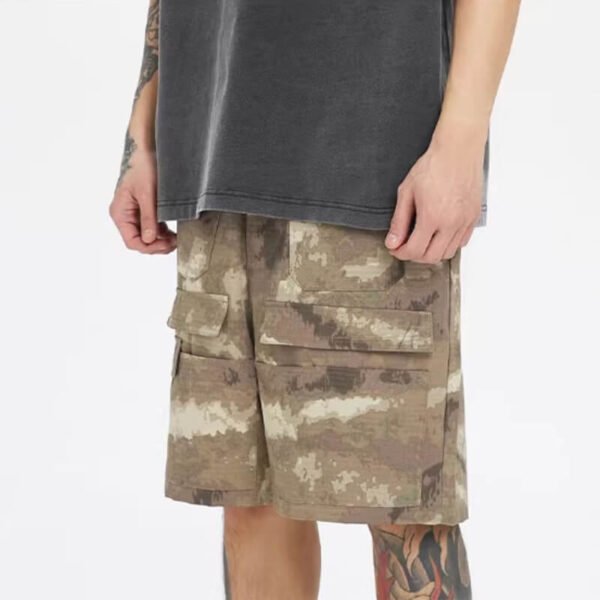
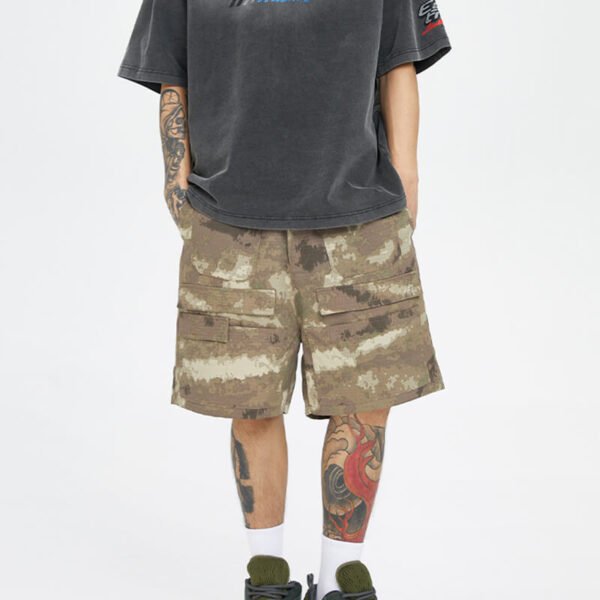
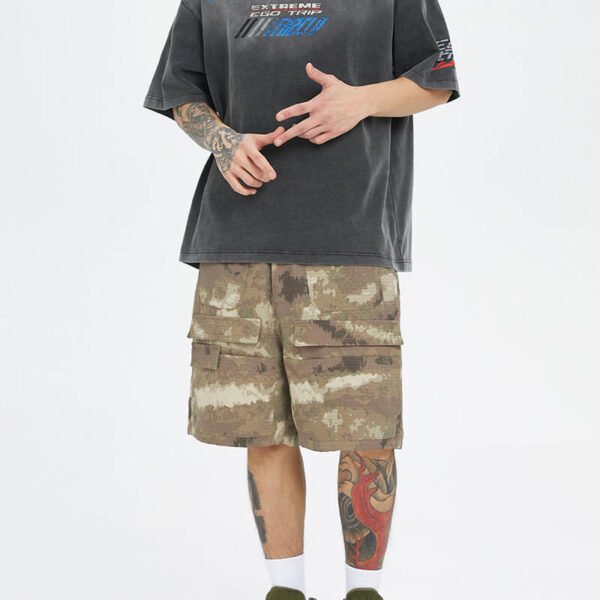
The supplied image shows a broad leg opening and relatively uninterrupted side silhouette, giving the garment a useful drape reference. A heavier pocket package could make that line stand away from the body, so pocket depth and hardware should be judged together.
Reading the Camouflage Surface
The camouflage is not a small accent; it covers the visible garment and already supplies strong visual activity. Because the pattern carries much of the identity, additional patches, contrast labels, or oversized hardware may increase surface noise before they add meaningful commercial value.
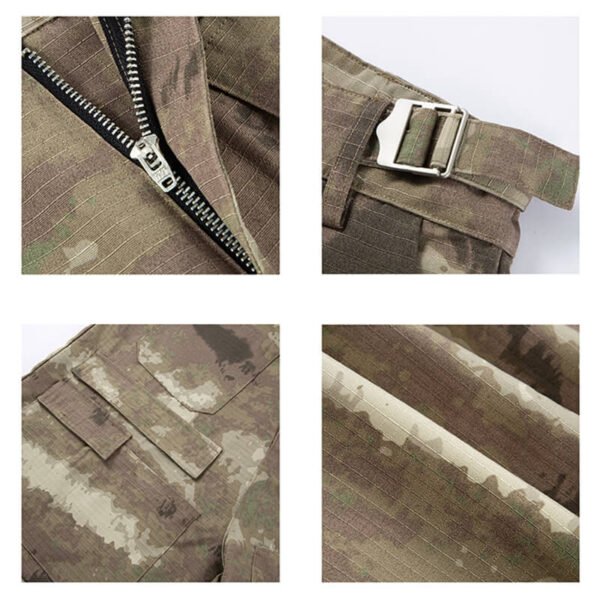
The earth-toned mix of tan, brown, olive, and muted cream also affects perceived weight. Darker clustered areas can make folds appear denser, while lighter bands reveal distortion more clearly. Pattern scale and panel matching should therefore be reviewed alongside the physical trim package.
Utility Details and Movement
Work-short functionality depends on access without forcing the wearer to compensate for a stiff or overloaded front. Pocket openings should remain reachable when seated, while their contents should not create excessive outward pull across the hip. This is a balance issue, not merely a measurement issue.
The visual reference supports a relaxed, practical stance with room through the leg. During fitting, the buyer should inspect walking, sitting, and stair movement, then note whether pocket corners stay stable or begin to swing away from the body.
Construction Checkpoints for Bulk
Pocket bags, facings, edge stitching, and reinforcement layers can quietly increase thickness even when the exterior looks simple. The sample review should isolate those layers and identify where a lighter internal treatment can preserve shape without weakening the intended utility function.
For this design, the approval team should compare an unembellished shell with the complete pocket configuration. That side-by-side check reveals whether added construction changes the side seam, hem angle, or crease behavior more than the collection can accept.
VeeWen Development Workflow
VeeWen can translate the approved pocket map into a development sequence that tests silhouette before committing the full embellishment package. The first review should confirm pattern balance, followed by a complete sample with pocket bags, closures, labels, and reinforcement represented accurately.
The useful workflow decision is to record trim weight and placement as part of the sealed sample approval, not as an informal styling note. Once the buyer accepts the hanging shape and movement behavior, that approved construction becomes the reference for production preparation.
Buyer Approval Gate
The buyer should approve this style only when the complete sample demonstrates consistent drape from front, side, and back views. Check the shorts on a moving body, because a static hanger can hide pocket swing, local stiffness, and uneven loading around the hips.
The final checkpoint is a documented pocket and embellishment specification linked to the approved sample. If the garment feels overloaded, reduce or relocate components before confirming the style, since later substitutions can change both balance and appearance.
Buyer Questions
What is the main development risk for these shorts?
The main risk is concentrated pocket or trim weight pulling the upper leg outward and weakening the clean straight silhouette during movement.
Is the polyester composition verified?
No. Polyester appears in the supplied source wording, but the final fiber composition, fabric construction, and supporting specifications require confirmation.
How should buyers approve the pocket package?
Review a complete sample while walking and sitting, then compare front, side, and back drape before sealing placement, reinforcement, and trim details.
What is the minimum order quantity?
The commercial minimum is MOQ: 100 pieces per style, with final development details confirmed during the buyer's order-planning process.
Approve the Drape Before Production
Send your pocket map, target handfeel, and reference measurements to VeeWen for development review. Request a complete sample that lets your team approve utility, movement, and embellishment balance together.


Reviews
There are no reviews yet.