
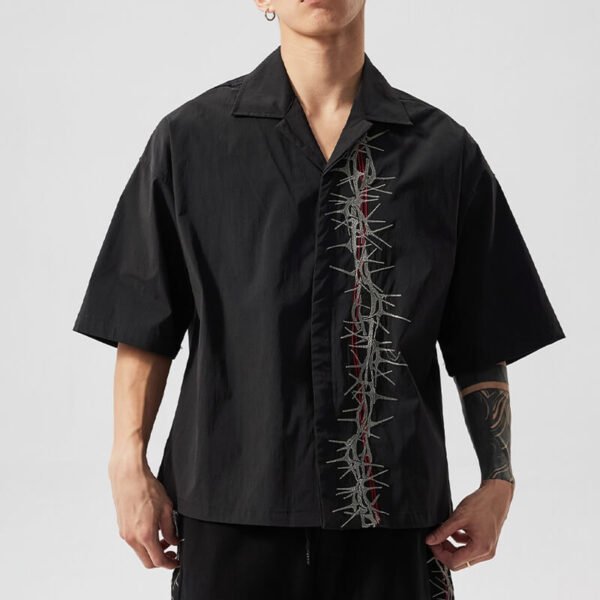
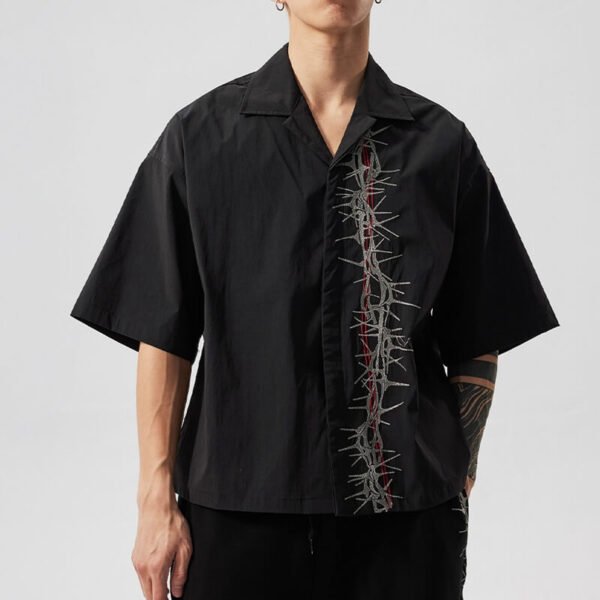

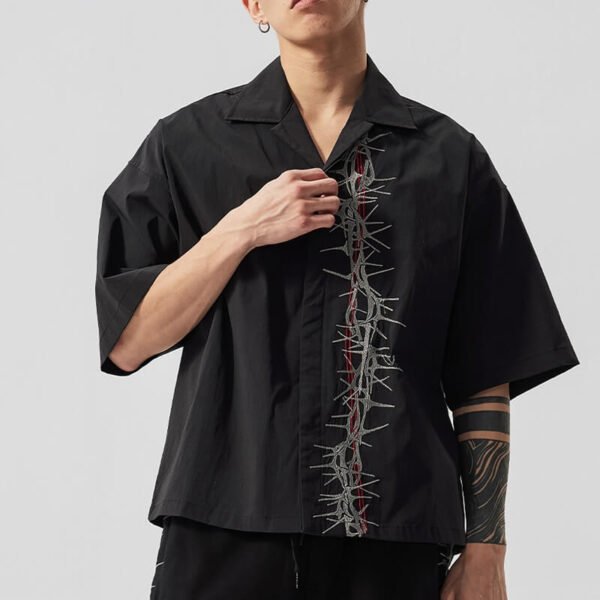


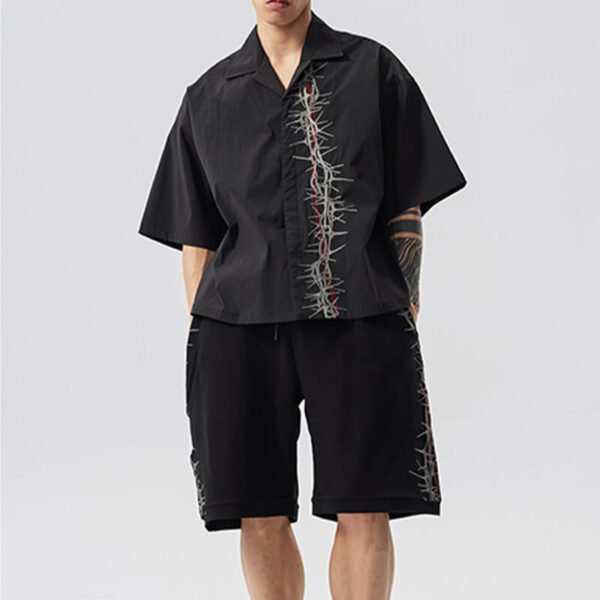
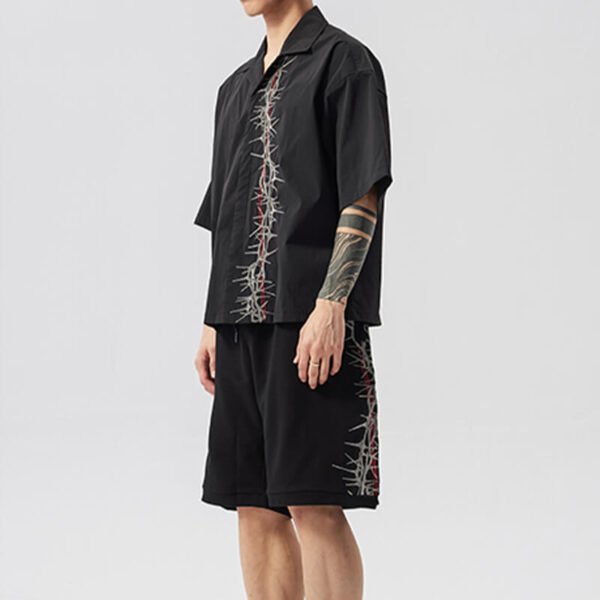
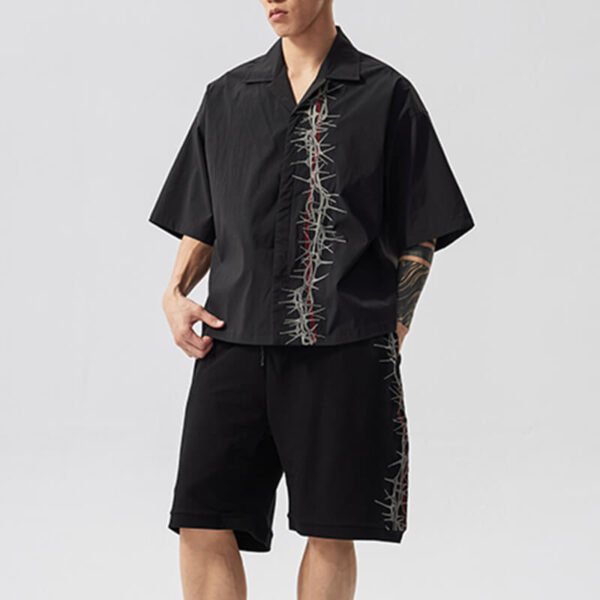

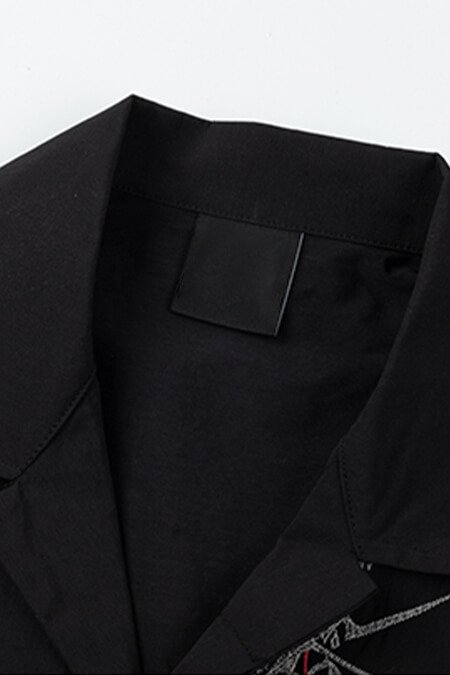
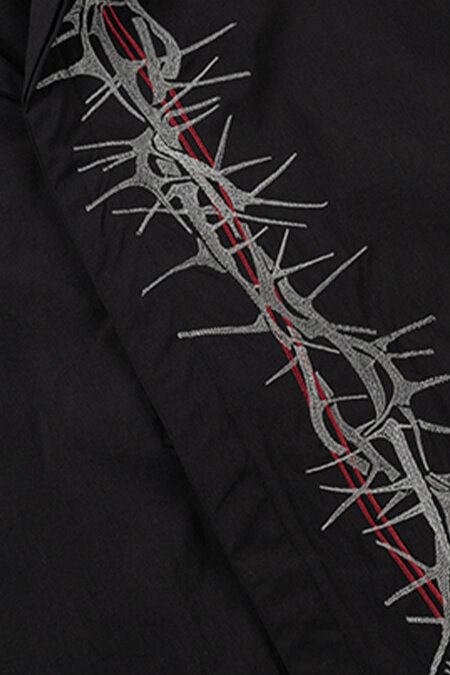


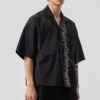

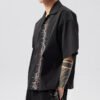
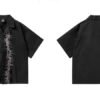
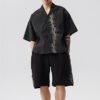
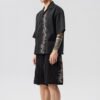


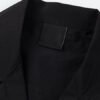
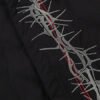

This shirt is developed around color control on a dark, reflective surface. The black body, gray thorn embroidery, and narrow red accent must be judged under repeatable lighting, because sheen and viewing angle can change the perceived relationship between fabric and thread.
Why Lighting Changes Dark Color Decisions
Black fabrics rarely appear identical across all viewing conditions. A smooth nylon surface can reflect a cool or warm highlight, while dense embroidery absorbs and scatters light differently, changing the perceived contrast between body, thread, and accent.
The supplied image shows a broad black front with visible surface variation and a vertical gray motif. That makes lighting part of the specification: the approval setup should be repeatable, documented, and used for body fabric, thread cards, and finished samples.
Separating Body Color from Thread Color
The embroidery is not a single color statement. Gray forms the thorn-like structure, while red appears as a narrow line through the center. Each thread must be evaluated against the same black body because adjacent colors influence perceived saturation and brightness.
VeeWen should record body fabric and embroidery references together rather than approving them separately. The buyer can then judge whether the gray remains legible without looking silver and whether the red accent stays intentional without overpowering the motif.
Managing Reflective Nylon-Like Surfaces
A nylon fabric reference can present different highlights depending on calendering, finishing, and fabric direction. Even when the nominal color is unchanged, surface reflection may make one panel look lighter than another under overhead or side lighting.
Before sample approval, inspect the shirt front, collar, sleeves, and side seams from several angles under one fixed setup. Any requested finish should be reviewed at the same time, because sheen is part of the color experience.
Embroidery Density and Visual Balance
The motif runs vertically through a relatively clean front field, so stitch density affects both color coverage and hand. Too little density can make gray appear broken; too much can create a heavy ridge that changes how the shirt hangs and reflects light.
The approval sample should show the intended stitch count, underlay, thread size, and edge definition. Review the motif while worn and flat, checking that the red accent remains continuous and that the front opening does not distort its alignment.
VeeWen Development Checkpoint
VeeWen's workflow should translate the image evidence into a color-control pack containing the body reference, thread references, lighting conditions, viewing distance, and acceptable visual tolerance. This is specific to the shirt because color consistency governs the motif's readability.
After the first sample, compare the finished garment with the approved references under the same setup. Confirm body black, gray coverage, red accent, collar appearance, and placement after pressing before grading and the MOQ: 100 pieces per style order.
Trade-Offs Before Production Approval
A stronger gray increases readability against black but may move the shirt toward a brighter graphic look. A subtler gray preserves restraint but can disappear under low light, while a brighter red accent improves recognition and raises attention.
The buyer should approve the intended contrast level, not simply a color name. Lock the lighting method, fabric finish, embroidery density, and tolerance together so later production decisions do not alter the original visual balance.
Buyer Questions
Why must this shirt be checked under consistent lighting?
Dark fabric sheen and embroidery coverage can alter perceived color. Consistent lighting allows the buyer to compare body black, gray thread, and red accent against one repeatable reference.
Can the thorn motif be replaced with original artwork?
Yes. VeeWen can develop original embroidery artwork, provided the buyer supplies approved files or a design brief for placement, density, and color review.
Is the shirt definitely made from nylon?
The supplied source wording references nylon fabric, but exact composition and construction are not verified. Final material details should remain To Confirm until sampling.
What is the minimum order quantity?
The commercial minimum is MOQ: 100 pieces per style. Final quantities remain subject to approved materials, colorways, size breakdown, and production specifications.
Set the Color Approval Standard
Share the body fabric target, thread references, artwork, and preferred lighting conditions to begin development. VeeWen will organize the sample review around color consistency, embroidery balance, fit, and MOQ: 100 pieces per style.


Reviews
There are no reviews yet.