

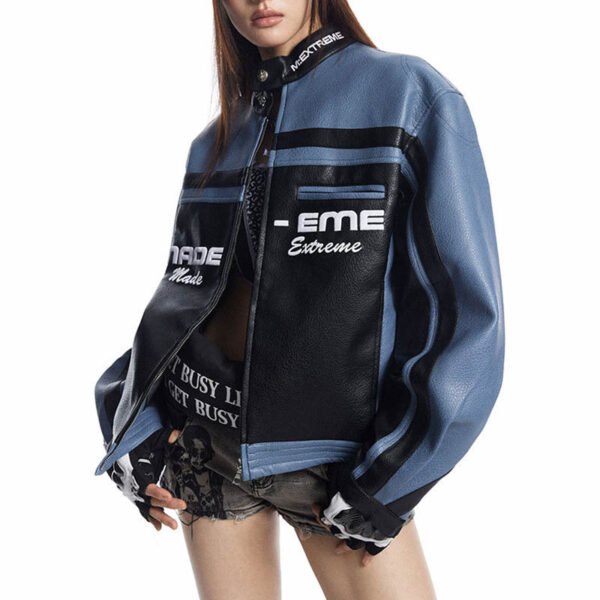

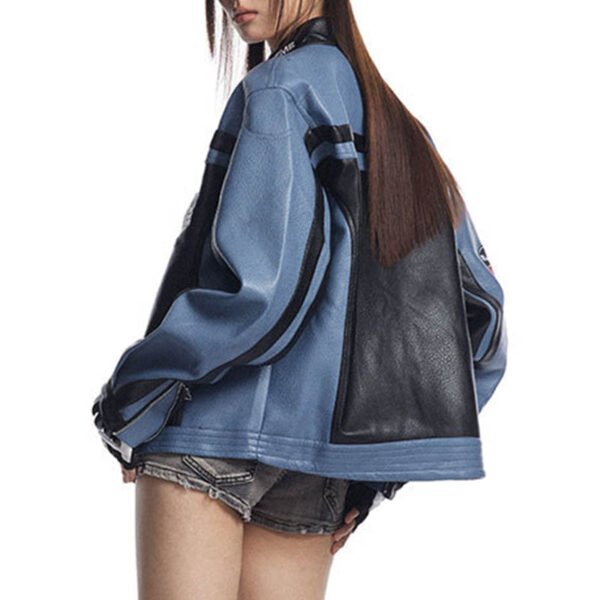

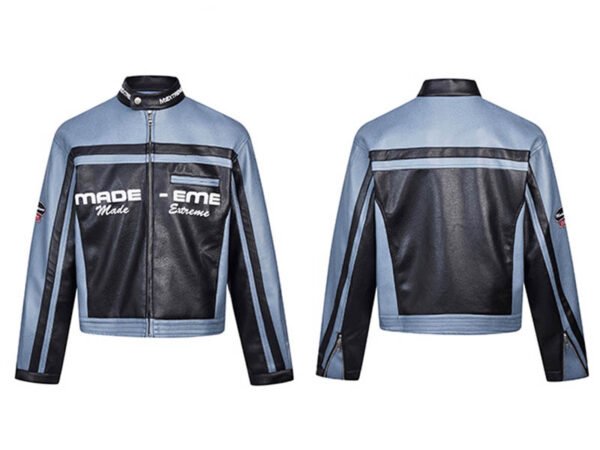
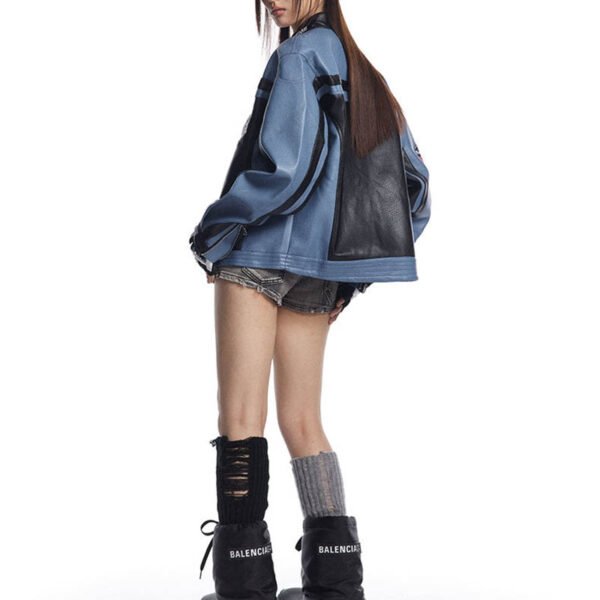

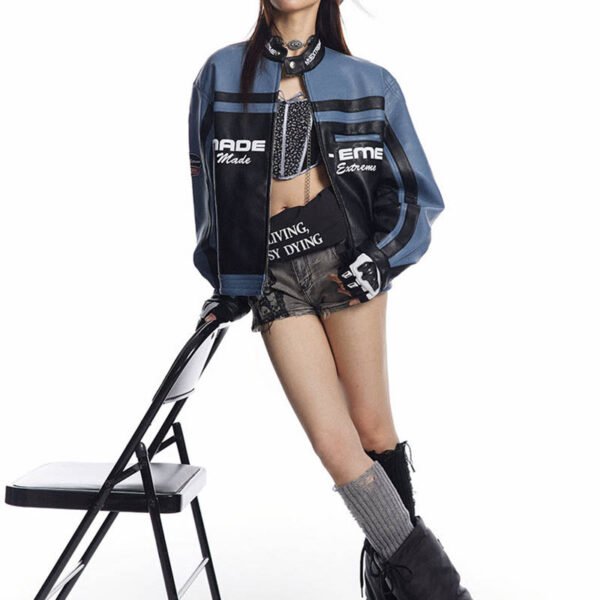



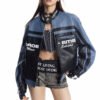

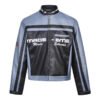



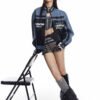
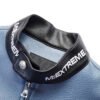

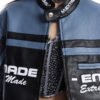
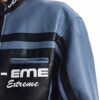
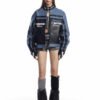
This custom racing jacket is developed around one practical challenge: keeping layered applique and patchwork visually precise without making the cropped body or articulated sleeves feel heavy. VeeWen can translate the pictured panel rhythm into a controlled technical package for OEM review.
Why Edge Control Defines the Jacket
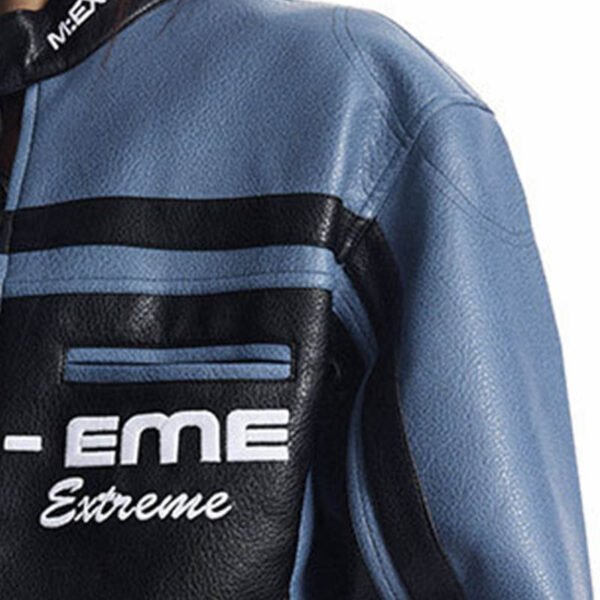
The image depends on crisp borders between blue, black, and graphic zones. When applique edges wander, the front loses its engineered racing character. Edge allowance, stitch placement, and turn-under behavior therefore deserve approval as design controls, not finishing details added after pattern development.
The chest artwork crosses broad dark panels while sleeve bands follow curved movement zones. Those placements create long visual lines that expose puckering quickly. A clean specification should identify every edge type, corner radius, overlap direction, and acceptable tolerance before cutting begins for production review.
Managing Bulk Across Layered Zones
Patchwork adds thickness wherever panels overlap, especially around the chest, armhole, sleeve bands, hem, and collar. The pictured cropped silhouette leaves little visual distance between these zones, so seam stacking must be sequenced to preserve a neat profile without flattening the intended dimensional contrast.
Bulk planning should distinguish decorative overlays from structural seams. VeeWen's development team can map overlap order, reduce unnecessary internal allowances, and test pressing direction on representative panels. The objective is balanced distribution, allowing the jacket to retain its graphic architecture while remaining practical for seated and active.
Front Panel and Graphic Registration
The central front is visually divided by a closure, horizontal bands, and large white lettering. That combination makes registration sensitive: even small shifts can cause the two sides to appear misaligned. Artwork placement should be locked against the finished pattern, not estimated from an ungraded paper template.
A buyer should review a front-panel approval sample with the closure installed and the garment relaxed naturally. This reveals whether the applique remains centered after joining, whether lettering clears seam interruptions, and whether the visual weight of each side matches the approved design intent.
Sleeve Curves Need Flexible Applique Planning
The sleeves show multiple dark and blue sections running along a bent arm, where a flat strip can distort during wear. Curved pattern pieces, controlled notches, and measured easing help maintain the intended band direction without forcing excess material into the elbow or underarm.
The development checkpoint should include a worn sleeve assessment, not only a table inspection. Confirm that edges stay smooth through flexion, the cuff remains aligned, and seam intersections do not create hard ridges. These observations connect the visual concept directly to movement comfort and production repeatability.
VeeWen Development Workflow for This Axis
VeeWen should begin by converting the image into an applique map that separates body panels, sleeve bands, graphics, collar details, and closure boundaries. The technical package can then define material references, edge treatments, overlap sequence, artwork coordinates, and bulk-risk points for the first development sample.
After sample review, record edge behavior and layer thickness observations by zone rather than issuing one broad approval. Confirm corrections on the revised pattern and construction sheet before authorizing the MOQ: 100 pieces per style production route. This workflow keeps the argument measurable at each handoff.
Buyer Approval Checkpoint
Before approval, inspect the jacket on a form and in motion under consistent lighting. Check applique symmetry, corner sharpness, sleeve-band continuity, collar layering, hem profile, and closure alignment. Also verify that the selected substrate supports the planned edge treatment without visible bubbling, lifting, or unwanted stiffness.
The commercial decision is ready when the approved sample demonstrates both graphic precision and controlled bulk in the highest-risk zones. Document the accepted tolerances, material status, grading assumptions, and corrective notes so production teams can reproduce the same visual balance across the ordered size range.
Buyer Questions
Is this jacket genuine leather?
The supplied image shows a leather-like surface, but it does not verify genuine leather, PU, backing, fiber content, or composition percentages. Material selection remains To Confirm.
How can applique bulk be controlled?
Control begins with mapped overlap order, consistent edge allowances, reduced seam stacking, and sample testing at the collar, armhole, sleeve bands, hem, and closure.
Can the graphics be customized?
Yes, artwork can be developed through approved placement files and applique specifications. Final scale, technique, color separations, registration tolerances, and substrate compatibility require buyer confirmation.
What is the minimum order quantity?
The exact commercial minimum is MOQ: 100 pieces per style. Final quotation, material availability, and development requirements should be confirmed against the approved technical package.
Approve the Patchwork Edge Plan
Send your artwork, target measurements, and material direction to VeeWen for technical review. We will organize the applique map and bulk-risk checkpoints around MOQ: 100 pieces per style.


Reviews
There are no reviews yet.