


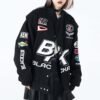
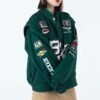


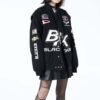

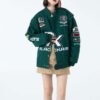


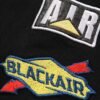
This black moto racing bomber is developed around elastic insertion and torque prevention, because dense front graphics, roomy sleeves, and ribbed edges create visible distortion risks. The approval target is a stable, relaxed silhouette that keeps cuffs, hem, snaps, and decoration aligned during movement and wear.
Elastic Insertion as a Stability System
Rib components at the cuffs, collar, and hem do more than finish the jacket. Their recovery force controls openings around the body, but excessive tension can pull adjoining panels inward. The development objective is a measured insertion ratio that closes cleanly without creating ripples.
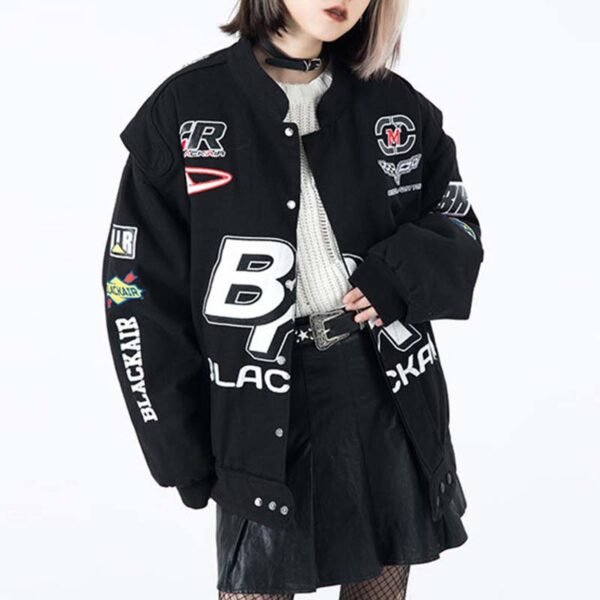
The image shows broad black rib areas framing a heavily decorated shell, so uneven stretch would be immediately noticeable. VeeWen can evaluate rib width, relaxation, and seam allowance together during proto review, preserving edge continuity while keeping the intended relaxed volume.
Preventing Torque Across the Decorated Body
Large graphics crossing the chest and lower front introduce visual reference lines that expose even modest twisting. If opposing panels feed differently through assembly, the jacket can rotate around the wearer. Panel grain, joining order, and balanced seam handling therefore become central approval variables.
A practical review should inspect the jacket on a hanger and a moving fit model, checking whether snaps, graphics, and side seams remain vertically consistent. That visual checkpoint connects construction decisions to merchandising impact, especially where bold decoration leaves little room for misalignment.
Roomy Sleeves Need Controlled Recovery
The supplied image presents generous sleeves ending in close-fitting cuffs. This proportion creates comfort and streetwear presence, yet it also concentrates tension where sleeve volume meets elastic. The cuff must recover sufficiently to hold position without collapsing the sleeve into unwanted bunching.
VeeWen's workflow should isolate this junction in the first fit sample, comparing cuff circumference, rib height, and sleeve opening. Approval should record the acceptable balance between hand clearance and gathered fullness, because that relationship determines whether the jacket looks intentional during movement.
Decoration Placement Under Movement
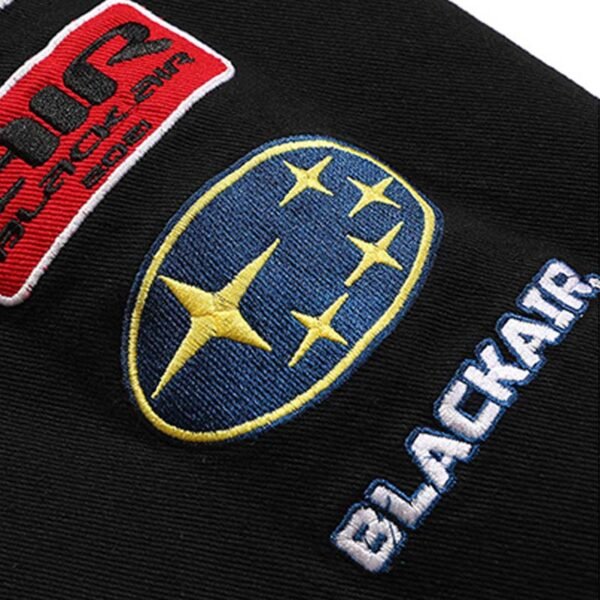
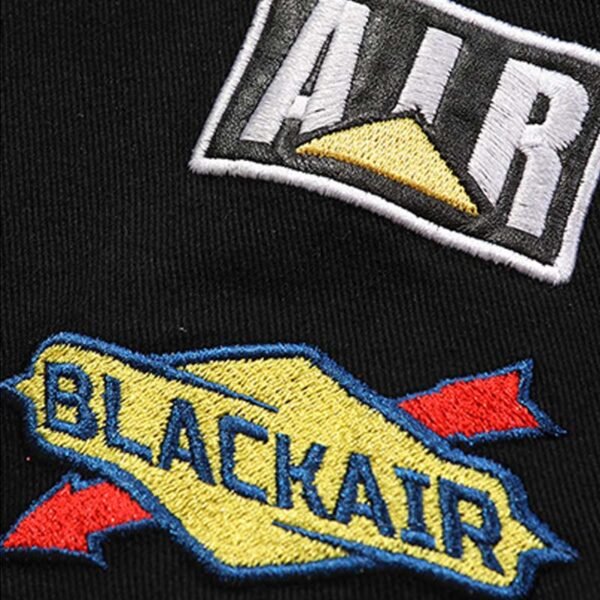
Contrasting patches, lettering, and embroidered motifs create a strong racing visual language, but each added layer changes local weight and stiffness. Decoration near seams or ribs can restrict stretch and encourage torque. Placement should therefore follow the garment's movement map rather than a flat artwork file alone.
During development, artwork can be separated into stable body zones and flexible edge zones before digitizing or applique planning. The image's concentrated front and sleeve decoration suggests prioritizing clean registration around closures, elbow movement, and rib transitions for dependable visual control.
Trade-Offs in a Relaxed Bomber Profile
A relaxed silhouette offers layering room and a contemporary attitude, but extra ease increases momentum when the wearer moves. That momentum can pull the shell against elastic edges and exaggerate rotation. Reducing ease may improve stability, yet it would weaken the product's intended generous proportion.
The buyer should choose the fit priority explicitly: maximum layering, sharper alignment, or a negotiated middle ground. VeeWen can carry that decision into graded patterns, maintaining the approved relationship between sleeve fullness, body width, rib tension, and decorated panel proportions.
VeeWen Development Approval Checkpoint
This product should progress through a focused construction review rather than a decoration-only approval. The checkpoint covers rib insertion, seam torque, snap alignment, graphic registration, and movement behavior in one sample, giving buyers a clear basis for accepting or revising the physical mechanism.
Before bulk authorization, approve a sample after inspecting relaxed recovery and repeated movement across the decorated zones. Record the selected shell reference, rib specification, artwork positions, and tolerance expectations, then release the style only when the visual lines remain stable under normal wear actions.
Buyer Questions
What is the main development risk for this jacket?
The main risk is torque at elastic edges, where roomy sleeves, decorated panels, and uneven rib recovery can visibly shift the relaxed bomber silhouette.
Which material details are currently verified?
Only visible black outerwear styling, ribbed edges, snap-front appearance, and graphic decoration are evidenced; fiber composition, fabric weight, and exact decoration method require confirmation.
What should buyers review before approving the sample?
Review cuff and hem recovery, snap alignment, side-seam verticality, graphic registration, sleeve bunching, and movement comfort before approving the final construction direction.
What is the minimum order for this style?
The commercial minimum is MOQ: 100 pieces per style, with final materials, decoration specifications, and graded measurements confirmed during product development.
Approve the Torque-Controlled Sample Direction
Share your target shell reference, rib preference, artwork placement, and size range with VeeWen. We will frame the first approval around elastic recovery, seam stability, and decoration alignment. MOQ: 100 pieces per style.


Reviews
There are no reviews yet.