

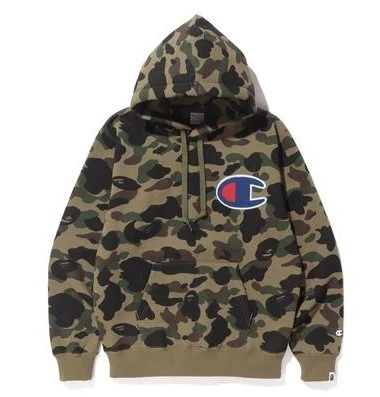
This red camouflage pullover hoodie should be developed around hem level and garment hang, because dense visual coverage, a pouch pocket, and applied details make lower-body balance especially noticeable.
Hem Level Sets the Silhouette
The image shows a broad lower rib band beneath a visually dense body. That band establishes the apparent hem level and acts as a tension transition between the main fabric and edge finish, so even small length or recovery differences can change the hoodie's stance.
A hem that rides upward can make the torso look shortened, while excessive looseness can create collapse or waviness. VeeWen should therefore measure finished body length against rib height and opening circumference before approving the garment for grading.
Garment Hang Under Visual Weight
The all-over red camouflage creates continuous visual activity from hood through body and sleeves. Because there is no quiet panel to disguise uneven settling, the hoodie should hang symmetrically on a hanger, with the front pocket and side seams remaining visually level.
The pouch pocket adds concentrated lower-front weight and can pull the body forward if its opening, depth, or attachment is inconsistent. Pocket placement should be reviewed alongside hem level, since either element can make the opposite side appear unbalanced.
Cuffs, Hood, and Lower Balance
Long sleeves extend the visual mass beyond the torso, while ribbed cuffs create firm transitions at both wrists. If cuff openings grip too strongly or relax too much, sleeve weight can alter shoulder and body hang, especially when the hoodie is displayed flat.
The hood also affects rear balance through its layered fabric and drawcord area. Its opening and attachment should be checked for even distribution, because a heavier or tighter hood can pull the neckline backward and change the apparent front hem position.
Workflow Checkpoint at VeeWen
VeeWen's product-development workflow should record body length, rib height, hem opening, pocket coordinates, cuff dimensions, and hood attachment as linked measurements. This style needs a balance map because each lower or edge component influences how the camouflage surface is read.
At sample review, the buyer should inspect the hoodie flat, on a hanger, and worn. Comparing those views reveals whether hem level remains stable under gravity and movement, while also exposing pocket drag, twisting seams, or uneven side lengths.
Trade-Offs in Hem Control
A firmer rib can preserve a defined lower edge and help the hoodie retain shape, but excessive recovery may gather the body or restrict movement. A softer rib can improve comfort and drape, yet may allow the dense torso to settle unevenly.
Shortening the body can sharpen the hem proportion, while additional length can improve coverage and layering. Either choice changes the relationship between pocket position, rib band, and sleeve volume, so buyers should approve proportions as a complete silhouette.
Production Release Decision
Final approval should confirm the finished hem level against the approved body length, rib behavior, pouch pocket placement, cuff balance, and hood hang. The camouflage layout should remain visually continuous while those construction points stay stable across the graded size range.
Before purchase-order release, the buyer should record all material and performance details still To Confirm. VeeWen can then use the approved balance map to control pattern updates, sewing checkpoints, and the final inspection reference for this style.
Buyer Questions
Why is hem level important for this hoodie?
The broad ribbed hem controls the lower silhouette. If its height, opening, or recovery changes, the dense camouflage body can look shortened, loose, twisted, or uneven on the hanger.
What does garment hang approval involve?
Review the hoodie flat, on a hanger, and worn. Check side-seam alignment, pocket level, sleeve balance, hood pull, body length, and whether the hem settles evenly.
Can the hem be made firmer or softer?
Yes, but each choice changes drape, comfort, recovery, and visual proportion. Buyers should compare rib options with the approved body length and pocket position before selecting one.
What is the minimum order for this style?
The commercial minimum is MOQ: 100 pieces per style. Final fabric, rib, artwork, grading, packaging, and production specifications should be confirmed before order release.
Approve the Hoodie Hang Direction
Share the target measurements, camouflage artwork, rib preferences, and size range so VeeWen can prepare a balance-focused sample for hem and hang approval.



Reviews
There are no reviews yet.