


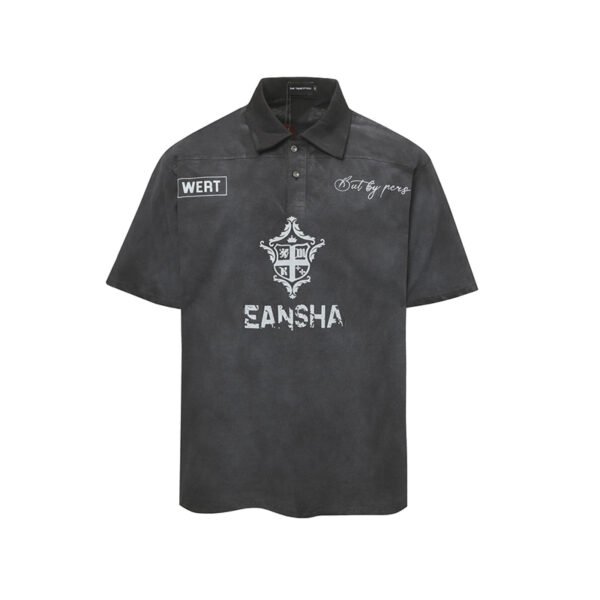
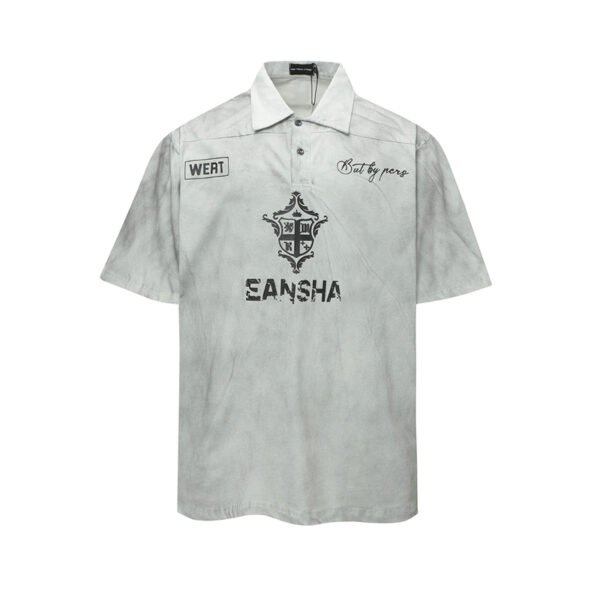




This custom washed graphic polo shirt is developed around fabric width and consumption planning. The supplied image shows two closely matched colorways, making shared pattern geometry, marker efficiency, wash allowance, and graphic placement central approval points for a controlled private-label program.
Why Width Planning Matters Here
The two pictured polos use nearly identical silhouettes while separating demand through light grey and charcoal colorways. That relationship allows one approved block to support multiple markers, but only when fabric width, body length, sleeve projection, and collar components are measured together.
A narrow usable width can force extra spreading, rotated pieces, or additional joins around sleeves and collars. A wider usable width may improve nesting, yet finishing shrinkage can change the usable area. The commercial question is therefore yield after treatment, not width stated before treatment.
Reading the Visual Construction
The image shows short sleeves, pointed collars, buttoned plackets, straight side seams, and softly curved hems on both garments. These repeated elements suggest a stable pattern family, while the light and dark surfaces expose whether shrinkage or shading changes proportion between colorways.
The front graphics occupy substantial central areas, with smaller marks near the upper chest. Their consistent positioning means panels cannot be casually rotated or substituted during cutting. VeeWen should align print placement tolerances with the marker plan so material savings do not create visual imbalance.
Consumption Risks After Washing
A washed appearance introduces a planning variable because dimensional change may occur before or after panels are cut, depending on the selected process. If the treatment is garment-level, the approved block must include measured allowances for body length, sleeve length, collar shape, and hem curvature.
Colorway pairing also affects approval because grey and charcoal may absorb or reveal finishing variation differently. The buyer should request post-treatment measurements for both shades, then compare those results with the marker assumptions before locking fabric width, purchase quantity, or artwork registration.
VeeWen Development Workflow
VeeWen can translate this axis into a staged development review: confirm the usable finished width, map the polo block, place collars and sleeves, then calculate consumption for each colorway before sample approval. The marker should preserve grain direction and graphic positioning requirements.
During review, the buyer should receive a clear checkpoint for fabric width, estimated usage, wash allowance, and cutting layout assumptions. A revised sample can then verify proportions after treatment, allowing production approval to reflect the actual garment system rather than an untested theoretical yield.
Trade-Offs Buyers Should Weigh
Optimizing width and nesting can reduce waste, but excessive piece rotation may disturb nap, shade direction, or the visual character of a washed surface. Preserving one cutting direction can increase consumption while producing more consistent appearance across the paired colorways.
Reducing graphic clearance may also improve yield, yet it narrows tolerance for placement variation and artwork registration. For a commercial program, the better decision balances material efficiency with repeatable presentation, especially because the central artwork is a defining visible feature.
Approval Gate Before Bulk Cutting
Before bulk cutting, approve a measured fabric width, finished-width tolerance, treatment sequence, and marker version for this polo block. Confirm whether both colorways can share the same layout and identify any components requiring one-way placement or separate shade control.
The final decision should compare projected consumption with a post-treatment sample and approved graphic positions. Once the buyer signs those checkpoints, VeeWen can proceed with the agreed pattern, material reference, color standards, and MOQ: 100 pieces per style.
Buyer Questions
Can both shown colorways use one pattern block?
They appear proportionally matched, so one block may be practical, but VeeWen should confirm measurements, treatment change, and shade-specific approval before production.
Why is finished width more important than nominal width?
Treatment, edge stability, and usable selvedge clearance can reduce cutting area. Finished-width measurement therefore gives a more reliable basis for consumption planning.
Does the large front graphic affect marker efficiency?
Yes. Placement and registration tolerances can restrict rotation or substitution of panels, so the artwork layout should be reviewed alongside the cutting marker.
What should be approved before fabric ordering?
Approve composition reference, usable finished width, treatment allowances, color standards, marker assumptions, graphic placement, and the post-treatment sample measurements.
Approve the Polo Marker Study
Send your target size range, color quantities, and artwork files to VeeWen for a width-led development review. Confirm the post-treatment marker assumptions before approving MOQ: 100 pieces per style.


Reviews
There are no reviews yet.