
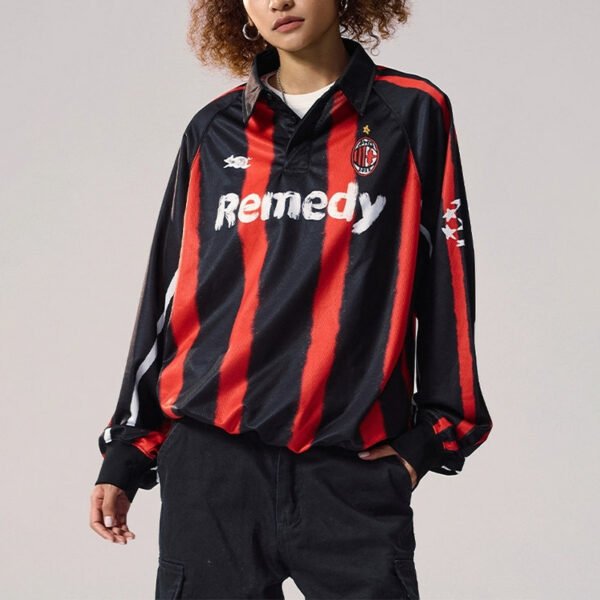

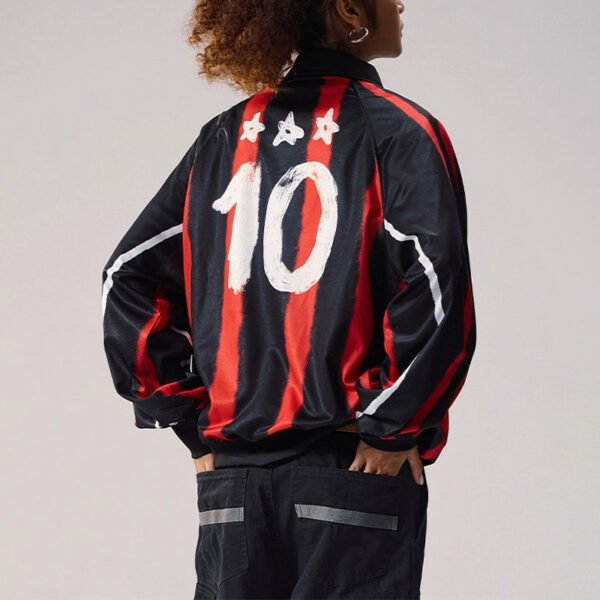
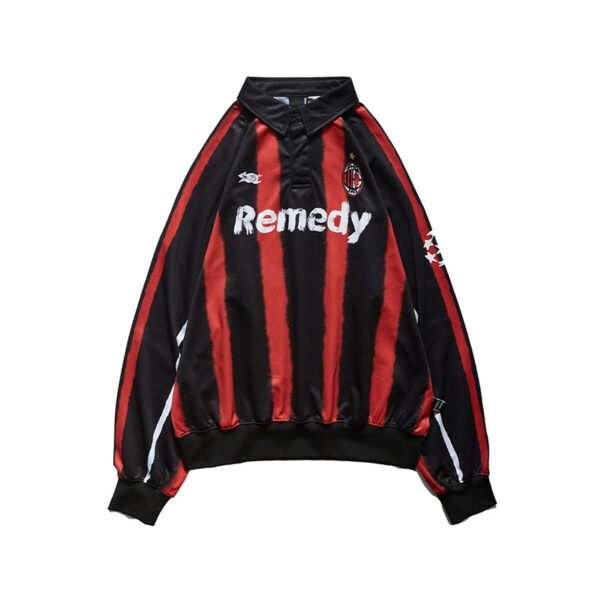
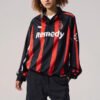
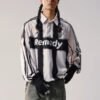
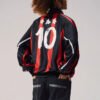
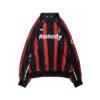
This custom long-sleeve jersey is developed around a visible relationship between stretch direction and stripe registration. The supplied image shows bold vertical color blocking, contrast sleeve treatment, and oversized graphics, creating a sample where fabric behavior directly influences proportion, balance, and perceived quality.
Stretch Direction Controls Visual Alignment
Vertical stripes expose unwanted distortion quickly because horizontal extension can widen the color bands and reduce their apparent length. The development pattern should identify the fabric grain, preserve repeat consistency, and evaluate stripe behavior at the intended relaxed fit.
A controlled stretch plan also protects movement at the elbows, shoulders, and torso. If the mesh recovers unevenly, the black and red divisions may shift after wear, so panel orientation and seam placement should be reviewed together before grading.
Panel Mapping Builds the Graphic Framework
The main image uses red and black columns as the garment's dominant visual structure, while white chest artwork creates a high-contrast interruption. Artwork size should therefore be mapped against stripe boundaries, avoiding accidental splits through important lettering or symbols.
Sleeve placement needs the same discipline because the stripes appear to travel from shoulder toward cuff. VeeWen's pattern review should mark each panel's repeat position, seam turn, and artwork relationship, ensuring the finished jersey reads as one coordinated surface.
Cuffs and Hem Stabilize the Stretch
The gathered lower edge and ribbed-looking cuffs provide containment where the mesh meets the body and hands. Their dimensions influence how far the jersey blouses, how the stripes terminate, and whether the sleeve graphics remain visible during ordinary movement.
Development should compare cuff tension with the fabric's extension rather than treating rib details as decoration alone. Excessive tension can pull the stripe field inward, while insufficient recovery may create a loose, uneven finish after fitting and laundering review.
Graphics Must Follow Fabric Movement
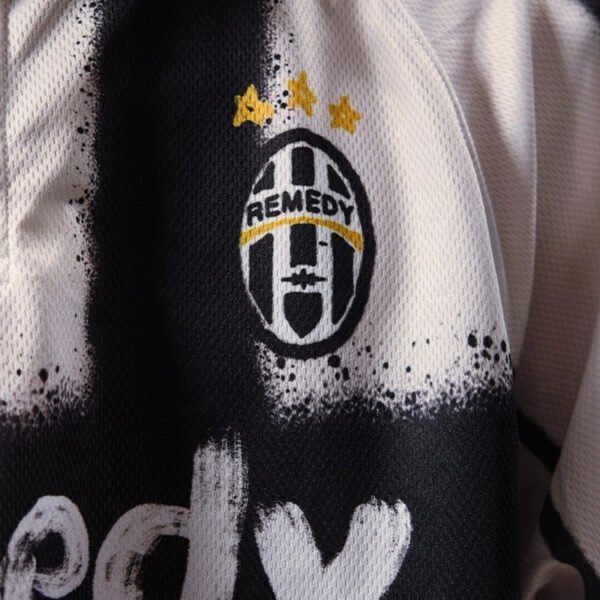
The prominent white chest graphic is positioned over a flexible, high-contrast ground, making print registration and opacity important visual checks. The supplied image supports the presence of printed artwork, but ink type, hand feel, curing method, and durability remain To Confirm.
A practical approval sample should inspect artwork at rest and under moderate extension across the chest. The buyer can then decide whether the graphic should remain large and central, or be reduced where stretch causes lettering to lose definition.
VeeWen Workflow for Stripe Approval
VeeWen should begin by converting the reference into a stripe map that records grain direction, repeat width, panel joins, and artwork safe zones. This makes the manufacturing axis measurable during pattern review instead of relying on a general visual impression.
After the first development sample, the buyer should assess the jersey on a moving body and inspect front, side, sleeve, and cuff alignment. Approval should cover stretch behavior and pattern registration simultaneously before the style advances toward the MOQ of 100 pieces per style.
Trade-Offs and Buyer Checkpoint
More pronounced color blocking increases visual impact but leaves less tolerance for fabric distortion, grading variation, or misaligned seams. A softer, more extensible mesh may improve comfort while making the stripes harder to keep straight through production.
The final checkpoint is a combined fit and artwork review: confirm the stripe repeat at each size, observe recovery after extension, and approve graphic placement before committing the production specification and MOQ: 100 pieces per style.
Buyer Questions
What fabric information is currently verified?
The reference supports a mesh jersey appearance, but fiber composition, GSM, stretch percentage, recovery, and performance claims require confirmation during development.
Why is stripe direction important for this jersey?
Vertical color blocks reveal widening, twisting, or seam drift quickly, so grain direction and repeat mapping should be approved before grading.
How should the chest artwork be reviewed?
Review artwork at rest and under moderate stretch, checking opacity, lettering clarity, placement against stripes, and the intended print hand feel.
What is the commercial minimum?
The exact commercial minimum is MOQ: 100 pieces per style, subject to approval of the final development specification and production details.
Approve the Stripe and Stretch Map
Send the target size range, artwork files, and preferred mesh reference so VeeWen can align the stripe map, movement review, and MOQ: 100 pieces per style.


Reviews
There are no reviews yet.