

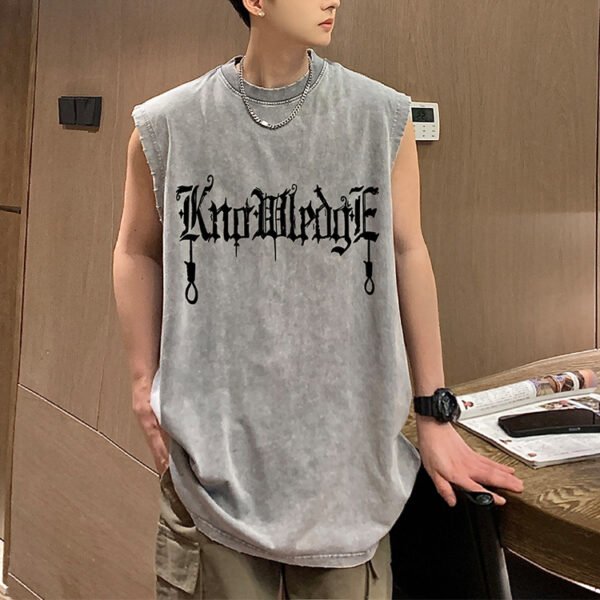
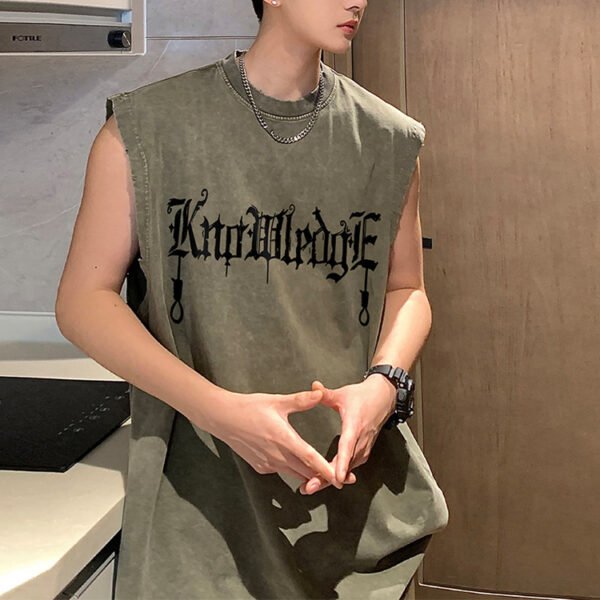

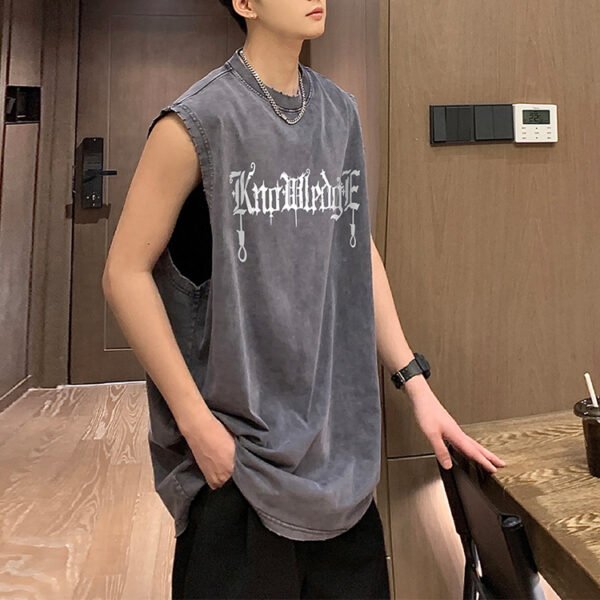
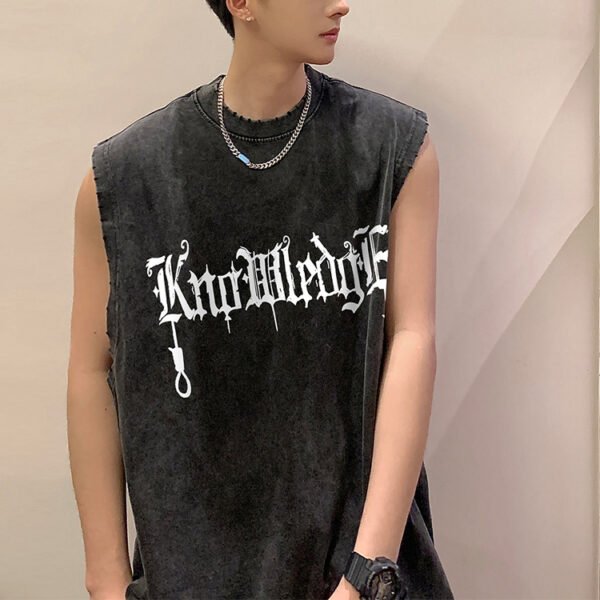




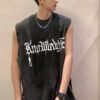
This sleeveless tank is positioned as a graphic-led streetwear base where the visual impact depends on coordinating artwork placement with panel geometry and acid-wash variation. The supplied image establishes a dark, mottled body, broad arm openings, and centered chest artwork for a controlled development brief.
Registration Starts With the Artwork Map
For an all-over print tank, the artwork should be divided into front, back, shoulder, and side zones before cutting. The image shows a centered chest graphic, so the first approval should establish how future artwork crosses armholes, side seams, and hem positions.
Registration tolerance becomes more visible on a sleeveless silhouette because the armhole exposes a larger uninterrupted body area. VeeWen should mark grain direction, panel notches, and print reference points on the pattern so placement remains repeatable across sample and production pieces.
Acid-Wash Variation Changes the Print Ground
The supplied image shows a mottled black ground rather than a flat solid shade. That variation can alter perceived print contrast from panel to panel, meaning the print strike-off must be reviewed against the approved wash appearance instead of evaluated on greige fabric alone.
Wash intensity also creates a trade-off between vintage character and graphic clarity. A stronger treatment may deepen tonal irregularity but soften edge definition or change the artwork balance, so the buyer should approve wash and print together as one visual system.
Panel Geometry Controls Continuity
Although the reference presents a dominant front graphic, an all-over direction requires continuity across the tank body. Side seams, shoulder transitions, and the curved armhole can interrupt motifs unless the pattern is engineered around intended visual breaks and usable registration allowances.
The longline body gives artwork more vertical area, while the raw-looking arm openings emphasize the garment perimeter. VeeWen can use the approved silhouette to test whether motifs terminate cleanly at edges or intentionally appear cropped, creating a deliberate rather than accidental result.
Print Method Needs a Defined Approval Point
The source wording references screen printing, but it does not verify a final ink system, coverage, or curing process. Those choices should be treated as open development variables because dense artwork, acid-wash exposure, and soft handfeel can pull the design in different directions.
The buyer should compare a printed-and-washed strike-off with the original artwork at normal viewing distance. Approval should record color count, placement tolerance, edge sharpness, and acceptable surface variation, giving production a concrete reference beyond a verbal instruction such as oversized graphic.
VeeWen Workflow for This Argument
VeeWen's workflow should begin with a panel-aware artwork file, the base tank pattern, and a wash reference photographed under consistent lighting. The development sample then tests registration after construction and washing, rather than treating print placement as a separate decoration step.
The critical handoff is a combined approval sheet showing pattern landmarks, artwork boundaries, wash intensity, and rejected outcomes. Once the buyer signs that checkpoint, the same controls can guide size grading and repeat sampling without losing the approved visual relationship.
Buyer Checkpoint Before Production
Before approving production, confirm whether the collection needs true artwork continuity across panels or a controlled front-led graphic with supporting placements. The distinction affects marker planning, print setup, pattern notches, inspection standards, and the amount of acceptable visual interruption.
Also approve the final body length, armhole depth, wash contrast, graphic scale, and edge treatment on a completed garment. This checkpoint should balance expressive irregularity against readable artwork, ensuring the finished tank matches the commercial intent established by the supplied reference.
Buyer Questions
Can VeeWen develop an all-over print version of this tank?
Yes, the supplied reference can guide development, but artwork mapping, print method, panel registration, wash sequence, and final tolerances require buyer approval before production.
Is the fabric confirmed as cotton?
No. The source wording mentions cotton, but composition, fabric weight, and finish should remain unverified until VeeWen confirms the selected material.
How should the acid wash be approved?
Approve the wash on a completed printed sample, reviewing tonal variation, graphic contrast, handfeel, edge appearance, and repeatability under consistent lighting.
What is the minimum order quantity?
MOQ: 100 pieces per style. Final production planning should follow approved artwork, pattern, wash, grading, and inspection requirements.
Approve the Registered Graphic Direction
Send the artwork, target measurements, and wash reference to begin a panel-aware tank development review with VeeWen. The first checkpoint is a completed sample showing registration, contrast, silhouette, and edge treatment together.



Reviews
There are no reviews yet.