


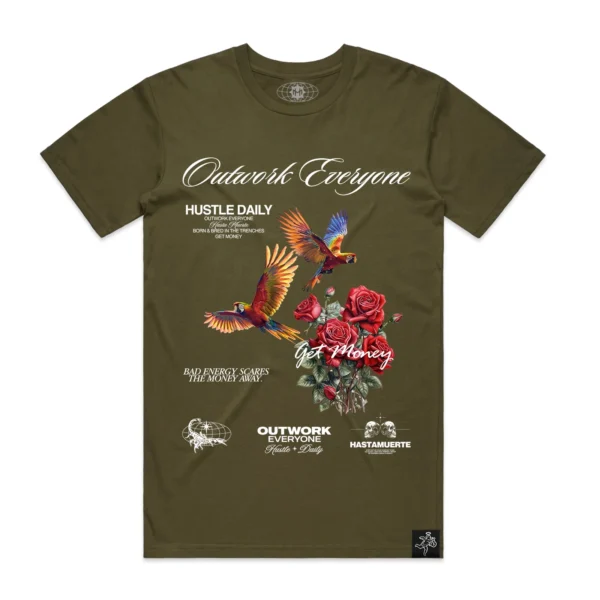







This graphic T-shirt requires a precise decision about closure scope. The supplied image presents a clean zipper-free crew-neck front dominated by birds, roses, and supporting graphics, so puller scale cannot be assumed. Development should protect the artwork first, then validate any coordinated zip variant separately.
Establish the Closure Truth
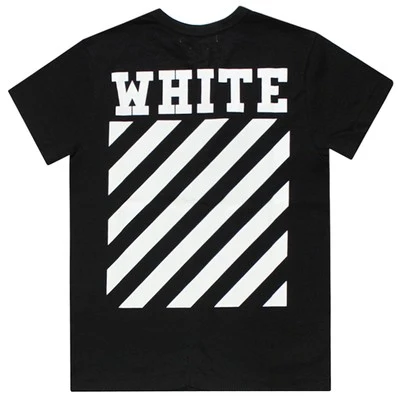
The supplied image depicts a conventional crew-neck T-shirt with a continuous front graphic area and no visible zipper. That observation matters commercially: adding a puller would change the product category, front balance, opening behavior, and artwork requirements rather than simply adding hardware.
The first buyer checkpoint is therefore binary. Confirm a zipper-free T-shirt specification, or define a separate zip-front version with its own pattern, seam allowance, placket, and operating requirements. Do not carry an unverified puller assumption into artwork approval.
Protect the Artwork Field
The central illustration combines flying birds, roses, and multiple dark text-like graphic elements across the white front. A future zipper would divide that composition, so artwork must be repositioned around a controlled center gap before any closure sample is evaluated.
Keeping the graphic uninterrupted preserves the supplied visual impact but limits front-opening options. Introducing a closure can improve styling flexibility while creating alignment risk, print interruption, and increased handling around the placket. Those trade-offs belong in the variant brief.
Size the Puller to the Garment
If a zip version is approved, puller scale should be proportional to the lightweight-looking T-shirt silhouette rather than borrowed from outerwear. Excessive hardware can dominate the graphic and create a heavy visual point, while undersized hardware may be difficult to operate.
The correct scale also depends on slider type, tape width, placket construction, and wearer access. VeeWen should compare puller lengths and shapes on the actual sample, checking finger clearance without allowing the puller to strike printed artwork or twist the front.
Test Operational Clearance
Operational clearance means the puller can be grasped, moved, and parked without catching the neck rib, print surface, seam allowance, or nearby labels. The supplied flat image cannot verify these relationships, so they require a physical sample and a defined opening path.
A narrow placket may preserve a cleaner front but reduce finger room. A wider placket improves handling yet adds visible structure and may shift the graphic outward. Approve the clearance based on actual movement, not a flat technical drawing alone.
Apply the Checkpoint to VeeWen Workflow
VeeWen should record the closure decision before grading or finalizing the front artwork. For the zipper-free style, the workflow can preserve the uninterrupted graphic and focus on neck, sleeve, hem, and print placement approvals. For a zip variant, create a distinct construction route.
That route should include a closure mock-up, puller options, placket dimensions, artwork exclusion zones, and wear testing. The useful workflow outcome is a documented yes-or-no decision that prevents the T-shirt sample and any coordinated zip garment from sharing incompatible assumptions.
Approve the Correct Product Version
Approve the pictured product when the buyer confirms a zipper-free crew-neck T-shirt and accepts the uninterrupted front composition as the defining construction. If a zipper is desired, approve only after reviewing a revised front, puller scale, placket, and clearance sample.
The final development record should identify closure status, artwork boundaries, hardware references if applicable, and tolerance points for placement. This protects production communication and ensures the commercial minimum, MOQ: 100 pieces per style, applies to the correctly defined style.
Buyer Questions
Does the supplied image show a zipper puller?
No. The main image shows a flat front crew-neck T-shirt with no visible zipper, slider, puller, or closure opening requiring operational measurement.
Why is zipper clearance an assigned development axis?
It creates a necessary variant checkpoint: confirm the pictured zipper-free style, or separately engineer a zip version with compatible artwork, placket, and puller access.
Can the artwork remain unchanged on a zip version?
Not automatically. A center closure would interrupt the graphic field, requiring revised artwork alignment, exclusion zones, and approval on the physical garment sample.
What is the commercial minimum?
The exact commercial minimum is MOQ: 100 pieces per style, with quantities tied to the finalized style definition and approved production specifications.
Confirm the Closure Route
Confirm whether this remains a zipper-free graphic T-shirt or becomes a separate zip-front variant. VeeWen can then prepare the correct artwork, hardware-clearance, construction, and approval checkpoints.


Reviews
There are no reviews yet.