


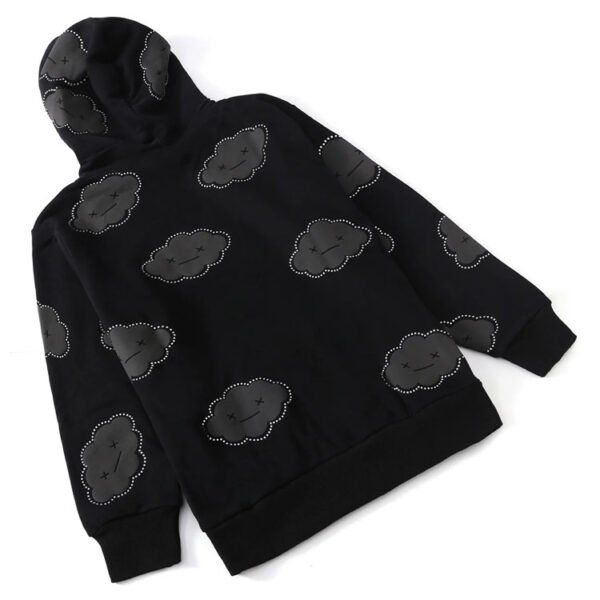


This custom pullover hoodie is developed around approval discipline: the visible cloud artwork, dark base, hood construction, and ribbed finishing must be captured in one sealed reference before production. That checkpoint protects repeat orders from drifting in placement, scale, relief, or proportion.
Why The Approval Sample Controls This Hoodie
The image shows decoration distributed across multiple panels rather than concentrated in one logo area. That makes the sample a production map: it records artwork scale, spacing, panel transitions, and the visual relationship between cloud motifs and the black shell.
A reorder can look materially different even when the same artwork file is used. Small changes in motif size, placement, print height, or hood positioning alter the garment's balance, so approval must cover the assembled hoodie rather than artwork alone.
Decoration Placement Is A Measurable Decision
The front, sleeves, and hood visibly carry separate cloud placements, including light and dark versions. VeeWen should mark each placement from stable garment references, such as center front, shoulder seam, cuff edge, pocket boundary, and hood opening.
The approval review should identify acceptable movement limits for every visible motif group. Buyers should check whether graphics cross seams cleanly, retain their intended spacing, and preserve the same visual density when the hoodie is viewed flat and worn.
The Shell And Trims Need One Visual Standard
The black body is visually unified with dark cuffs, hood lining, and bottom rib, allowing the contrasting clouds to lead. The sample should therefore confirm shell shade, rib shade, seam appearance, and hood proportion together, because mismatch can weaken the intended graphic impact.
The supplied image suggests a substantial hoodie presence, but it does not verify composition, GSM, or internal construction. Those points remain open development items, while the approval sample can still establish handfeel direction, silhouette, trim color, and decoration positioning.
VeeWen Workflow For A Sealed Reference
VeeWen's workflow should begin by converting the image evidence into an artwork placement sheet and measurement list, then building one physical sample that represents the complete approved combination. The sealed reference becomes the visual checkpoint attached to the style's production record.
Before a reorder, the buyer and VeeWen should compare the new preproduction sample against that sealed reference panel by panel. Any approved revision should replace the prior record clearly, so production teams do not work from mixed artwork files or outdated measurements.
Trade-Offs Buyers Should Resolve Early
Dense decoration can create stronger shelf impact, yet it also increases the number of placement decisions and inspection points. A buyer may simplify motif coverage for easier control, or retain the full distribution while accepting a more demanding approval and inspection process.
A darker cloud treatment blends into the shell more quietly than the white version, creating depth without equal contrast. The buyer should decide whether the intended assortment prioritizes high-contrast visibility, layered tonal detail, or a defined balance between both treatments.
The Final Reorder Approval Checkpoint
The decisive checkpoint is a sealed sample showing the approved garment measurements, hood shape, rib treatment, cloud artwork, color variants, and panel placements. The buyer should sign against the assembled item, because individual artwork approval cannot prove the finished composition.
Once approved, the commercial decision is whether this controlled reference is specific enough to support MOQ: 100 pieces per style and later repeats. If measurement tolerances, decoration limits, or color references remain unclear, the style should return for clarification before ordering.
Buyer Questions
What should the sealed sample include?
It should include final measurements, hood shape, rib treatment, artwork scale, placement marks, decoration appearance, color references, and any approved construction notes.
Can artwork placement change across sizes?
Yes, placement may require graded coordinates, but the buyer should approve how motif scale, seam clearance, and visual density change across each size range.
Is the heavyweight claim verified?
The supplied wording identifies a heavyweight hoodie, while the image suggests substantial presence; exact GSM, composition, and testing remain To Confirm.
What is the minimum order quantity?
The commercial minimum is MOQ: 100 pieces per style, subject to the final approved specification and agreed production documentation.
Seal The Reference Before Reordering
Send the artwork direction, size range, and target measurements to VeeWen for a complete approval sample. Confirm every panel, trim, and decoration detail before placing MOQ: 100 pieces per style.


Reviews
There are no reviews yet.