




This jean concept is defined by controlled imbalance: visible distressing shifts across the two legs while the washed denim remains commercially wearable. The development challenge is coordinating marker direction, panel yield, and abrasion placement so the finished pair feels intentionally asymmetric rather than randomly damaged.
Read the Distress as a Cutting Problem
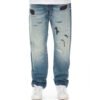
The supplied image shows a pale blue denim base with darker shading concentrated lower on the legs. That tonal direction matters because marker orientation can influence how wash character and panel grain read when front pieces are cut and assembled.
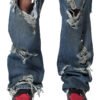
Large dark-backed openings sit high on both legs, while smaller tears and pale abrasions scatter below. Because the damage is not mirrored, a production marker must preserve left-right placement logic, ensuring the intended irregularity survives cutting without unnecessary panel substitutions.
Protect Visual Imbalance from Becoming Waste
Asymmetrical design increases planning sensitivity: one leg may require a particular panel orientation or a specific distress position that cannot be exchanged freely with another. Material consumption should therefore be reviewed alongside the artwork, not treated as a later costing adjustment.
The commercial trade-off is direct. Tighter nesting may improve yield but restricts directional consistency or distress placement; looser nesting protects the visual map but consumes more denim. The approval target is a repeatable compromise documented before bulk cutting begins.
Engineer the Distress Map
The image provides a useful hierarchy for development: two dominant dark openings establish recognition, while several smaller tears create movement through the legs. VeeWen can convert that hierarchy into a placement sheet identifying panel, height, scale, and treatment intensity for approval.
Irregularity still needs boundaries. The buyer should distinguish intentional asymmetry from uncontrolled variation by approving reference positions and acceptable tolerances for each abrasion. This keeps the design expressive while giving production teams a practical standard for checking cut panels and finished garments.
Manage Panel Direction Through Sampling
A sample should test more than the overall silhouette. It should confirm how the selected denim direction interacts with the wash, whether the large openings remain correctly positioned after assembly, and whether lower-leg shading supports rather than overwhelms the distress composition.
VeeWen's workflow can place marker review beside the first development sample, allowing the buyer to compare fabric usage assumptions with actual panel behavior. If the sample reveals awkward grain flow or excessive waste, the map can be adjusted before final pattern approval.
Balance Wearability and Statement
The light blue ground keeps the concept accessible, while the uneven dark-backed openings supply a stronger streetwear signal. That contrast creates a useful merchandising balance, but excessive opening size or density could reduce perceived durability and narrow the range of acceptable end use.
The buyer should decide how much visual disruption the collection requires before approving production details. A restrained map supports broader styling and easier size scaling; a more aggressive map delivers stronger impact but demands stricter placement control and potentially greater material allowance.
Set the Bulk Approval Checkpoint
The decisive checkpoint is a signed distress and marker package linking the approved image reference to production patterns. It should identify fabric direction, key opening locations, tolerance ranges, and the agreed material-consumption assumption for this individual style.
Once those variables are fixed, VeeWen's product-development workflow can move from pattern refinement to cutting preparation with a clear technical record. The buyer should approve the package only when visual asymmetry, panel yield, and commercial MOQ: 100 pieces per style align.
Buyer Questions
Can the distress pattern be adjusted for a collection?
Yes, the placement map can be developed around approved artwork, panel positions, scale, and tolerance ranges, subject to pattern review and final technical confirmation.
Does asymmetrical distressing always require more denim?
Not always. Consumption depends on marker direction, panel interchangeability, size range, and placement restrictions; VeeWen should verify yield through the approved marker before cutting.
What should be approved before bulk production?
Approve the denim reference, distress map, directional cutting plan, tolerance limits, fit sample, and final consumption assumption before authorizing bulk preparation.
What is the minimum order for this style?
The commercial minimum is MOQ: 100 pieces per style. Final materials, grading, color options, and development details should be confirmed before order acceptance.
Approve the Distress and Marker Package
Send your target denim reference, size range, and preferred distress intensity to VeeWen. We can organize the placement map, marker review, and sample checkpoint for MOQ: 100 pieces per style.


Reviews
There are no reviews yet.