
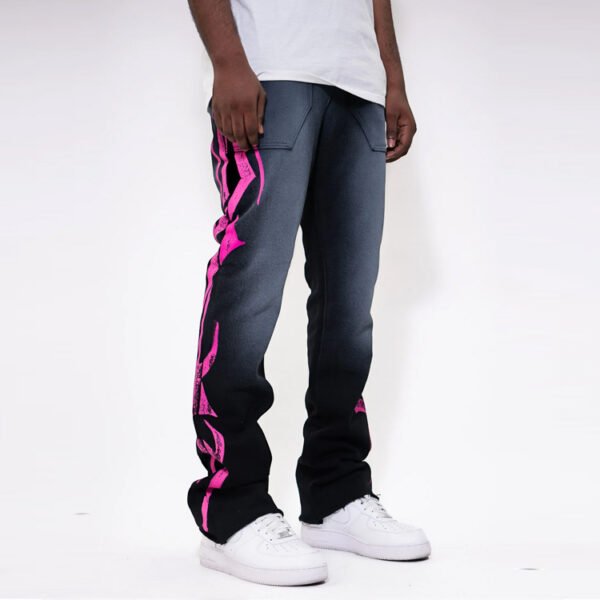
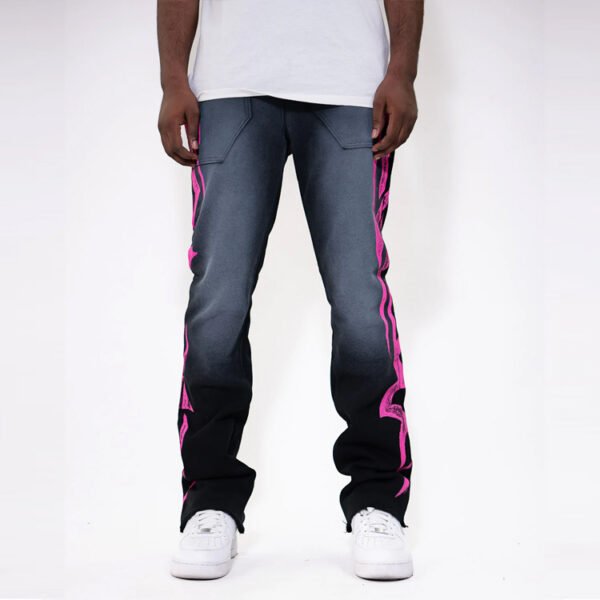
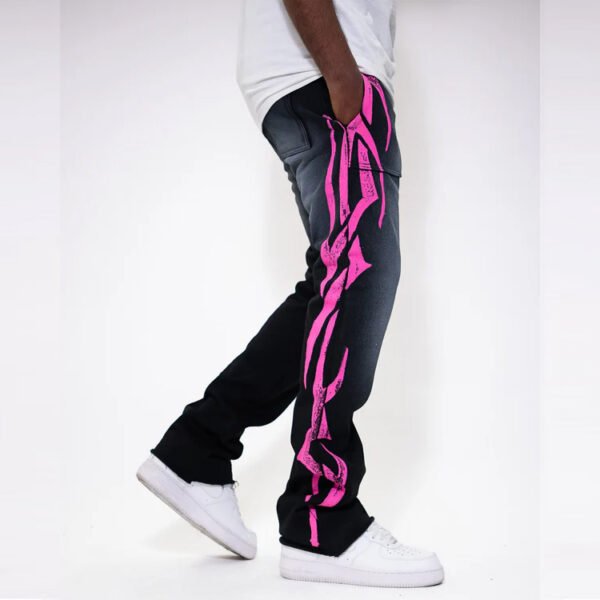


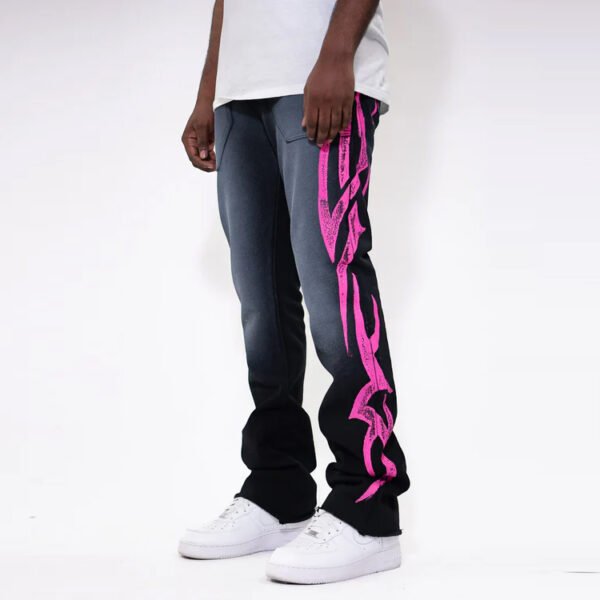


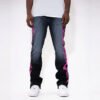
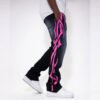
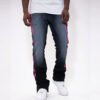

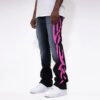
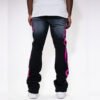
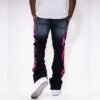
This custom stacked streetwear pant treats pooling as an engineered relationship between shell length, internal ease, and movement. The supplied image shows concentrated ankle stacking and a vivid outer-leg graphic, making lining balance essential to comfort, proportion, and print stability.
Stacking Begins Inside the Garment
The reference image shows folds accumulating near both ankles rather than spreading evenly from hip to hem. That visual result depends on controlled excess length and enough internal ease for the shell to settle naturally without creating pressure at the calf or ankle.
If the lining is shorter than the shell, it can pull upward and flatten the intended stack. If it is too generous, it may twist, balloon, or add unwanted bulk, so the internal layer must be evaluated as part of the silhouette.
Shell-to-Lining Balance Controls Movement
A stacked pant must accommodate sitting, walking, and knee flexion while preserving its lower-leg character. The pattern review should compare shell and lining measurements at the waist, rise, thigh, knee, and hem, identifying where differential ease supports movement.
This balance is especially important when the outer shell appears relatively narrow. Movement resistance can expose lining tension before the wearer notices visual problems, while excess internal volume may disturb the clean side profile and reduce the intended streetwear proportion.
Graphic Placement Makes Fit Visible
The bright pink side graphic follows the outer leg and provides a practical visual diagnostic. When the shell twists or the lining pulls, artwork can rotate, break across folds, or shift away from the side seam, revealing problems that a plain fabric might conceal.
Artwork placement should therefore be checked on a moving wearer or articulated fit form, not only on a flat table. The approval sample should document alignment at standing, walking, seated, and stacked positions before print files are finalized.
Pocket Panels Need Internal Clearance
The upper-thigh pocket panels visible in the image introduce another balance point between shell, lining, and stored contents. Their bags must remain accessible without catching on the lining or pulling the outer leg away from its intended narrow profile.
Pocket placement should be tested with realistic hand entry and light contents. If a bag drags against the lining, the wearer may feel resistance during movement; if it is too shallow, the pocket panel can look decorative rather than functional.
VeeWen Workflow Validates the Architecture
VeeWen's product-development workflow should establish a shell block and internal layer measurements together, then mark stacking zones on the pattern. This creates a measurable starting point for reviewing pooling rather than treating folds as an accidental styling effect.
A sewn sample should be inspected inside out and worn through movement checkpoints, with the side graphic applied in its intended scale. Findings can then guide lining length, hem control, rise ease, and artwork placement before size grading.
Approval Requires Dynamic Fit Evidence
Approve this style only after comparing the garment empty, lightly loaded, and in motion. The key observations are ankle pooling, lining drag, seat comfort, pocket access, and whether the pink graphic remains visually intentional through ordinary movement.
The buyer decision should separate desirable stacking from uncontrolled bunching. If folds become uneven or artwork migrates, adjust internal ease and shell balance before approving the final pattern, print placement, and production specification set.
Buyer Questions
Does the image confirm that the pants are lined?
No. The assigned development axis requires lining evaluation, but the supplied image and wording do not verify lining presence, fiber content, or construction. Those details should remain To Confirm.
How can stacking be kept consistent across sizes?
Grade shell and lining measurements together, then review ankle pooling and graphic alignment on representative sizes. Adjust differential length only after dynamic fitting confirms the intended movement behavior.
Can the side graphic be replaced with custom artwork?
Yes, custom artwork can be developed for the outer-leg placement, subject to approved scale, production method, color references, registration requirements, and sample review on the finished silhouette.
What is the minimum order quantity?
The commercial minimum is MOQ: 100 pieces per style. Final quantities, colorways, artwork requirements, grading, trims, and approved construction details should be confirmed before production planning.
Approve the Stacking Balance
Share your target fit, lining preference, and artwork files for a focused development review. VeeWen can coordinate internal ease, shell length, pocket clearance, and graphic alignment around your private-label brief.


Reviews
There are no reviews yet.