

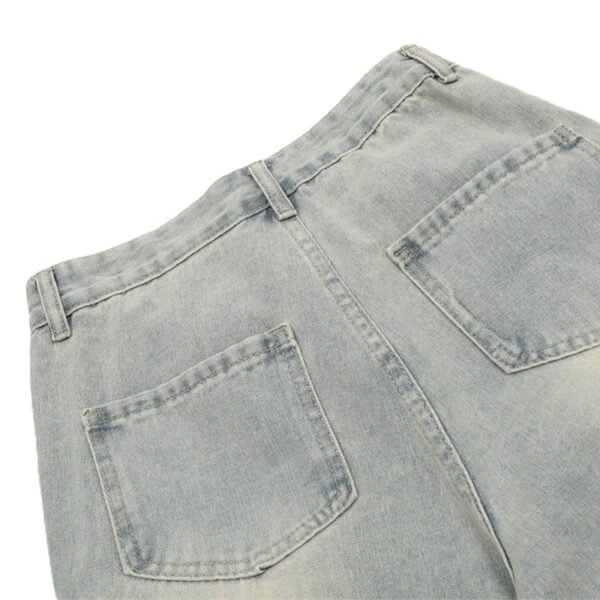
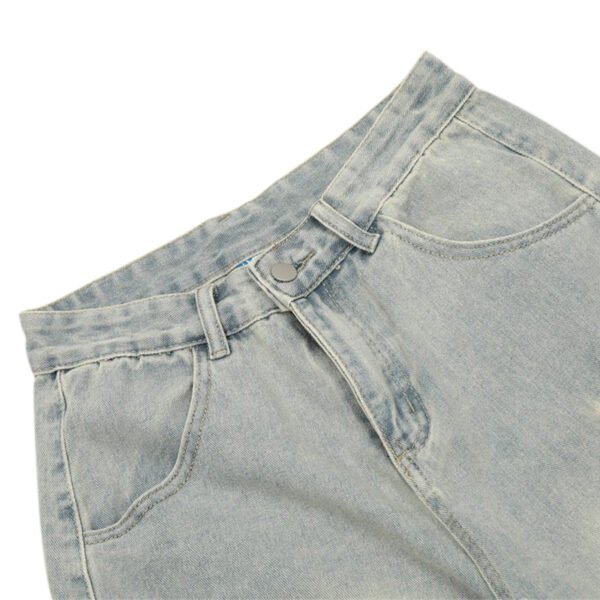


These custom denim shorts are developed around wash shade range and reorder repeatability, using visible abrasion placement, pocket anchors, and preserved seam contrast to define a practical reference system. VeeWen can translate approved shade targets into development checkpoints for consistent repeat orders at MOQ: 100 pieces per style.
Wash Shade Mapping
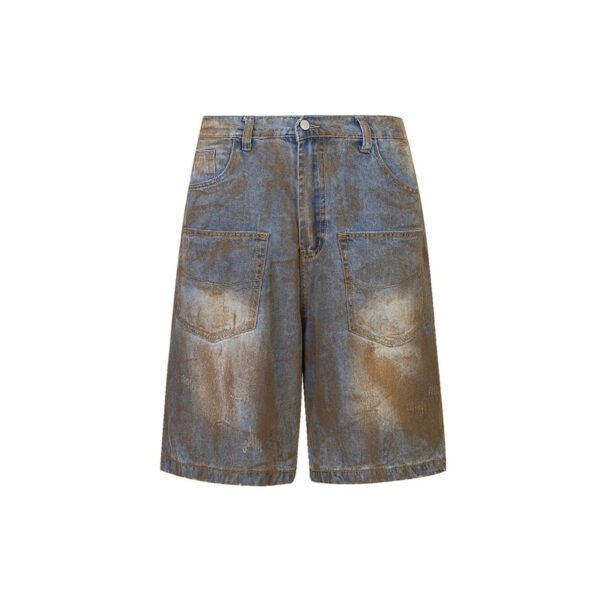
The supplied main image presents a medium blue-brown ground interrupted by lighter abrasion on the upper thighs, lower legs, and pocket areas. That distribution matters because buyers can map shade zones rather than approving color from a single overall swatch.
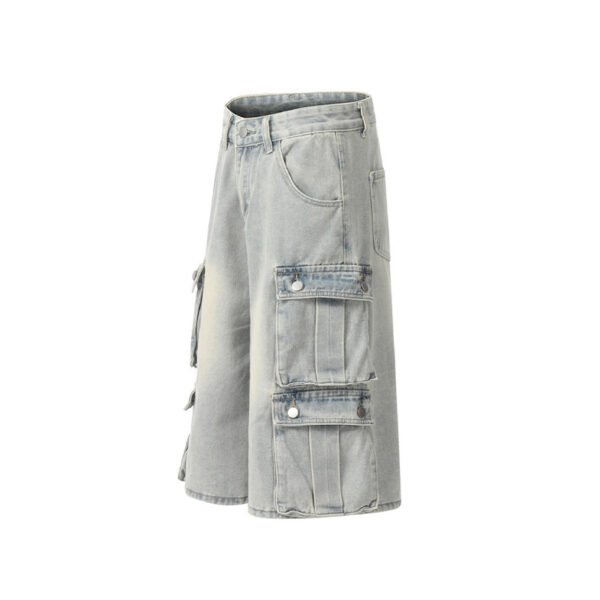
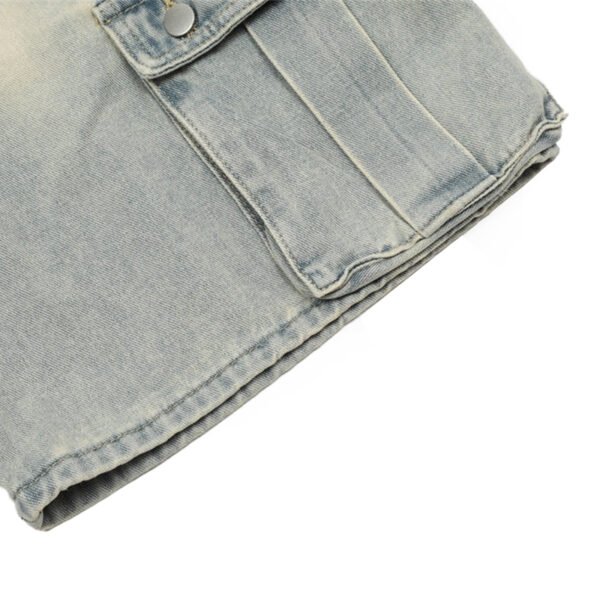
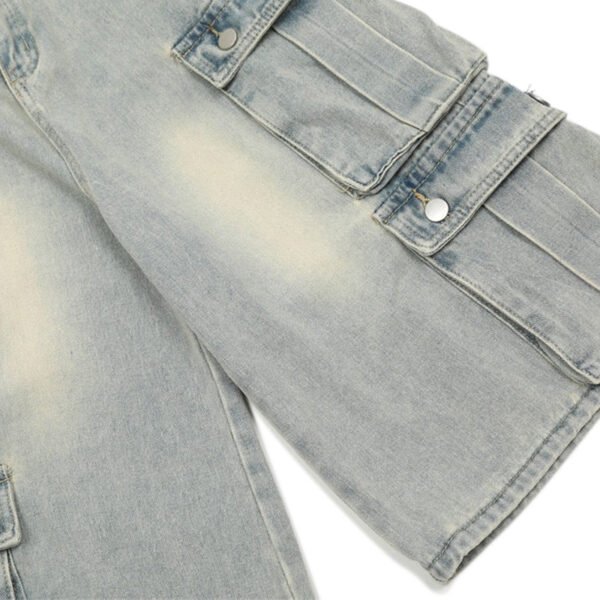
A development shade card should record base tone, contrast level, abrasion position, pocket lightening, and seam retention. The image evidence also references light-blue and washed alternatives, supporting a controlled range instead of an undefined vintage effect.
Repeatability Mechanism
Repeat production depends on converting a visual wash into measurable checkpoints: fabric lot, garment loading, wash recipe reference, abrasion locations, and acceptable tonal deviation. Each checkpoint gives the production team a reasoned basis for comparing a reorder against the approved sample.
Because the shorts contain large uninterrupted leg panels, small wash shifts can become highly visible. VeeWen's development workflow should therefore preserve a retained approval sample and shade photographs, then review pre-production output against those references before confirming bulk finishing.
Pocket and Seam Anchors
The two large front patch pockets provide stable landmarks within the changing wash surface. Their outlines, topstitching, and placement remain readable against lighter denim, helping a buyer judge whether the wash has enhanced the design rather than obscured its construction.
The waistband, belt loops, fly, side seams, and hems appear darker than surrounding panels in the supplied image. These retained lines create continuity across shade variations, so approval should include seam contrast as a separate criterion alongside overall color.
Trade-Offs in Aging
A stronger abrasion pattern can create more visual character, but it also increases shade variability and may make reorder matching more demanding. A softer wash usually improves consistency, yet it can reduce the contrast that gives these shorts their distinctive worn appearance.
The buyer should choose where variation is intentional and where it is unacceptable. For example, broad thigh lightening may define the collection, while pocket edges, fly alignment, and hem tone should remain within tighter visual limits for dependable product recognition.
VeeWen Development Workflow
VeeWen can begin by converting the supplied image evidence into a wash brief that names the base shade, lightened zones, pocket treatment, and seam contrast. The next approval checkpoint is a garment sample evaluated under consistent lighting against the brief.
After fit and construction approval, the wash reference should travel with the production specification, retained sample, and shade tolerance notes. This links creative direction to reorder control without treating each new batch as an unrelated interpretation of the original garment.
Buyer Approval Checkpoint
Before bulk approval, request confirmation of the fabric composition, stretch behavior if required, final measurements, pocket dimensions, and wash tolerance. These details are not fully established by the supplied image and should be locked through the technical package.
The decisive question is whether the collection needs one exact shade or several related shades. Approve one numbered target for repeat orders, or approve a defined shade range with boundaries, sample references, and separate identifiers for each variation.
Buyer Questions
Can these shorts be developed in several wash shades?
Yes, buyers can request a controlled shade family, provided each shade receives its own reference sample, identifier, tolerance, and reorder approval checkpoint.
What should the wash approval package include?
Include the base tone, abrasion map, pocket treatment, seam contrast, hem appearance, lighting conditions, retained sample, and acceptable deviation for production review.
Are stretch and fiber percentages confirmed?
No. The supplied evidence identifies denim visually, but fiber composition and stretch content require confirmation through the selected fabric specification and approved development sample.
What is the minimum order quantity?
The commercial minimum is MOQ: 100 pieces per style. Final shade quantities, size breakdown, and any multi-shade arrangement should be confirmed during order planning.
Approve Your Denim Wash Direction
Send your target shade references, preferred pocket layout, measurement requirements, and reorder expectations. VeeWen can organize the wash brief and sampling checkpoints for MOQ: 100 pieces per style.


Reviews
There are no reviews yet.