
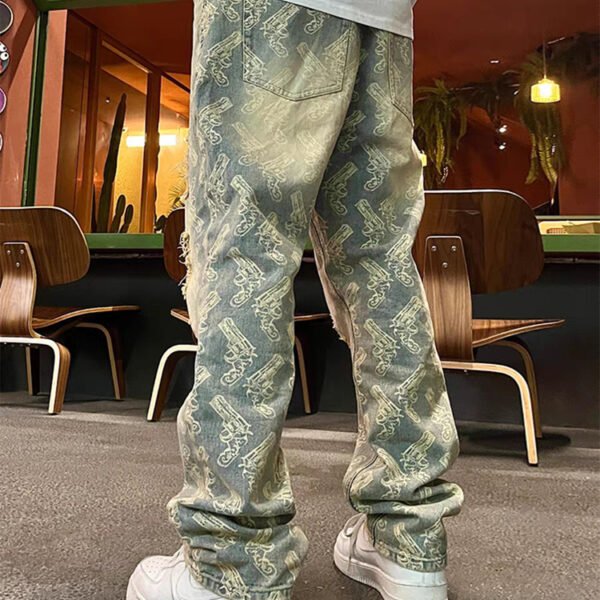
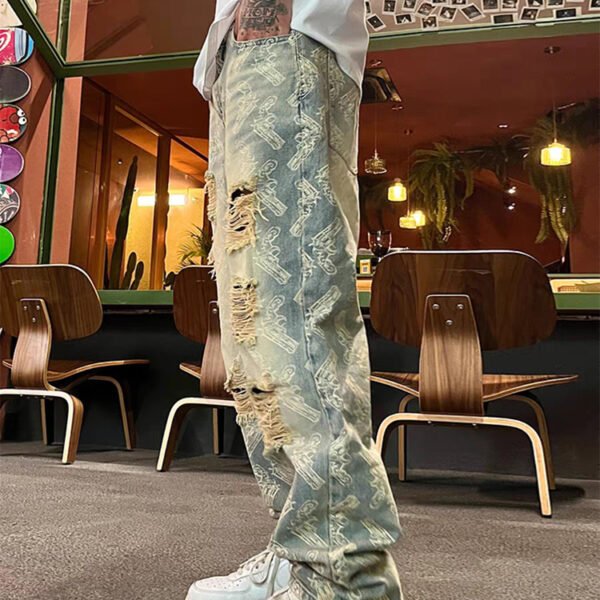


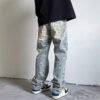
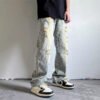
This custom denim jean development centers on pocket-bag depth and opening geometry as visible design controls. The supplied image shows a straight leg, repeated pale artwork, diagonal access lines, and frayed hems, so pocket engineering directly affects comfort, print continuity, and the final silhouette.
Geometry Before Artwork Placement
The pocket opening is not an isolated trim detail. Its angle establishes how the hand enters the garment, how the front panel bends during movement, and where a repeated graphic must be interrupted or aligned. The image suggests a shallow diagonal opening on a relaxed denim block.
Pocket-bag depth should therefore be mapped against the waist, hip, and upper-thigh measurements before finalizing artwork repeats. A bag that is too shallow can reduce practical access, while excessive depth may add bulk or pull the printed front panel away from the body during wear.
Printed Front Panel Continuity
The supplied image shows pale motifs distributed across the blue denim surface, including areas close to pocket boundaries. During development, the artwork map should identify the pocket mouth, bag facing, and side seam as separate placement zones rather than treating the front as one uninterrupted canvas.
This approach creates a measurable trade-off. Maximum graphic continuity may require controlled placement offsets around openings, while unrestricted motif scale can make the pocket entry visually crowded. Buyer approval should confirm whether functional geometry or uninterrupted surface impact receives priority.
Straight-Leg Drape and Bag Volume
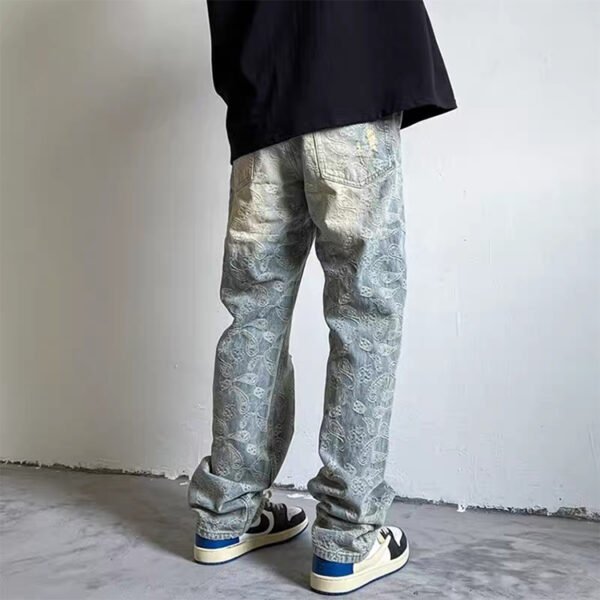
The legs appear straight from the upper thigh downward, with fabric gathering above the shoes. That stacked break depends on balanced panel width and pocket-bag volume; a projecting bag can disturb the front fall, whereas an undersized bag may pull against the hip when the wearer sits.
Development should compare the approved pocket pattern with the intended finished measurements through a physical sample. The key checkpoint is not simply whether the pocket fits a hand, but whether access remains usable while the straight leg retains the loose, gathered break shown.
Frayed Hem Interaction
Frayed hems introduce variable edge length, making the final leg break less predictable than a clean finished hem. On this style, the visible pooling above sneakers is part of the visual evidence, so pocket balance must support the leg length without encouraging excessive twisting or uneven front.
The buyer should decide whether fraying is created before or after garment washing and surface finishing. Earlier abrasion can alter dimensions and reveal construction limits, while later treatment may preserve measurement control but produce a cleaner, less irregular edge character.
VeeWen Development Workflow
VeeWen's workflow should begin by converting the image evidence into a pocket specification: opening angle, mouth length, bag depth, bag width, and placement from the waist and side seam. Those measurements can then be reviewed beside the artwork map and straight-leg block.
At sample review, VeeWen can isolate the pocket geometry in fitting comments instead of changing the entire jean indiscriminately. The buyer should approve hand entry, sitting comfort, front-panel smoothness, artwork interruption, and stacked hem behavior before the style moves toward production documentation.
Approval Checkpoint and Trade-Offs
The central trade-off is functional access versus a cleaner printed front. A wider or deeper bag can improve usability but may introduce bulk, while a tighter opening can protect the graphic composition but feel restrictive. Neither choice is correct without the buyer's target wearer and styling intent.
Approve the style against a defined wear scenario, including standing, sitting, and hand insertion with footwear. Confirm the intended pocket geometry, print registration tolerance, finished leg length, and fray allowance together, because each decision influences the visible proportion captured in the supplied image.
Buyer Questions
What should be measured first for this jean?
Measure pocket opening angle, mouth length, bag depth, and placement from the waist and side seam before refining artwork registration.
Will a deeper pocket change the silhouette?
It can. Additional bag volume may create front-panel bulk or pulling, so evaluate hand access, sitting comfort, and straight-leg drape together.
How should the frayed hem be approved?
Approve finished leg length, fray allowance, and post-treatment appearance together, because abrasion and washing can change edge length and stacking behavior.
What remains unverified from the image?
Fiber blend, denim weight, stretch percentage, wash process, exact measurements, artwork method, and production testing remain To Confirm during development.
Approve the Pocket Geometry Brief
Send VeeWen your target measurements, artwork file, wear scenario, and preferred hem character so the pocket pattern and straight-leg sample can be reviewed as one system.


Reviews
There are no reviews yet.