


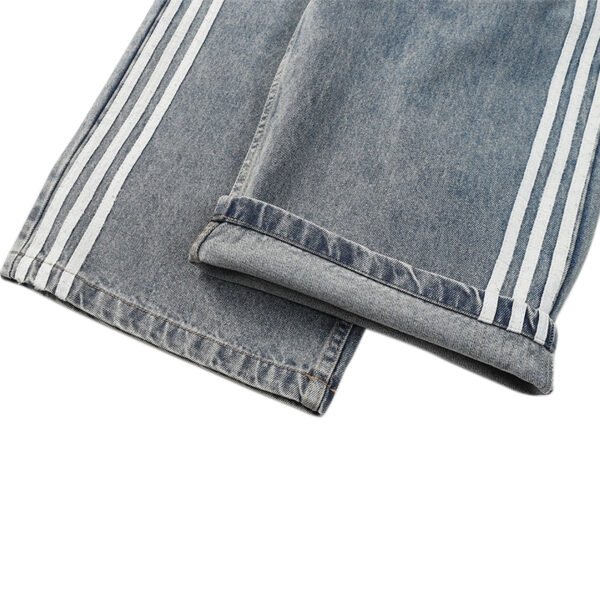

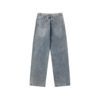


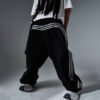

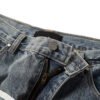
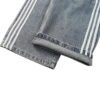
This custom loose straight-leg jean is built around waistband stability. The clean back view exposes pocket symmetry, elastic path, and back-rise behavior, giving buyers a practical development framework for preserving comfort while keeping the broad leg line visually straight during wear.
Why Waistband Torque Matters
Loose straight-leg jeans depend on a stable upper block because the generous leg volume cannot correct a twisting waistband. When elastic is inserted unevenly, one side can pull forward, rotate the back rise, and make otherwise straight legs appear skewed.
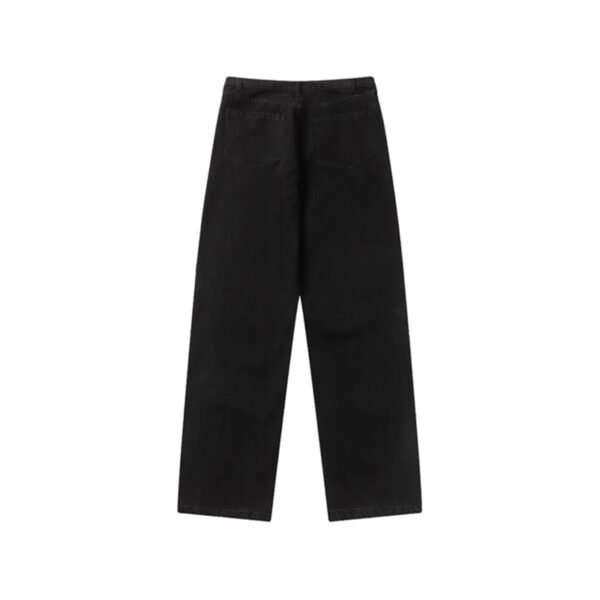
The supplied image is useful precisely because it shows the rear view clearly. The waistband reads level, the pockets appear balanced, and both legs descend with similar width, establishing the visual outcome the development process should protect.
Elastic Insertion Mechanics
Elastic insertion changes how tension travels around the waist. A continuous elastic path can distribute recovery more evenly, while segmented or poorly anchored insertion may concentrate force at seams and create localized torque during sitting, walking, or repeated dressing.
The channel width, elastic length, seam anchoring, and join position should therefore be treated as one system. The correct solution is not simply tighter elastic; it is controlled tension that supports comfort without rotating the waistband or distorting the back rise.
Back-Rise and Pocket Alignment
Back-rise shape determines how the waistband transitions over the seat, while pocket placement makes rotation easy to see. In the supplied black jean image, the two rear pockets sit at comparable heights and angles, so misalignment would immediately weaken the clean technical appearance.
During fitting, the team should inspect pocket symmetry with the garment relaxed, worn, and seated. If the elastic pulls one side upward, pocket imbalance may indicate torque rather than a pocket-pattern problem, preventing the wrong correction from entering the next sample.
Straight-Leg Fall Under Movement
A loose straight leg should fall broadly from the hip without narrowing into a jogger profile. Waistband torque can interrupt that line by turning the side seams and shifting the leg opening, even when the flat pattern appears acceptably symmetrical.
Movement review should include walking, bending, and sitting because each action changes waist tension. The buyer should observe whether the legs return to a consistent vertical fall afterward, especially when the denim includes any unconfirmed stretch or wash-related softness.
Wash and Surface Trade-Offs
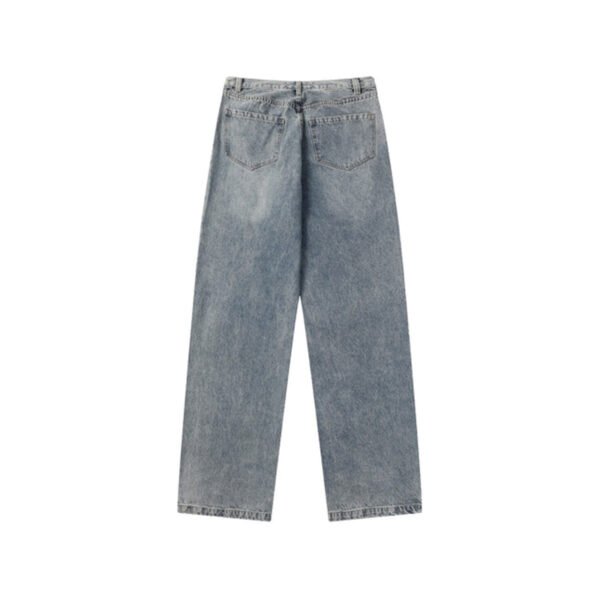
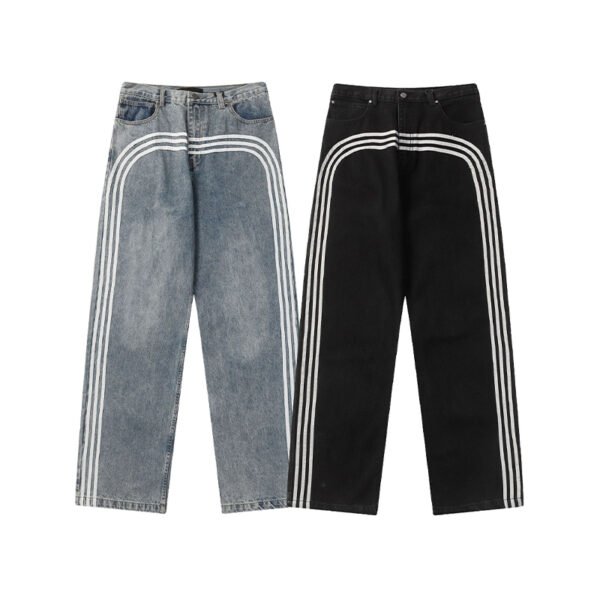
The supplied image shows restrained black denim with minimal visual distraction, while the source wording references a light-blue washed direction. A darker clean finish highlights construction accuracy; a more varied wash can soften edges but may make torque and pocket imbalance harder to diagnose.
Wash processes can also change hand feel, shrinkage, and dimensional stability, although the exact effects are To Confirm. Buyers should approve waistband behavior on the finished wash standard, not rely solely on an unwashed development sample.
VeeWen Workflow Checkpoint
VeeWen's product-development workflow should document the elastic route, join location, channel dimensions, anchor points, back-rise measurements, and pocket coordinates in one technical review. This connects the waistband mechanism directly to the clean rear appearance shown in the supplied evidence.
Before production approval, buyers should review a finished-color sample through relaxed, walking, seated, and post-wear checks. Sign off the waistband torque result, straight-leg fall, pocket alignment, and size grading, while carrying MOQ: 100 pieces per style into the order brief.
Buyer Questions
Does the image confirm an elastic waistband?
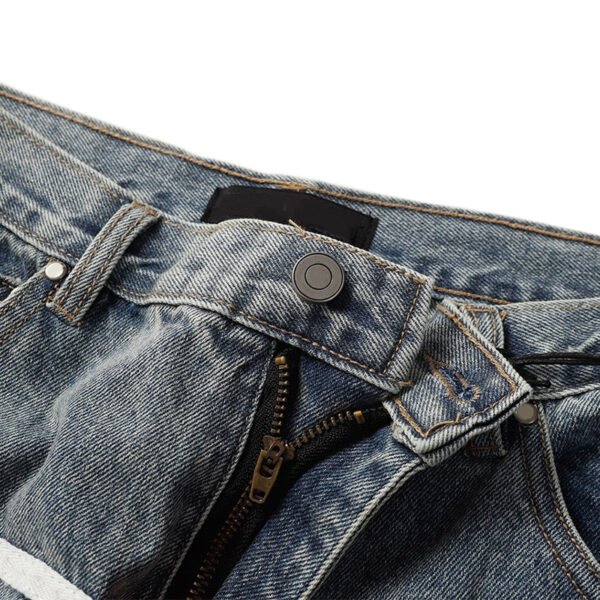
No. The image shows the waistband appearance, while elastic insertion, channel construction, and recovery must be confirmed through the technical specification and sample.
Can the jeans use a light-blue wash?
The source wording references light-blue washed jeans, but the supplied image shows black; the final wash, recipe, and approval standard remain to be confirmed.
How should waistband torque be checked?
Check the garment relaxed, walking, bending, seated, and after movement, then compare back-rise rotation, pocket symmetry, and straight-leg recovery.
What is the commercial minimum?
The commercial minimum is MOQ: 100 pieces per style, with wash, size assortment, waistband details, and final construction confirmed in the order brief.
Approve Waistband Stability
Share your waist measurement chart, preferred elastic behavior, and wash direction with VeeWen, then approve the finished-color movement sample before confirming production at MOQ: 100 pieces per style.



Reviews
There are no reviews yet.