
Built around controlled raw-edge containment, these custom denim shorts balance a worn blue-brown surface with disciplined perimeter stitching, shaped back pockets, and a stable silhouette. The development priority is preserving authentic variation while ensuring hems, pocket corners, and seam transitions remain commercially dependable.
Contain the Edge Without Losing the Character
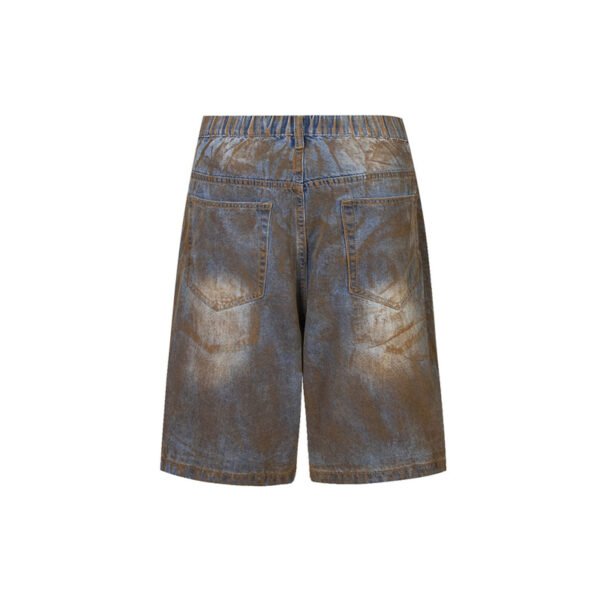
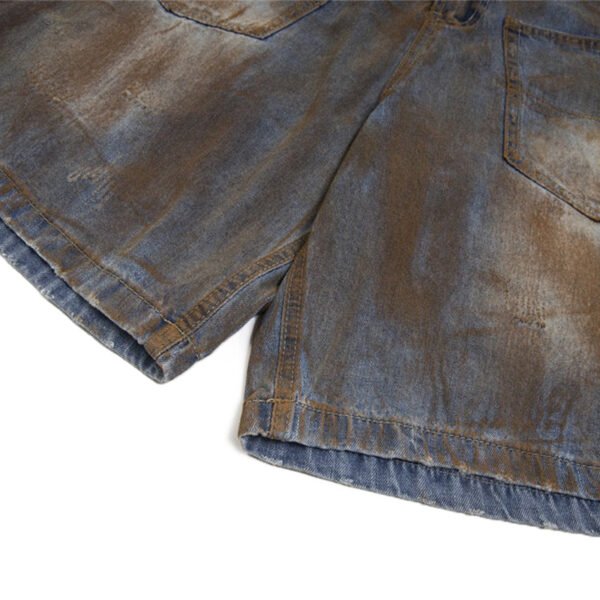
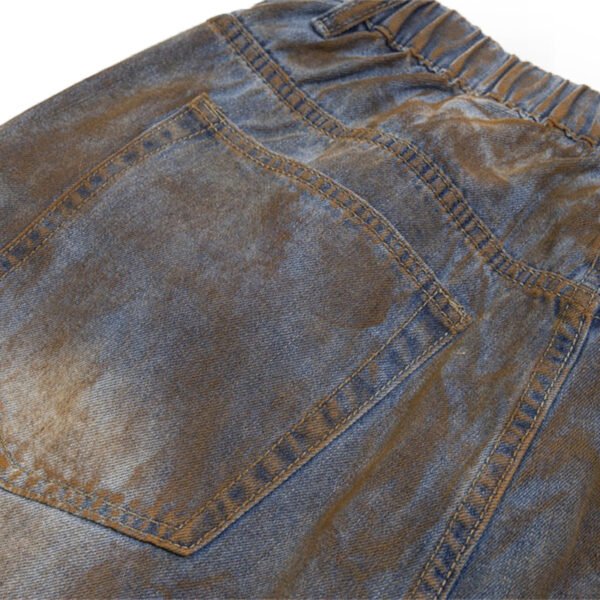
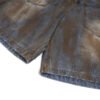
The supplied rear view shows leg openings finished with visible perimeter stitching, giving the hem a defined boundary instead of relying on an exposed cut edge. That boundary limits fraying during wear while still allowing the surrounding wash contrast to communicate a deliberately aged denim character.
For development, the hem decision should cover turnback depth, stitch placement, thread contrast, and wash exposure. A deeper turnback can improve containment but may feel heavier; a lighter treatment preserves flexibility. VeeWen should lock these variables against the approved measurement chart before bulk cutting begins.
Use Pocket Geometry as a Durability Map
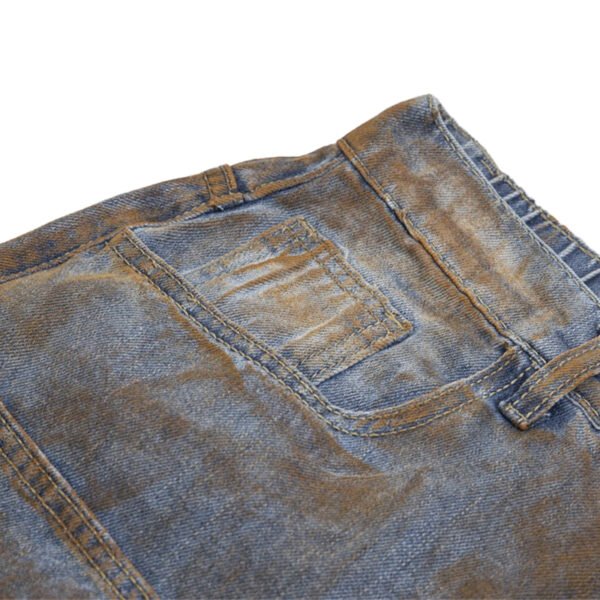
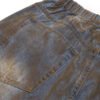
The two rear pockets are shaped with pointed lower corners and layered seam lines, creating an obvious construction map for reinforcement. These corners can catch during sitting, carrying, or repeated stretching, so stitch density and bartack placement deserve specific approval rather than generic durability language.
The pocket outline also affects the visual balance of the short. Reinforcement should follow the pocket shape without creating bulky ridges beneath the fabric. During sampling, review corner turns, opening stability, and pocket alignment together, because a technically strong pocket can still look inconsistent when placed unevenly.
Treat Wash Variation as a Boundary Problem
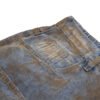
The surface shifts between blue, brown, and lighter rubbed areas across the rear panels, while seams remain visually legible. That contrast suggests the wash process must be mapped around construction boundaries so abrasion adds depth without weakening hems, pocket edges, or the center-back seam.
A repeatable wash map should identify approved high-fade zones, protected seam areas, and acceptable pair-to-pair variation. The buyer should decide whether the program favors close visual matching or a wider artisan range. That choice changes inspection tolerance and should be recorded before color approvals are issued.
Build the Waistband Around Stability
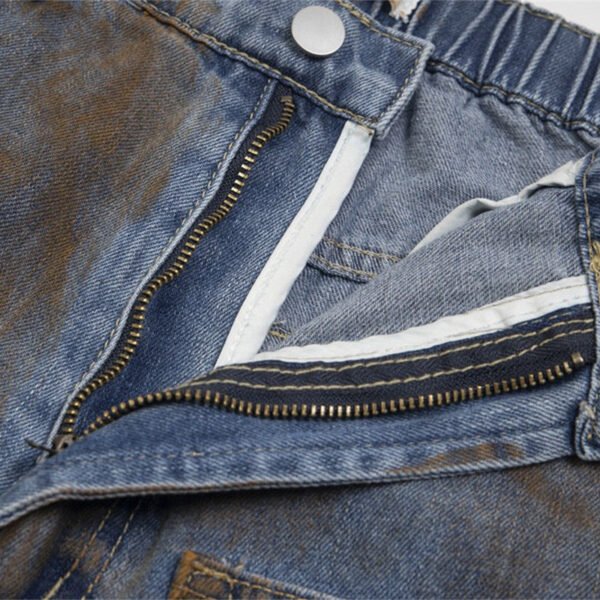
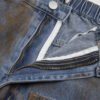
The waistband forms a gathered-looking upper edge with a centered rear seam and a clean top boundary. Because the image does not verify the internal structure, the development question is whether the intended block uses elastic, a concealed adjustment, or another support method for fit stability.
VeeWen's workflow should translate the visual waistband into measurable requirements: finished circumference, recovery expectation, seam allowance, and top-edge appearance. Any comfort feature must be checked against the wash process, since heat, abrasion, or repeated finishing can alter the hand and dimensional behavior.
Protect Movement at the Long Short Silhouette
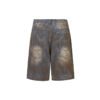
The straight leg extends well below the seat, giving this style a relaxed proportion rather than a compact athletic outline. That extra length creates useful space for movement, but it also makes hem level, leg opening width, and side-seam balance more noticeable across sizes.
The approval sample should be evaluated while standing, sitting, and walking, with attention to twisting at the side seam and pulling across the seat. Grade rules must preserve the intended visual line, because increasing width without controlling proportion can make the garment appear boxy or uneven.
Convert the Argument Into VeeWen Development Gates
VeeWen should develop this style through linked checkpoints: first approve the block and hem architecture, then review pocket reinforcement, then validate the wash map on a constructed sample. This sequence keeps raw-edge containment connected to actual garment behavior instead of treating finishing as a late decoration.
At the pre-production gate, the buyer should sign off on measurements, seam details, pocket placement, wash tolerance, and care-label wording. The commercial decision is readiness for MOQ: 100 pieces per style, subject to final material, testing, and production specifications being confirmed.
Buyer Questions
Can the denim composition and stretch level be selected for this style?
Yes, VeeWen can develop the requested denim direction, but composition, stretch percentage, recovery, weight, and handfeel must be selected and verified during material approval.
How should the vintage color variation be approved?
Approve a physical wash sample with mapped fade zones, protected seams, and tolerance limits, then inspect multiple pieces under consistent lighting before confirming bulk standards.
Can the back pockets be modified for a private-label collection?
Yes, pocket dimensions, corner shape, stitch design, placement, and reinforcement can be developed within the approved block and checked for alignment before production release.
What is the minimum order for this denim short?
The exact commercial minimum is MOQ: 100 pieces per style. Final quantities, size breakdown, materials, and construction details remain subject to confirmed development documentation.
Approve the Edge-Control Sample
Send your target measurements, denim references, wash direction, and pocket artwork to VeeWen. We will align the edge, reinforcement, and color-map checkpoints before MOQ: 100 pieces per style is confirmed.


Reviews
There are no reviews yet.