
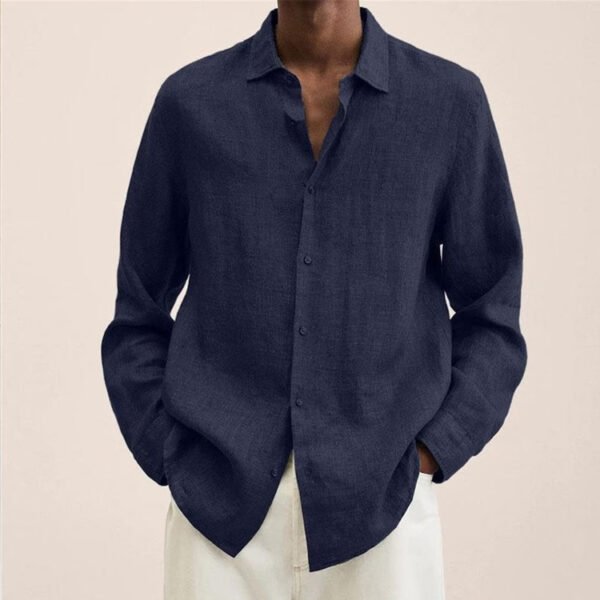
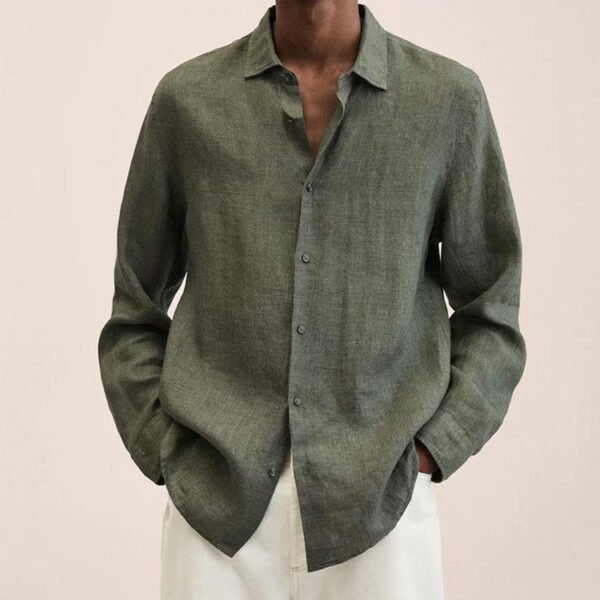
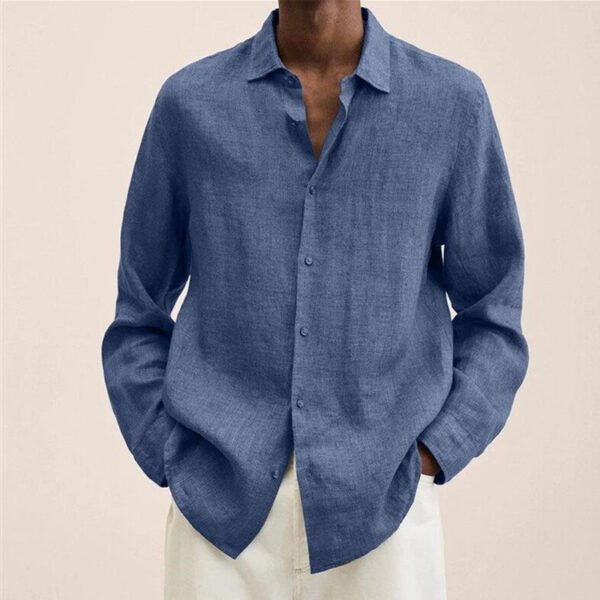
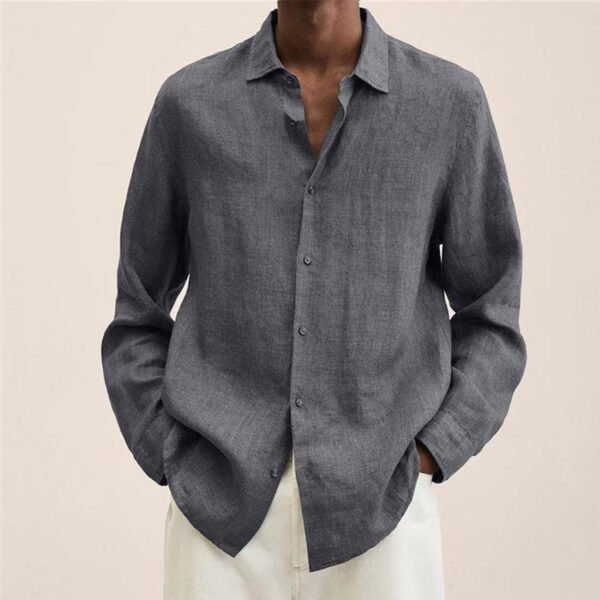
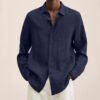
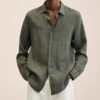
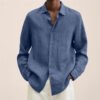
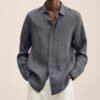
This shirt jacket is built around controlled ease: a relaxed body, open collar, and centered placket create movement without losing structure. The supplied navy sample supports a collar-first block, while the assigned hood-volume axis becomes a deliberate optional development decision rather than an assumed feature.
Neckline Pull Sets the Drape
The image shows a shirt collar opening naturally at the upper chest, with the first visible button positioned below the neck. That spacing creates a controlled pull line: too tight would sharpen the chest, while too loose would weaken the jacket's clean vertical fall.
For development, VeeWen should establish the collar stand, front edge, and first-button position together. The approval sample should be reviewed on a live fit model, because neckline tension changes with posture, layering, and the selected fabric's recovery.
Hood Volume Requires Restraint
The supplied main image does not show a hood, so hood volume cannot be treated as a verified feature. If the range requires a hooded variation, the hood should be tested as a low-profile extension that does not lift the collar or distort the front opening.
A larger hood would add visual volume and potentially create a stronger streetwear direction, but it could pull the back neckline upward and compete with the shirt collar. The buyer should choose between collar clarity and hood presence before final pattern approval.
Relaxed Proportions Need Balance
The broad torso, dropped-looking shoulder line, and generous sleeve shape make the garment read relaxed rather than tailored. That ease is useful for layering, but excess width could make the hem collapse or cause the placket to swing away from the body.
VeeWen's development checkpoint should compare body width, sleeve pitch, and side-seam position in the same fitting session. The objective is an easy silhouette that still keeps the front placket visually centered when the wearer moves or places hands in pockets.
Surface Texture Supports Casual Layering
The navy fabric in the image has a softly irregular, matte texture that supports the shirt-jacket category without relying on shine or heavy visual branding. This surface character can make the piece feel tactile, but its final appearance depends on the confirmed construction and finishing route.
Fabric approval should therefore cover hand feel, opacity, crease behavior, and color consistency under studio and daylight conditions. The image supports a linen-reference direction only; composition, GSM, shrinkage, and wash response remain open technical questions.
Button Placket Protects the Center Line
The visible button row gives the garment a stable center line and lets the wearer adjust exposure at the neckline. Because the collar opening is part of the design argument, button spacing and buttonhole placement should be treated as fit controls rather than decorative afterthoughts.
During sample review, the buyer should inspect whether the placket remains flat when closed and whether the open collar folds symmetrically. Any puckering or twisting can change the perceived neckline pull and undermine the relaxed but considered appearance.
Workflow Turns the Axis Into Approval
VeeWen's product-development workflow should begin with a collar-led measurement sheet, then add a separate hood-volume option only if the buyer wants that direction. This keeps the visible shirt-jacket evidence intact while making the optional construction decision measurable.
At the pre-production checkpoint, approve the collar stand, first-button position, hood proportion if applicable, fabric reference, and placket behavior together. The buyer's sign-off should identify one base block, one material direction, and one final neckline treatment for production.
Buyer Questions
Is the fabric confirmed as linen?
No. The source wording references linen jackets, while the supplied image shows texture only. Fiber composition, blend percentage, GSM, and performance remain To Confirm during fabric development.
Does the base sample include a hood?
No hood is visible in the supplied main image. Hood volume should be treated as an optional variation and approved only after checking collar balance and back-neck pull.
Can the neckline be made more open?
Yes, the collar stand, front edge, first-button position, and opening depth can be developed together. The buyer should approve the revised neckline on a fitted sample before grading.
What is the minimum order?
The commercial minimum is MOQ: 100 pieces per style. Final fabric, trims, colorways, labeling, and construction details should be confirmed before production approval.
Approve the Collar-Led Block
Send your target measurements, material direction, label requirements, and hood preference to VeeWen. We can organize the neckline and proportion checkpoints needed to move this shirt jacket toward an approved production sample.


Reviews
There are no reviews yet.