
Down Jacket Buying Guide for Production-Ready Collections
Use this down jacket buying guide to define warmth, weight, fill and construction—then develop approved custom outerwear with VeeWen.
Down Jacket Buying Guide: Wearability Specs That Matter
VeeWen helps fashion buyers translate performance priorities into buildable specifications for commercially consistent outerwear collections.
Fill Power and Weight
Select fill power, fill weight and baffle construction together; they determine insulation, silhouette, target climate and unit cost.
Warmth Meets Packability
Balance warmth with packability by matching down volume and jacket weight to travel, retail positioning, shipping expectations and intended use.
Shell Protection Choices
Specify nylon or polyester shells with appropriate DWR, density and coatings to balance wind resistance, abrasion performance, breathability and hand feel.
Layer-Ready Fit Blocks
Choose a fit block with room for layering; shoulder shape, body length and sleeve volume define streetwear proportion and customer comfort.
Production Specs That Hold
Use this down jacket buying guide to align fill, fabric, trims and fit before sampling, protecting consistency from sample approval through bulk production.
More Down Jacket Buying Guide Options and Guides
Compare adjacent product categories, manufacturing options and practical buyer resources from the VeeWen architecture.

Product Selection Guides
Custom clothing product selection guide for B2B brands: choose fabrics, fits and finishes from a 100-piece-per-style MOQ. Request a custom quote.
Read the Guide
Ski Jacket Buying Guide
This ski jacket buying guide helps brands specify waterproof fabrics, insulation and trims for OEM runs from 100 pieces per style. Request a custom quote.
Read the Guide
Dress Shirt Buying Guide
Dress shirt buying guide for B2B labels: use our 100-piece MOQ checklist to specify fit, fabric and trims before production. Request a custom quote.
Read the Guide
Motorcycle Jacket Buying Guide
Motorcycle jacket buying guide for brands: turn concepts into OEM-ready specs from 100 pieces per style. Compare materials, trims and sampling. Request a quote.
Read the Guide
Winter Jacket Buying Guide
Winter jacket buying guide for OEM buyers: plan insulation, shells and fit from a 100-piece-per-style MOQ. Request a custom production quote today.
Read the Guide
What to Look for in Mens Leather Jacket Buying Guide
What to look for in men’s leather jacket buying guide: assess hide, fit, trims, and production specs before sourcing. Get a 100-piece OEM quote.
Read the Guide
Leather Jacket Buying Guide
Leather jacket buying guide for brands: plan an OEM-ready spec from 100 pieces per style, with sampling, trims, and production checkpoints. Request a quote.
Read the Guide
Custom Clothing Manufacturing
Custom clothing manufacturing from 100 pieces per style, with OEM, ODM, sampling and private-label finishing. Send your tech pack to request a quote.
Explore CategoryDown Jacket Buying Guide: Buildable Outerwear Specifications
Fill Power and Weight
Fill power signals loft efficiency, while fill weight determines how much insulation sits in each panel. VeeWen helps translate your intended climate, silhouette and target cost into a fill specification that delivers credible warmth without making the jacket unnecessarily bulky.
- Choose higher-loft fill for lighter warmth
- Set fill weight by garment zone and climate
- Balance insulation volume with intended streetwear profile
- Confirm fill type and distribution before sampling
Shell Fabric Sets Direction
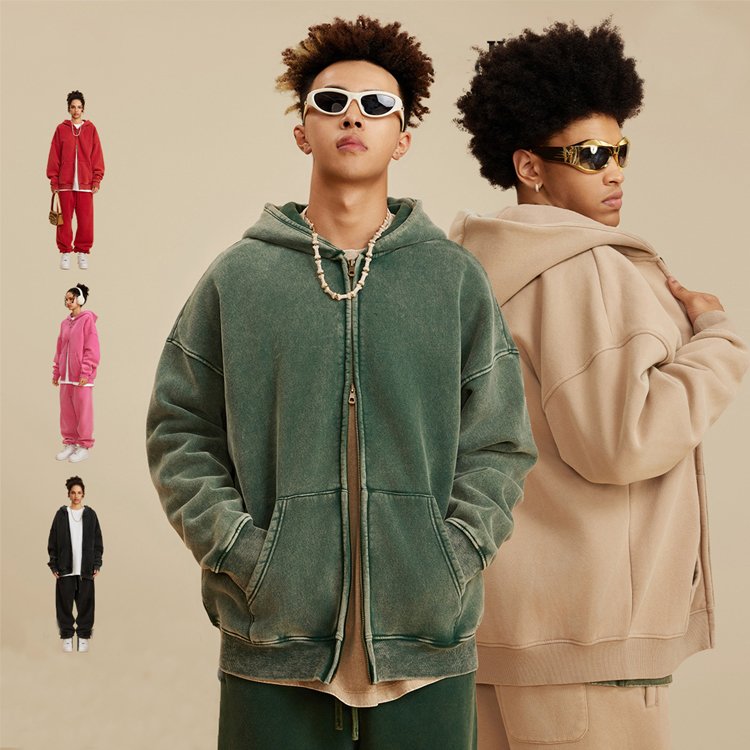
The shell controls first impression as much as weather performance. Matte nylon, crisp polyester, coated fabrics and textured woven shells each change drape, noise, sheen and abrasion behavior. Fabric weight and finish should support the chosen fill volume rather than fight it.
- Select shell weight for structure and drape
- Match water resistance to the product brief
- Review sheen, texture and hand feel in person
- Allow for quilting, coating and shrinkage effects

Construction Controls Loft
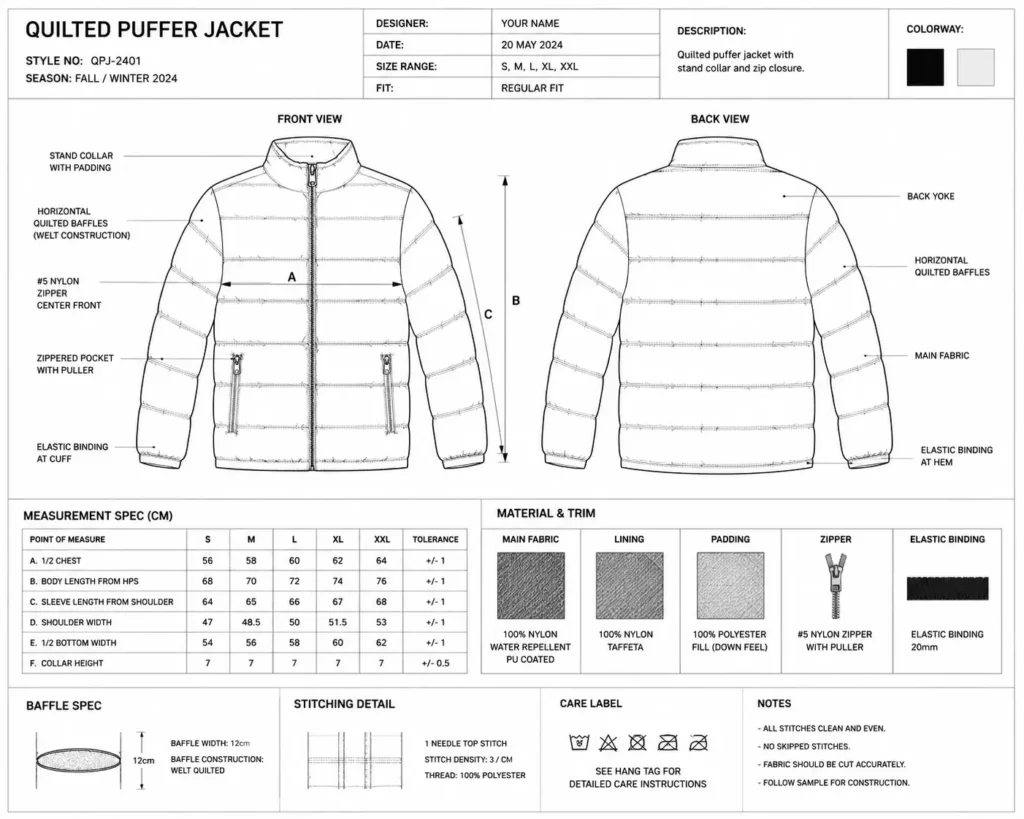
Baffle layout, stitch spacing and panel engineering determine where insulation can move and how the garment reads on body. Oversized channels create a bolder puffer identity; tighter quilting offers a cleaner, more controlled profile. Approved samples make those visual trade-offs measurable.
- Choose channel scale for desired visual volume
- Use baffles to reduce fill migration
- Plan seam placement around fit and movement
- Review loft recovery after sample handling
Finishes Complete the Product
Zippers, rib trims, lining, labels and decoration turn a functional jacket into a branded collection piece. VeeWen coordinates private-label details, embroidery, patches and packaging within one development workflow, so each trim choice is checked against bulk lead time, drape and durability.
- Specify zipper quality, pullers and storm protection
- Test embroidery or patches on filled panels
- Match lining and rib recovery to the silhouette
- Approve labels, hangtags and packing before bulk
Down Jacket Buying Guide: From Concept to Approved Bulk
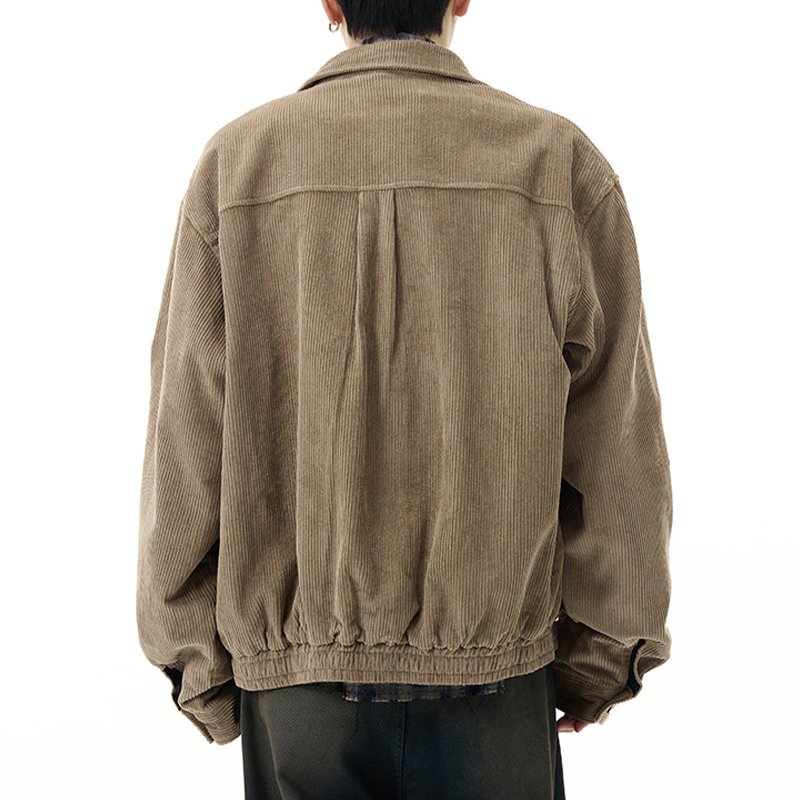
Move from a tech pack, sketch or reference garment to a production-ready down jacket with clear specifications, approved samples and controlled manufacturing.
Share Your Product Direction
Send a tech pack, sketch, reference sample or inspiration images. We clarify fit, shell silhouette, intended warmth, target price and private-label requirements.
Select Materials and Details
Choose shell, lining, insulation, hardware and trims around weight, structure and end use. We explain trade-offs before pattern development and decoration testing begin.
Review Your Development Sample
Assess fit, construction, fill distribution, measurements and branding on a sample. Confirm revisions and pre-production details before locking specifications for bulk manufacturing.
Approve Controlled Bulk Production
After approval, VeeWen produces from documented specifications, performs in-line and final quality checks, then coordinates labeling, packing and shipment for your collection.
Down jacket buying guide for fashion buyers
Use a practical framework to compare insulation, construction, fit, and shell performance, evaluate China-based manufacturing partners, and avoid costly specification, sampling, compliance, and production mistakes before launching a branded down jacket.
1. What Is a Down Jacket Buying Guide?
1 down jacket buying guide organizes the decisions behind a jacket that performs for a defined climate, customer, and retail position. It connects insulation performance and garment weight with silhouette, shell weather protection, target price, and the supplier’s ability to repeat approved specifications.
100-piece development programs differ from buying finished retail stock. A private-label or OEM buyer sets the fit block, fill type and quantity, fabric, trims, branding, sample approvals, and packing; a retail buyer selects a completed jacket with those choices already fixed.
700-fill-power down can deliver high loft at lower weight, but the right choice still depends on intended temperature, activity level, and price ceiling. A production-minded guide turns those trade-offs into a measurable brief before sampling begins.
2. Evolution of Down Jacket Design
1936 saw Eddie Bauer patent a quilted down jacket after expedition gear had proved that loft could deliver exceptional warmth without excessive bulk. Early shells prioritized weather protection and toughness; modern tightly woven nylon and polyester shells reduce weight while baffle engineering limits fill migration.
1990s performance outerwear brought lighter insulation systems, and streetwear later made cropped, oversized and high-volume silhouettes commercial essentials. Buyers now balance warmth-to-weight against a recognizable fit block, stitch architecture and abrasion-resistant trims.
2020s sourcing expectations increasingly require documented down origin, responsible-down credentials where applicable, or recycled synthetic alternatives. For private-label programs, approve shell weight, fill distribution, seam construction and material documentation together—durability and traceability are product features, not afterthoughts.
3. Down Jacket Buying Guide: Core Types
A down jacket buying guide should start with the product format, because fill level, silhouette, and construction follow its end use. Build the range around the wearer’s climate and layering habits.
| Type | Ideal Buyer | Warmth | Silhouette And Production |
|---|---|---|---|
| Packable | Travel or e-commerce | Low | Slim; lightweight shell and compact packing |
| Everyday puffer | Urban labels | Medium | Boxy or regular; standard horizontal baffles |
| Parka | Cold-climate retailers | High | Long; hood, storm placket, multiple trims |
| Quilted fashion | Streetwear designers | Low–medium | Defined quilting; complex stitch layout |
| Vest | Layering brands | Low–medium | Sleeveless; armhole binding matters |
| Hybrid or synthetic | Activewear buyers | Variable | Panelled; insulation compatibility testing |
Format Selection
Six core formats cover most launches: packable jackets, everyday puffers, parkas, quilted fashion pieces, vests, and hybrid insulation. Each needs a distinct fit block and trim plan.
4. Down Jacket Buying Guide: Materials
600–800 fill power describes loft, while fill weight sets total warmth. A practical down jacket buying guide specifies shell, lining, and trims together because each changes weather resistance, hand feel, and perceived value.
| Collection | Material Direction | Trade-Off |
|---|---|---|
| Fashion | Polyester shell, midweight fill | Soft hand; less weather protection |
| Commuting | Nylon-poly shell, DWR | Balanced warmth and drizzle resistance |
| Outdoor | Light nylon, membrane | Lowest weight; highest weather protection |
Insulation Specifications
80/20 down-to-feather is a common balance of loft and cost. Specify RDS-certified or recycled down when traceability documentation is required.
Shell And Lining
20D nylon is lighter for outdoor shells; 50D polyester gives fashion styles a fuller hand. DWR sheds drizzle, while waterproof-breathable membranes add protection and cost.
Hardware And Elastic

20D polyester lining layers easily, while nylon is cooler and more durable. YKK zippers and recovery-tested elastic cuffs improve daily wear and perceived value.
5. Customization and Branding Options
Two approved samples should lock the branding map before bulk. VeeWen can convert sketches, references, or tech packs into production-ready placements.
| Technique | Best Placement | Production Trade-Off |
|---|---|---|
| Embroidery | Chest shell | Puckering risk |
| Heat transfer | Smooth shell | Wash-test adhesion |
| Printed lining | Interior | Higher fabric minimum |
Silhouette And Quilting

Two-tone blocking makes panel seams visible. Extra baffles add sewing cost.
100-piece styles suit tested layouts. Approved quilting prevents uneven spacing.
Shell Logo Marks

3D embroidery works on stable chest panels. Dense stitches can pucker lightweight shells.
Heat transfers suit smooth shells. Test abrasion and wash adhesion first.
Linings And Trims

One-color lining prints give internal identity. Full-repeat prints raise fabric minimums.
Woven labels, pulls, patches, hangtags and polybags suit trims. Custom hardware adds lead time.
6. Construction Quality That Matters
Two construction choices determine whether a puffer feels entry-level or engineered. Inspect the approved sample inside out, then lock every checkpoint before bulk cutting.
Baffles And Stitching

Sewn-through baffles are lighter but create cold spots; box-wall chambers retain loft. Specify consistent stitch density, downproof shell fabric, even fill distribution, and reinforced stress seams to limit migration and down loss.
Closures And Sealing

No. 5 coil or Vislon zippers should run smoothly under load; a storm placket blocks drafts. Elastic cuffs, adjustable hems, hood drawcords, and lined pocket bags improve warmth, comfort, durability, and premium hand feel.
Leak Testing
A 24-hour shake and compression check exposes feather leakage at seams, baffles, and zipper tape. Review it alongside wear testing before pre-production approval; corrections are far cheaper than bulk rework.
7. Down Jacket Buying Guide: Choosing Manufacturers
Use this down jacket buying guide to compare factories by evidence: approved samples, documented materials, inspection points, and responsive technical communication—not showroom claims.
| Program | Ask Before Approval | Control Point |
|---|---|---|
| OEM | Can you follow our tech pack? | Sealed sample |
| ODM | Which blocks and materials exist? | Specification sheet |
| Private label | Which trims and packaging are available? | Artwork approval |
Verify Category Experience
Ask for comparable puffer samples, baffle construction details, graded patterns, and recent inspection records before funding development.
Check Materials And Testing
Request fill-power, composition, traceability, shell test reports, and applicable compliance documents; confirm the lab, test method, and report date.
Confirm Commercial Control
Confirm sample revisions, 100-piece MOQ, capacity, critical-path lead time, QC checkpoints, packaging approval, and one English-speaking production contact.
8. Common Down Jacket Buying Mistakes
700-fill-power down can feel cold when fill weight is too low. Prevent returns by locking measurable warmth, construction, fit, and test requirements before sampling.
Specify Warmth And Construction

600–900 fill power measures loft, not total insulation; specify fill grams by size.
5–8 cm baffles require stitch maps; request downproof-shell leakage testing.
Validate Fit And Care
2 cm grading errors at chest or sleeve drive returns; approve graded measurements.
1 wear test should include movement, washing, and care-label review before PP approval.
Compare More Than Price
100-piece orders need more than the lowest quote; compare materials, trims, and QC.
2 checkpoints—sample approval and final inspection—reduce delays and cost surprises.
9. Steps to Launch Your Down Jacket Brand
A 100-piece style MOQ makes a focused first drop practical, but launch dates depend on frozen specifications before bulk commitments. Use this down jacket buying guide sequence to turn market positioning into shipment-ready approvals.
Define The Product Brief
One target customer, price band, climate range, and sales channel should set the silhouette and feature list. A tech pack must lock graded measurements, Pantone colors, baffle map, trims, artwork, and construction notes.
Approve Materials And Samples
Three decisions—shell fabric, insulation type and fill weight—must be approved before bulk fabric or fill is ordered. Review a prototype, complete fit and wear testing, then document revision rounds and any required lab tests.
Release Bulk Production
A full size set and pre-production sample are the final gates for measurements, shade, labeling, packing, and workmanship. During bulk, monitor in-line output, conduct final inspection, and book sea or air freight around the confirmed carton count and delivery date.
10. Down Jacket Pricing and Cost
100 pieces is VeeWen’s standard MOQ; indicative FOB prices below assume an approved sample and a complete specification pack.
25–45 days is a typical bulk window after pre-production approval. Exact quotations need fill type and weight, shell fabric, baffle layout, trims, decoration, testing, and packaging defined.
| Quantity tier | Indicative FOB/unit | Bulk lead time | Main cost drivers |
|---|---|---|---|
| 100–299 pcs | US$32–58 | 30–45 days | Down fill, nylon shell, sewn-through baffles |
| 300–999 pcs | US$26–48 | 25–40 days | Fill weight, zipper quality, embroidery, labels |
| 1,000+ pcs | US$22–42 | 25–35 days | Box baffles, custom hardware, testing, retail packaging |
Down Jacket Buying Guide FAQs for OEM and Private-Label Buyers
Clear answers on insulation, weather protection, sampling, minimums and branded production for commercial outerwear programs.
What fill power should I choose in a down jacket buying guide?
How does a down jacket buying guide compare down and synthetic insulation?
Can a down jacket buying guide help me choose water-resistant fabrics?
What is the minimum order quantity for custom down jackets?
Can you make a sample before I place a down jacket bulk order?
How can I prevent down leakage and uneven fill in a custom puffer jacket?
Can VeeWen add private-label details to my down jacket collection?
What information do I need to request a quote for a custom down jacket?
Ready to Develop Your Down Jacket Collection?
Turn your approved construction into production-ready samples, private-label details and bulk goods with VeeWen’s 100-piece-per-style workflow.