
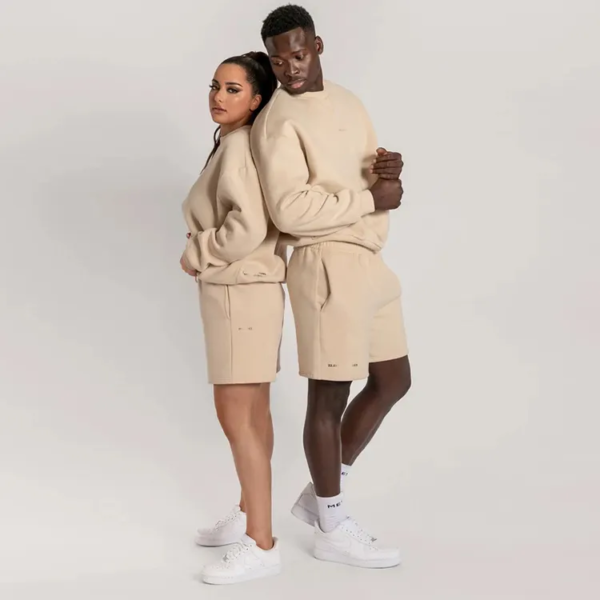


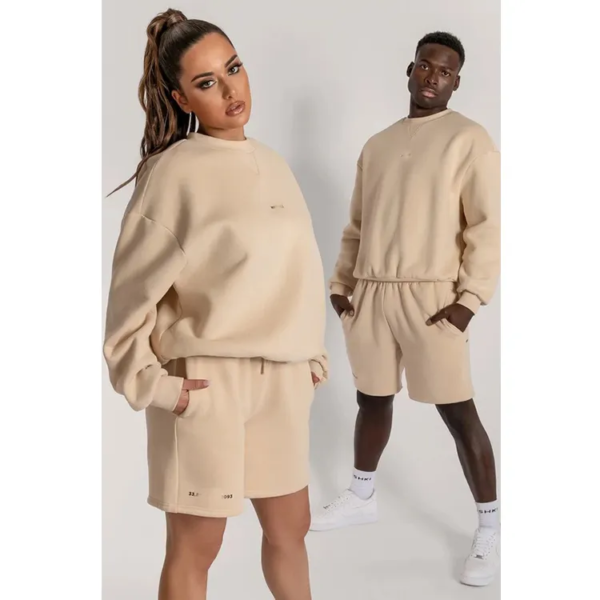

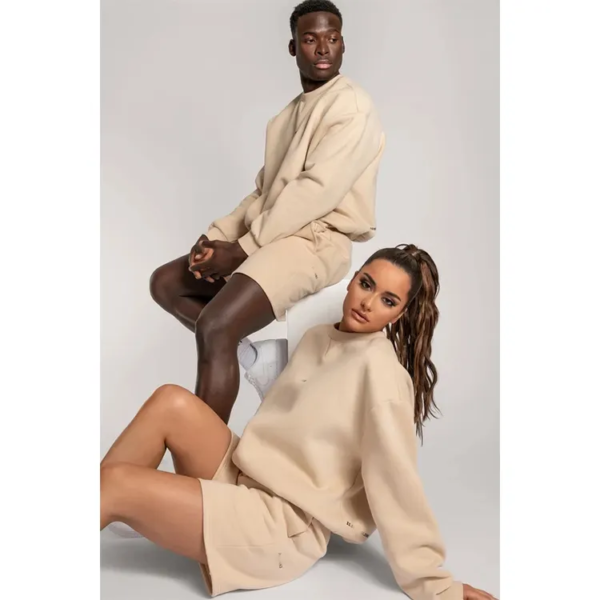



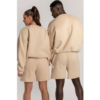

This custom crew neck sweatshirt is developed around deliberate pocket restraint: the supplied image shows a clean front without a visible kangaroo pouch, keeping the torso uninterrupted. That choice shifts the development question toward side access, pocket-bag control, and reinforcement that preserves a refined everyday silhouette.
A Clean Front as a Placement Decision
A clean front is not an absence of engineering; it is a placement decision. Removing a kangaroo pouch protects the uninterrupted torso line, reduces central bulk, and leaves the sweatshirt easier to layer beneath jackets or style with coordinated bottoms.
If storage is required, a side-seam pocket can preserve that visual discipline, but its entry must be reachable without twisting the garment. Pocket angle, opening length, and bag depth determine whether the feature feels integrated or becomes a distracting interruption at the hip.
Moving Reinforcement Away from Visibility
The photographed sweatshirt presents a smooth central panel, so load reinforcement should move away from high-visibility zones. A pocket bag anchored into stable seam allowances can distribute carried weight while keeping the face clean and limiting stress lines around the entry.
The trade-off is internal complexity: reinforcement, bartacks, or additional facing may improve durability but add thickness at the side seam. The sample should confirm that support remains comfortable when the wearer sits, bends, or layers the sweatshirt over a tee.
Proportion Across Coordinated Sets
The image shows the garment worn by two people in matching cream-toned separates, making proportion and pocket visibility especially important. A side pocket must work across body sizes without shifting the perceived balance between the sweatshirt body, sleeve volume, rib cuffs, and paired short.
The absence of a visible front pouch also creates a clearer measurement checkpoint for grading. As sizes increase, pocket placement should follow the side seam and remain visually quiet, while the opening must retain enough length for practical hand entry.
Body Movement and Pocket Load
A sweatshirt pocket is pulled by both the hand and the pocket contents, especially when the wearer walks with arms relaxed. Locating the load near a side seam can stabilize the opening, yet excessive depth may swing outward and disturb the clean profile.
Reinforcement should therefore be selected with fabric behavior in mind, not added automatically. A narrow facing may preserve softness, while a bartack may secure a stress point; the correct choice depends on knit recovery, intended contents, and approved wear expectations.
VeeWen Development Checkpoint
VeeWen's development workflow should begin with a pocket decision sheet tied to the sweatshirt pattern: no front pouch, optional side access, target opening, bag depth, and reinforcement zones. That document keeps the visual intent measurable before the first sample is cut.
During sample review, the buyer should inspect the sweatshirt front-on and in motion, then compare pocket access across intended sizes. Approval should cover placement, comfort, opening stability, and the effect of carried contents on the cream-toned body before grading is released.
Trade-Offs Before Production Approval
Keeping the torso free of a pouch supports a cleaner, more versatile product story, but removes the easiest high-capacity storage option. Side pockets can restore utility, although they require careful seam engineering and may increase development complexity around the hip.
Approve the final arrangement only after deciding what the sweatshirt must carry and how visibly it should carry it. The key checkpoint is whether reinforcement protects the chosen entry without adding unwanted stiffness, drag, or distortion to the approved relaxed silhouette.
Buyer Questions
What pocket details are confirmed visually?
The image does not show a front kangaroo pouch, so a clean-front specification is supportable visually. Side-seam pockets or other storage remain To Confirm through pattern review, sampling, and buyer approval.
Can a side pocket be added?
Yes, a side pocket can be evaluated without changing the clean front, provided its opening, bag depth, seam reinforcement, and comfort are validated across sizes before grading and production approval.
What should be carried in the pocket?
Define the intended contents first, such as hands, cards, or small accessories. That decision sets opening length and bag capacity, preventing overbuilt reinforcement or a pocket too shallow for practical daily use.
Is MOQ available?
The commercial minimum for this development record is MOQ: 100 pieces per style. Final specifications, approved construction, color, and packaging should be aligned before production planning begins for the selected configuration.
Approve the Clean-Front Pocket Direction.
Share the target carry use, clean-front preference, and preferred side-pocket direction with VeeWen. We will convert those choices into a measurable pocket brief for sampling and approval, with MOQ: 100 pieces per style for the selected sweatshirt.


Reviews
There are no reviews yet.