


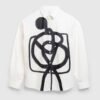


This custom white shirt translates a bold geometric artwork into a production problem: every curved edge must remain clean while layered material stays comfortable at the button placket. VeeWen can develop the balance through artwork segmentation, controlled appliques, and targeted approval checkpoints.
The Layer-Bulk Problem
The front graphic uses broad black shapes with overlapping visual paths, so the shirt cannot treat every area identically. Added layers increase stiffness and thickness, especially where the design approaches the button line, while thin curves demand flexible edge control.
A workable build separates the artwork into mapped components before cutting. VeeWen should identify overlaps, reduce unnecessary underlayers, and reserve reinforcement for vulnerable contours. This keeps the motif visually substantial without creating a rigid panel across the wearer's chest.
Edge Control Around Curves
The supplied front image shows rounded loops, tight interior openings, and long sweeping lines. These contours magnify small cutting or attachment errors. Consistent seam allowance, stabilized handling, and an agreed edge treatment are therefore more important than simply enlarging the artwork.
Sampling should inspect corners, concave openings, and narrow channels at close range after handling. The buyer should review whether edges lie flat, whether curves remain smooth, and whether the applique resists lifting when the shirt is flexed across the torso.
Placket Interruption Strategy
The black design visibly crosses the center front, while the button placket remains functional beneath it. That intersection requires deliberate artwork splitting, registration, and clearance so buttons can pass cleanly without catching a raised applique edge or creating an uneven front.
During pattern and sample review, VeeWen can establish a no-build zone around buttonholes and closure components. The approval question is practical: does the graphic read continuously from a normal viewing distance while the placket opens, closes, and lies flat?
Balancing Structure and Movement
The collar, cuffs, sleeves, and lower hem appear visually quieter than the chest, giving the shirt a wearable frame around its statement surface. Preserving that contrast means avoiding unintended reinforcement that spreads stiffness into adjacent body panels or sleeve movement zones.
Fit evaluation should include reaching, sitting, and opening the shirt. If the chest feels board-like, the team can reduce layer count or refine backing placement. If edges ripple, localized stabilization may be preferable to adding bulk across the entire artwork.
VeeWen Development Checkpoint
VeeWen's development workflow should begin with a vector artwork map tied to the shirt pattern, not an isolated decoration file. Each layer, overlap, edge allowance, and placket clearance can then be reviewed against the actual front panel before sample cutting begins.
The first approval sample should document layer order, attachment method, edge appearance, button operation, and post-handling condition. Buyer sign-off should occur only after confirming that the artwork placement survives construction realities without weakening the shirt's everyday function.
Commercial Approval Logic
This style is strongest when the graphic remains crisp and dimensional without overwhelming the shirt's comfort or closure. Its trade-off is development sensitivity: more layered definition can increase stiffness, while simplified construction may soften the intended visual depth.
Approve the style at MOQ: 100 pieces per style after the final sample establishes an acceptable edge standard. The production brief should record artwork files, layer map, placket clearances, tolerances, and the agreed visual reference.
Buyer Questions
Is this garment printed or appliqued?
The supplied image visibly suggests raised layered applique rather than a flat print, but the final attachment method and backing construction remain To Confirm.
Can the artwork cross the button placket?
Yes, the reference demonstrates that direction, but artwork segmentation and closure clearance must be approved through a physical development sample first.
What fabric should buyers specify?
Specify the desired handfeel, drape, opacity, and laundering expectations; exact fiber composition, weave, and GSM require confirmation during fabric development.
What is the minimum order?
MOQ: 100 pieces per style. Final quantities, size ratio, color assortment, and production details should follow the approved technical package.
Approve the Applique Engineering Brief
Send VeeWen the artwork, target measurements, preferred handfeel, and placement priorities so the team can prepare a sample focused on edge control, layer bulk, and button-placket function.


Reviews
There are no reviews yet.