


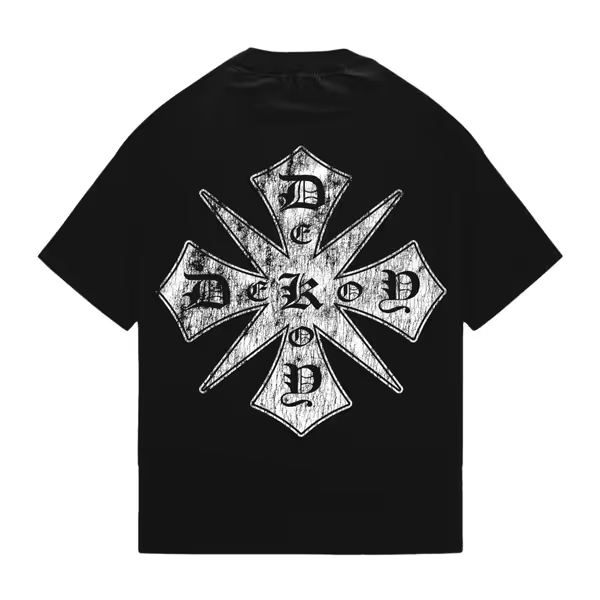

This custom black tee is developed around one disciplined detail: a localized patch held inside a deliberate stitch boundary. The dark body keeps attention concentrated, making placement, edge clearance, and containment more commercially important than decorative volume or unnecessary surface treatment.
Why Containment Is the Product Mechanism
A patch changes how the eye reads a plain tee because its perimeter creates a small engineered zone. Containing the stitch line keeps the attachment visually intentional, limits wandering thread exposure, and helps the decoration remain legible against black jersey during repeated handling.
The mechanism depends on proportion rather than ornament count. A patch placed too near a seam can distort with body movement, while an oversized perimeter can overpower the garment. Development therefore treats patch dimensions, seam distance, and stitch density as connected variables.
Reading the Supplied Visual Evidence
The supplied source identifies a black tee and provides three image references for the same style, supporting a focused review of the garment rather than a broad all-over graphic concept. The dark base is useful evidence for testing contrast, patch scale, and edge definition.
Because the image set is referenced by filenames rather than technical annotations, the exact patch substrate, backing, stitch count, and placement coordinates remain open decisions. Those unknowns should be recorded as sample checkpoints instead of being treated as confirmed specifications.
Placement Approval Before Sampling
For this style, the first approval should establish a placement box measured from stable garment landmarks, such as the neckline, shoulder seam, and side seam. That method allows the patch to remain visually consistent across sizes, even when graded panels change proportion.
The buyer should also approve a minimum clearance from nearby seams and the acceptable rotation range. These controls prevent the patch from appearing crowded, drifting during sewing, or losing its intended hierarchy when the black tee is produced across a size range.
Stitch Containment and Trade-Offs
A tighter stitch boundary can create a cleaner edge, but it may increase needle penetration, thread concentration, or puckering on lighter jersey. A looser boundary can improve flexibility, yet may expose more edge movement. The correct choice balances appearance, substrate behavior, and production reliability.
Backing selection creates another trade-off. More support can stabilize the patch during attachment, while excess stiffness may reduce comfort or create a noticeable transition inside the garment. VeeWen should evaluate both sides of the sample before locking the construction.
VeeWen Development Workflow
VeeWen can translate this axis into a controlled development sequence by first mapping the patch footprint against the base pattern, then testing attachment on the intended jersey reference. The key handoff is a marked sample showing placement origin, edge clearance, and stitch boundary.
Once the physical sample is reviewed, comments should separate visual corrections from construction corrections. Placement movement, perimeter shape, backing feel, and stitch behavior can then be revised independently, giving the buyer a clearer approval trail before the style reaches bulk preparation.
Bulk Readiness Checkpoint
Bulk approval should confirm that the approved patch remains centered or intentionally offset after laundering simulation, pressing, folding, and ordinary garment handling. The inspection should focus on stitch containment, edge lift, puckering, and placement drift rather than relying only on a front-view photograph.
The final decision is whether the detail performs as a repeatable system across sizes. If the patch footprint, seam clearances, and stitch boundary are documented clearly, the black tee can move forward with fewer interpretation gaps between development, sampling, and production.
Buyer Questions
What should be approved first for this tee?
Approve the patch footprint, placement landmarks, seam clearances, and stitch boundary before discussing secondary finish details or final production grading.
Can the patch be moved for different markets?
Yes, placement can be adapted, but each change should receive a revised measurement sheet and sample because seam relationships affect visual balance.
Is the fabric composition confirmed?
No. The reference indicates a tee, but the supplied evidence does not verify fiber percentages, weight, or performance, so those details remain To Confirm.
What is the commercial minimum?
The required commercial minimum is MOQ: 100 pieces per style, subject to the approved development specification and final order documentation.
Approve the Patch Engineering Direction
Send the target patch artwork, preferred placement landmarks, and fabric reference to begin a focused VeeWen development review. MOQ: 100 pieces per style supports the next approval conversation.


Reviews
There are no reviews yet.