
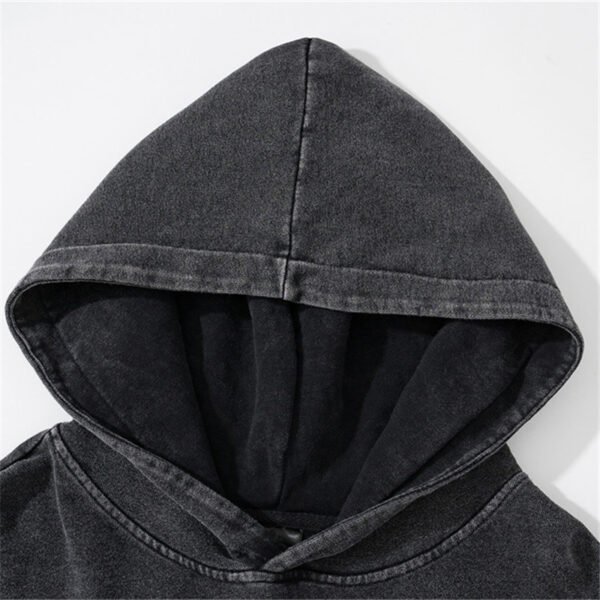
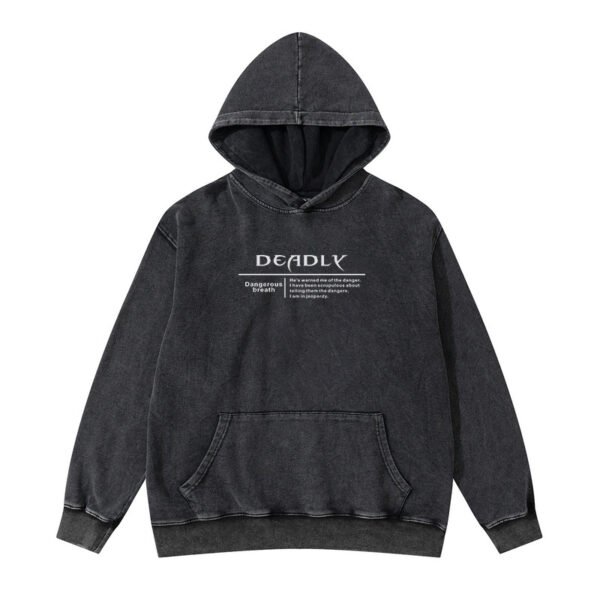



This custom oversized pullover hoodie is developed around one practical issue: acid-wash character must look intentional without weakening the hood's seam architecture. The supplied close-up shows contrasting abrasion along the perimeter, a pronounced center seam, and darker recessed panels, creating a clear map for controlled distress placement.
Why Seam Clearance Controls Acid-Wash Quality
Acid washing creates contrast through uneven exposure, abrasion, and chemical action across the garment surface. On this hoodie, the center hood seam and opening perimeter visibly catch attention, so uncontrolled treatment could exaggerate puckering, weaken thread areas, or make the finish appear accidental.
The development target is not maximum fading everywhere. It is a measured relationship between lighter edge abrasion, darker recessed panels, and stable seam lines. Protecting critical construction zones allows the oversized silhouette to keep its intended shape after washing and handling.
Reading the Supplied Hood Evidence
The close-up presents a charcoal-black ground with lighter contrast concentrated around the hood's outer edge and seam intersections. The center vertical seam is especially legible, while the interior hood panels remain visually deeper, giving the wash a directional rather than random appearance.
That evidence supports a placement-led sample brief: define where abrasion may intensify, where the fabric must remain comparatively dark, and how close treatment can approach seam lines. The remaining image references should confirm whether this balance continues across the body, sleeves, and pocket area.
Trade-Offs in Distress Placement
More aggressive distress can produce stronger shelf impact, but it increases risk around needle holes, seam allowances, and folded edges. A softer treatment may improve durability and repeatability, although it can reduce the dramatic tonal separation visible in the supplied hood reference.
Branding placement must be considered simultaneously. Large prints, embroidery, or woven labels need sufficiently stable fabric beneath them, while distressed zones can remain useful for controlled visual framing. The approval sample should therefore test wash intensity and decoration placement as one coordinated package.
Oversized Shape and Wash Movement
An oversized hoodie depends on proportion: generous hood volume, relaxed shoulder width, and a broad body must remain visually balanced after laundering. Uneven shrinkage or seam torque could change the opening shape and disturb the relationship between hood, neckline, and shoulder panels.
VeeWen's product-development workflow should lock the base pattern before wash mapping, then compare pre-wash and post-wash measurements at critical points. This exact sequence connects the visual distress plan to pattern stability, allowing the buyer to approve appearance without losing the intended oversized geometry.
VeeWen Development Checkpoint
VeeWen can translate the reference into a marked development package showing protected seams, permitted abrasion fields, darker hold zones, and decoration exclusions. The package should accompany the pattern, construction details, wash recipe brief, and labeled sample images for a traceable approval discussion.
At the sample review, buyers should inspect hood symmetry, seam definition, edge contrast, and handfeel together. Any requested increase in fading should be evaluated against seam clearance and measurement change, keeping the manufacturing decision tied to the garment's actual mechanism.
Approval Criteria Before Bulk Production
Approve this style when the acid-wash contrast reads consistently across the agreed panels, the center hood seam remains defined, and no critical edge shows unacceptable weakness or distortion. Record the approved tonal map because small process changes can shift the final appearance materially.
The commercial checkpoint is MOQ: 100 pieces per style after specifications, sample appearance, labeling, and packaging details are confirmed. Buyers should also confirm composition, weight, care labeling, and decoration method before releasing the style for production planning.
Buyer Questions
Can the acid-wash pattern be adjusted for a specific collection direction?
Yes, the wash map can be developed around approved light, dark, and protected zones, provided the buyer reviews how each adjustment affects seam clarity, handfeel, and repeatability.
Why should seams be excluded from heavy distress areas?
Seams concentrate thread, needle holes, and folded fabric, so excessive abrasion or chemical exposure may increase distortion and weakness while reducing the clean structural definition visible in the reference.
Can logos be added to this hoodie?
Yes, decoration can be planned after stable fabric zones are identified. The buyer should approve artwork scale, placement, and method alongside the wash sample to prevent conflict with distressed areas.
What must be confirmed before ordering?
Confirm composition, fabric weight, measurements, wash map, seam-clearance tolerance, decoration, labels, care instructions, packaging, and MOQ: 100 pieces per style before production planning begins.
Approve the Wash Map and Hood Construction
Send your target measurements, decoration requirements, and preferred distress intensity to begin a seam-aware sample review. VeeWen will organize the approval checkpoints around wash contrast, hood stability, labeling, and MOQ: 100 pieces per style.


Reviews
There are no reviews yet.