




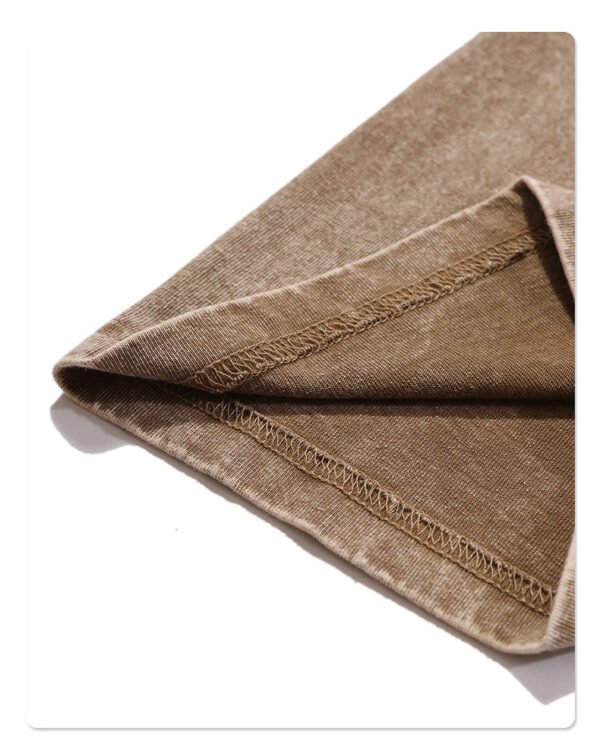







This acid-wash T-shirt is best developed through pocket geometry rather than color alone: the relaxed body gives a pocket room to become useful, while carefully controlled depth and opening width prevent the detail from looking misplaced across multiple washed shades.
Why Pocket Geometry Matters
On a relaxed T-shirt, pocket depth controls carrying capacity, visual drop, and the amount of fabric that can sag during wear. Opening width controls hand access and perceived scale, so both dimensions must be balanced against the broad front body.
Acid washing adds another variable because tonal contrast can emphasize edges, corners, and pocket faces differently. A pocket that looks quiet on a solid-dyed sample may become prominent after washing; geometry should therefore be judged with the intended surface treatment.
Reading the Supplied Evidence
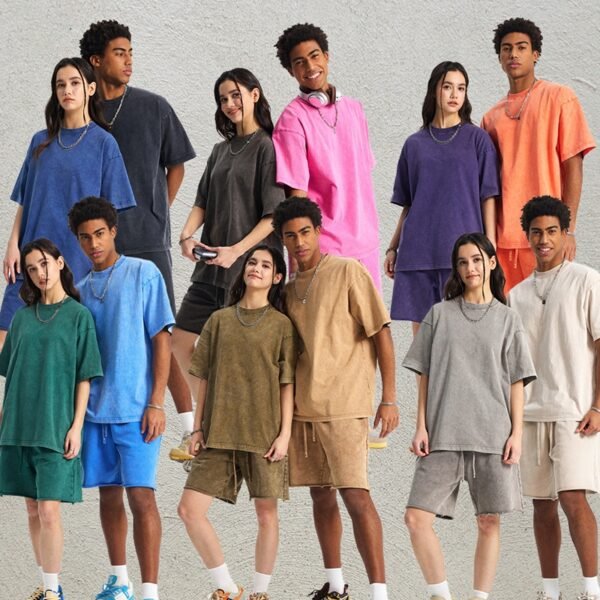
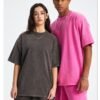
The main image shows a group of short-sleeve T-shirts in varied washed colors, with roomy bodies, dropped-looking shoulders, and coordinated shorts on several models. The front views support a relaxed proportion, but they do not clearly verify a chest pocket or opening.
That limitation is commercially useful: the image defines the silhouette and assortment context while leaving the pocket as an intentional development decision. The technical pack should not treat an unseen pocket detail as verified until its pattern and placement are approved.
Depth, Opening, and Wear
A deeper pocket bag can improve practical capacity, yet excessive depth may pull the front downward, create a visible bulge, or distort the shirt during movement. A wider opening improves access, but can lose shape if the edge lacks appropriate stabilization.
The correct balance depends on the intended use and styling. Review the pocket with an empty garment, a light carried object, and normal arm movement, then compare the front appearance at rest. This reveals functional problems that a flat measurement alone can miss.
Managing Multiple Wash Shades
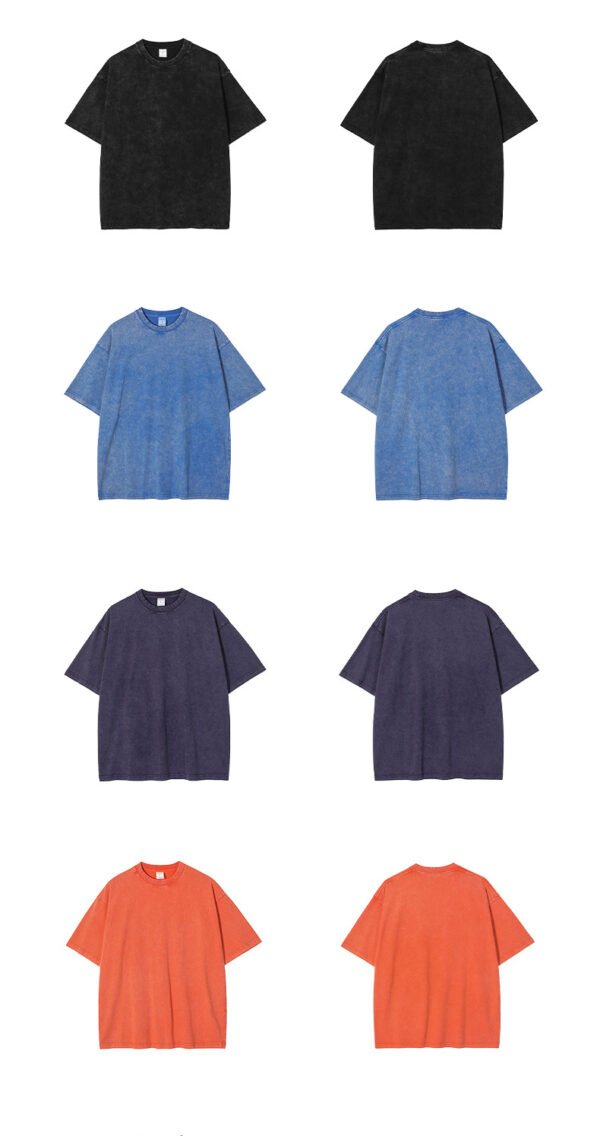
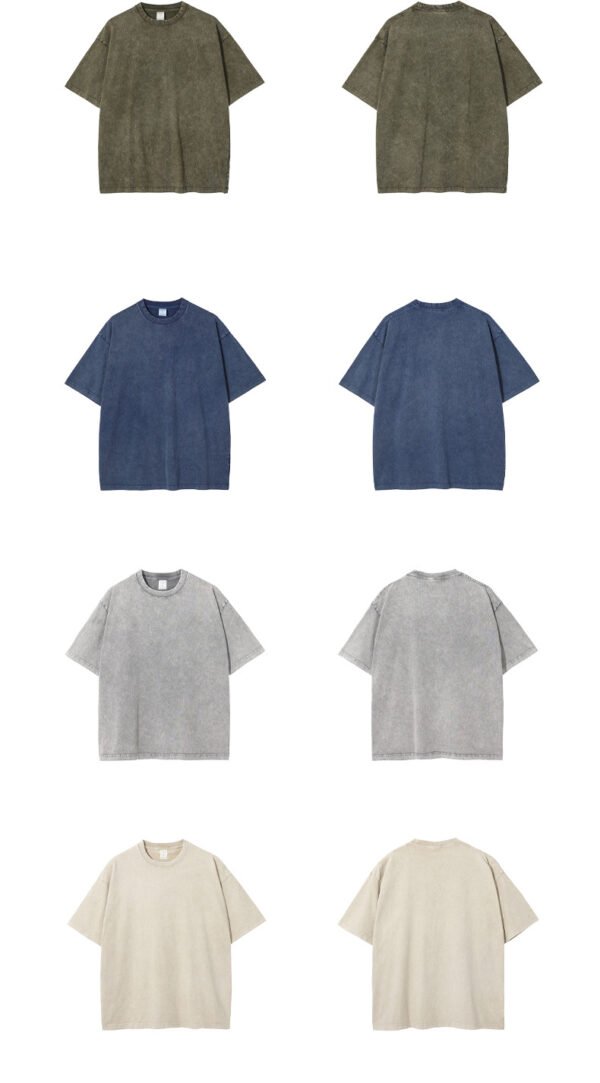
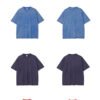
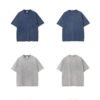
The assortment image spans saturated and muted colors, from blue and pink to charcoal, purple, tan, gray, and cream. A consistent pocket proportion helps these colorways belong to one commercial family, while controlled wash placement prevents each shade from creating a different visual hierarchy.
Pocket bags and openings should be checked for wash exposure, edge definition, and dimensional change. If the opening contracts or the bag twists, the same approved measurement may no longer deliver the same user experience after processing across the assortment.
VeeWen Development Checkpoint
VeeWen can structure this style around a pocket-specific development loop: establish the intended use, draft depth and opening alternatives, place them on the relaxed body pattern, and review a washed sample for proportion and access.
The approval checkpoint should capture pocket measurements, reinforcement details, opening finish, placement from neckline and side seam, and post-wash observations. This turns a small design detail into a repeatable technical instruction that can travel across approved colors and future orders.
Buyer Approval Criteria
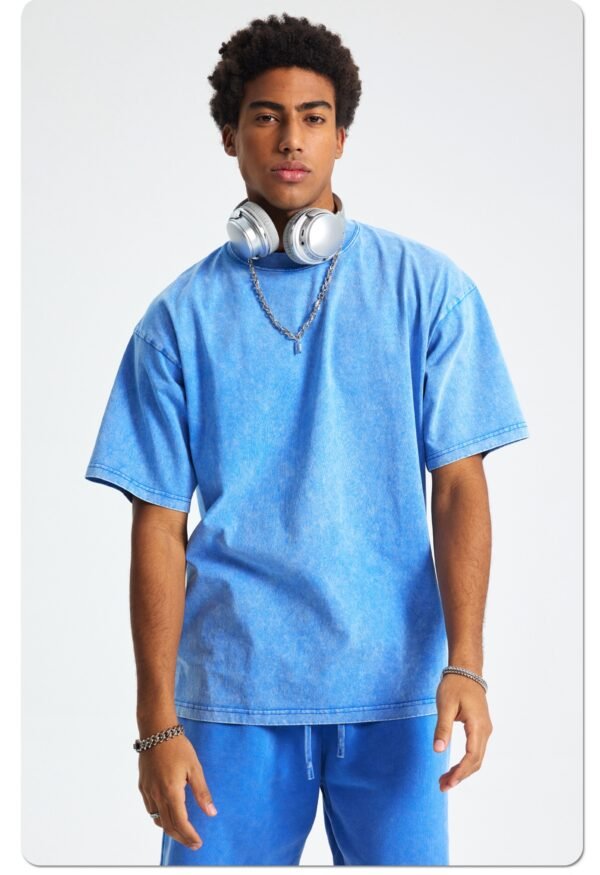
Approve the pocket direction when the opening is easy to use, the bag stays controlled during movement, and the pocket remains visually proportionate on the relaxed front. Check both male and female wear presentations if the product is sold as unisex.
Before purchase-order release, confirm composition, GSM, wash recipe, shrinkage allowance, color standards, pocket construction, artwork requirements, size grading, and packaging. The final decision should be based on a washed, worn sample rather than the source image alone.
Buyer Questions
Is a chest pocket shown in the image?
The supplied main image does not clearly verify a chest pocket, so pocket presence, placement, and construction should remain open until sample approval.
Why test the pocket after washing?
Washing can change edge definition, opening shape, bag position, and perceived contrast, making post-wash wear review essential for dependable geometry.
Can this style be developed with matching shorts?
Yes, coordinated shorts can be explored, provided their fabric, wash references, color standards, and separate construction requirements are approved.
What is the minimum order quantity?
MOQ: 100 pieces per style. Final colorways, size ratios, customization scope, and commercial terms should be confirmed with VeeWen.
Develop the Pocket as a Selling Detail
Share your intended pocket use, target measurements, wash palette, size range, and artwork direction with VeeWen for a focused sample and approval review.


Reviews
There are no reviews yet.