


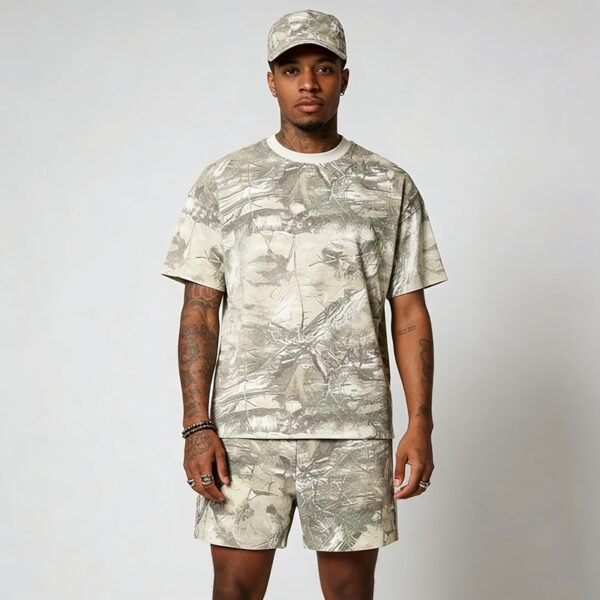
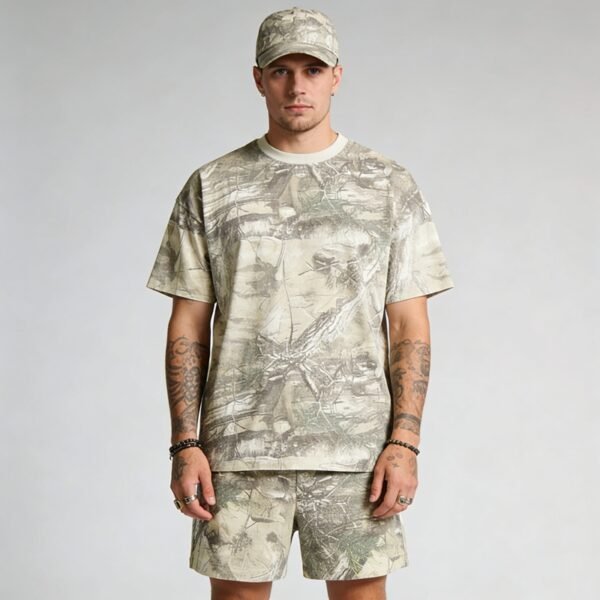


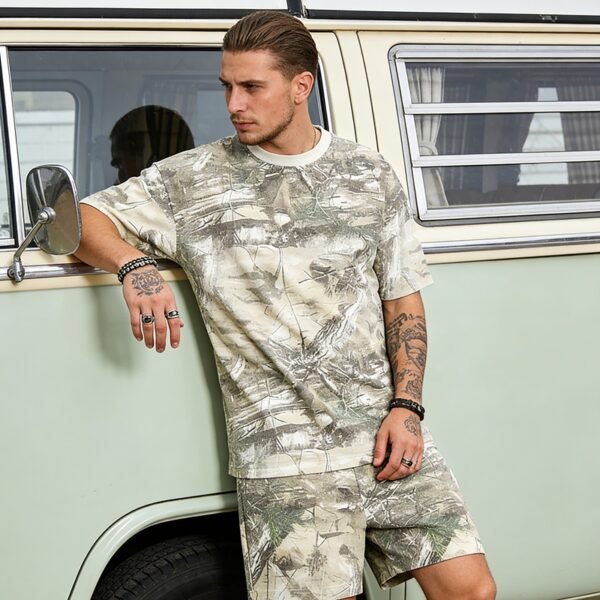






This coordinated set is developed around reorder control rather than novelty alone. The supplied image shows shared camouflage artwork across a short-sleeve top and shorts, while the source wording states 100% cotton. A sealed approval sample can preserve color interpretation, proportions, trims, and fit across future orders.
Why the Approval Sample Is the Product Standard
Camouflage is not a single color; it is a relationship among base tone, irregular shapes, contrast, scale, and placement. Screen images can interpret those variables differently. A sealed physical set gives the buyer one tangible reference for judging the finished top and shorts together.
The sample should be retained with its artwork file, measurement chart, trim notes, and material reference. That package converts a visual preference into a reorder control point, allowing later production to be checked against the approved set instead of memory, screenshots, or informal descriptions.
Cross-Garment Artwork Must Stay Coherent
The supplied image shows the same muted camouflage language across both pieces, which makes scale consistency commercially important. If the top uses larger shapes than the shorts, or the tonal balance changes between panels, the set can appear mismatched even when each garment looks acceptable alone.
Development should compare artwork repeat, orientation, and visible density on the top body, sleeves, short legs, and waistband area. Buyers should approve whether alignment is engineered at seams or allowed to vary, because exact matching adds control requirements and may influence cutting efficiency.
Color Approval Needs Physical Context
The photographed set reads in beige, gray, and olive tones against a concrete background, with an off-white neckline. Lighting and surrounding surfaces can shift perceived color, so a digital approval alone may not preserve the intended commercial appearance across production lots.
VeeWen's workflow should place the physical color and print strike-off beside the sealed garments before bulk authorization. The buyer can assess the camouflage's contrast, neckline relationship, and overall tonal depth under practical viewing conditions, then record the approved reference for future reorder comparison.
Fit Is a Set-Level Decision
The image presents a relaxed top with short sleeves and shorts featuring an elasticized waistband and easy leg volume. That proportion creates a casual silhouette, but the commercial result depends on how the top length, short rise, inseam, and waistband comfort relate when worn together.
A fit approval should review the complete set on the intended size range, not just individual measurements. The trade-off is between generous ease for casual movement and a cleaner outline for retail presentation; the buyer should define that balance before grading and sealing the reference.
Material Wording Still Needs Technical Detail
The supplied source title states 100% cotton, while the image suggests a casual textile set. That percentage does not establish fabric weight, knit or woven construction, shrinkage behavior, surface treatment, or colorfastness. Those variables can change both hand feel and the appearance of camouflage after care.
The sealed sample should therefore carry the confirmed fabric reference and care direction, with unresolved properties marked To Confirm. This protects reorder decisions from silent substitutions, especially where a different surface texture could make the same artwork look lighter, darker, sharper, or less dimensional.
The Reorder Checkpoint
The buyer's final checkpoint is a sealed, labeled set containing the approved fabric reference, artwork interpretation, color direction, measurements, neckline, waistband, labels, and care details. It should represent the exact version intended for production, including any accepted tolerances and intentional print variation.
After approval, reorder review should compare new submissions against that sealed set before release. Any change in cotton construction, artwork scale, color balance, trim, or fit should be treated as a new approval event, because consistency depends on controlling the whole system.
Buyer Questions
Is 100% cotton verified for this set?
Yes, the supplied source title explicitly states 100% cotton; fabric weight, construction, shrinkage, treatment, and care performance still require technical confirmation.
Why seal a physical approval sample?
It preserves one shared reference for artwork, color, proportions, measurements, trims, and fit, reducing ambiguity when the same style is reordered later.
Does camouflage need exact seam matching?
Not necessarily. The buyer should decide whether controlled repeat alignment or acceptable variation better suits the design, budget, and intended production tolerance.
What is the commercial minimum?
The exact commercial minimum is MOQ: 100 pieces per style, with final specifications and commercial terms confirmed during development and order review.
Seal the Set Before Reordering
Share the artwork, cotton fabric reference, size chart, label requirements, and target color direction. VeeWen can structure the approval set around repeatability, then support production at MOQ: 100 pieces per style.


Reviews
There are no reviews yet.