







This cargo trouser development record focuses on artwork scale and production repeatability: a dark, utility-led base with oversized pocket geometry gives graphics a controlled surface, while disciplined placement keeps panels, seams, and repeated units consistent across small-batch approvals and production for buyer confidence.
Artwork Scale on a Utility Surface
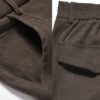
The supplied close-up shows a dark brown-charcoal woven surface, a broad rectangular cargo flap, rounded lower corners, and a vertical seam. Those visual anchors divide the trouser into usable artwork zones, helping a buyer judge whether a print, embroidery, patch, or tonal treatment will remain legible.
Large artwork can clarify the garment's architecture or compete with it. Here, the flap, pocket body, and seam lines create a measured hierarchy; artwork should therefore be scaled against finished pattern pieces, not a flat rectangle, with seam allowances and fold lines excluded from critical marks.
Repeatability Begins in the Artwork File
Repeatability depends on translating the approved visual into placement rules that operators can follow. The cargo layout suggests separate front, pocket, and leg zones, so each artwork file should identify grain direction, center points, edge clearances, and any intentional mismatch before cutting or decoration begins.
The production trade-off is visible in the pocket complexity: oversized components offer graphic impact but increase alignment checkpoints. A smaller motif may repeat more reliably, while a larger placement may define the design language; approval should balance recognition, registration tolerance, and the cost of correcting misaligned units.
Construction Controls Protect Visual Consistency
The supplied image shows clean perimeter stitching around the flap and pocket, with the pocket edge following a rounded, repeatable contour. That construction can frame tonal artwork effectively, but every decorative element must be checked against stitch paths so marks do not disappear beneath topstitching or become.
For repeatable production, the artwork approval should include a sewn or printed placement sample on the pocket configuration. Reviewers can confirm scale after folding, edge behavior around the flap, and consistency between left and right units before the specification is released for costing and size grading.
From Artwork Brief to VeeWen Approval Gate
VeeWen's development workflow should begin with an artwork map tied to the trouser pattern: identify every decorated panel, define safe zones, and mark seam exclusions. That map gives the sampling team an inspection sequence, linking creative intent to construction reality before the buyer approves the sample.
At the approval checkpoint, VeeWen can review artwork dimensions, placement tolerances, pocket symmetry, and the handling of repeated units as one development decision. The buyer should sign off only after the decoration method remains readable across the documented panels and does not undermine the garment's utility.
Material and Fit Questions Affect Artwork Decisions
The source wording references polyester and nylon, while the supplied image supports only a dark woven appearance; composition, blend ratio, GSM, and performance remain unverified. Material choice matters because surface texture, shrinkage, dye response, and drape can change perceived artwork scale after finishing.
The loose-fit description also affects repeatability: generous volume creates room for large graphic fields, but movement and folds can interrupt placement on the body. Confirm finished measurements, rise, leg volume, and grading behavior alongside artwork dimensions before commercial approval is granted.
Buyer Decision: Approve the Repeatable Graphic System
This development is strongest when the cargo architecture becomes a repeatable graphic system rather than a single decorative placement. The visible flap, pocket panel, and vertical seam provide recognizable anchors, allowing a collection to evolve through controlled artwork changes while preserving the same core trouser identity.
The buyer decision is to approve a measured artwork brief, not merely a visual mood. Confirm the hero placement, repeat unit, decoration method, tolerances, and panel-by-panel review standard, then release the style for costing with unresolved composition and performance fields clearly marked To Confirm.
Buyer Questions
What material information is verified for this cargo trouser?
The record supports a dark woven appearance and utility pocket construction. Confirm the exact fiber composition, blend ratio, GSM, and finishing response through the approved material submission before sampling begins.
How should artwork scale be approved?
Use finished pattern pieces to set artwork scale, safe zones, and seam exclusions. Review a decorated pocket sample because flap overlap and rounded corners can alter perceived placement during approval.
Should the artwork use a small or large repeat?
A smaller repeat generally offers easier registration, while larger artwork creates stronger visual impact. Choose after reviewing readability, tolerance, panel geometry, and the correction risk associated with each placement option.
What is the commercial minimum for development?
VeeWen's workflow should map artwork to each trouser panel, inspect decoration against stitch paths, and verify repeated units before buyer sign-off. The commercial minimum is MOQ: 100 pieces per style.
Approve the Artwork Control Brief
Send the target artwork, decoration preference, size range, and material reference for review. VeeWen can organize the next approval around panel mapping, repeatability checkpoints, and a clear decision on what remains To Confirm before production planning.


Reviews
There are no reviews yet.