
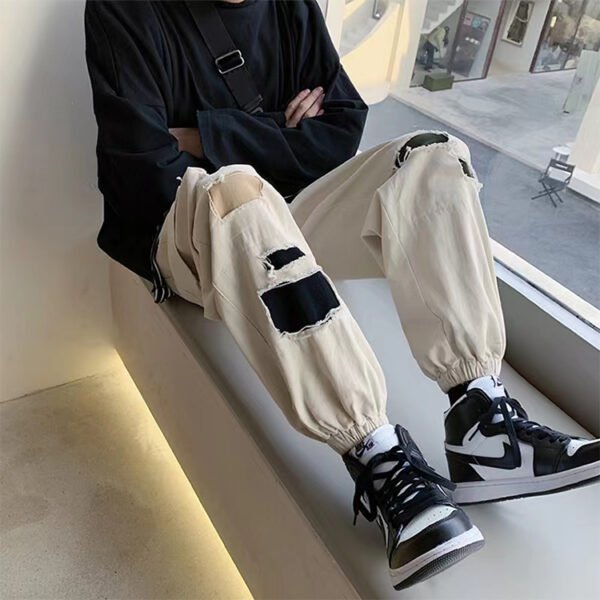


This denim style is built around controlled disruption. The supplied image shows a pale loose leg interrupted by irregular openings and dark inset areas, while the source wording identifies a waist string. The development challenge is preserving that treatment-led identity without letting adjustment hardware or finishing details become visual noise.
Distressing Defines the Product Surface
The pale denim ground is visually interrupted by several irregular openings, making treatment rather than hardware the first product signal. Raw edges introduce movement and depth, but their commercial value depends on controlled placement so the jeans look designed instead of randomly damaged.
The dark inset areas create a second layer inside the openings, strengthening contrast around the knees and thighs. Their scale, backing method, and edge behavior should be approved together because each decision changes durability, visual density, and the perceived looseness of the leg.
Waist String Adds Adjustable Function
The source wording identifies a waist string, giving the buyer an adjustable element within an otherwise relaxed denim silhouette. That function can accommodate styling variation, yet the channel and exit points may introduce bulk or interrupt the clean rise if poorly proportioned.
VeeWen's product-development review should map waist height, string route, exit placement, and securing method against the intended waistband construction. The approval checkpoint is a fit sample confirming that adjustment remains practical while the treatment stays visually dominant from the front.
Hardware Should Support the Treatment
This design has enough visual activity in its patches and openings that conspicuous plated hardware could compete with the surface story. A restrained button, eyelet, or tip finish may preserve focus, but the exact hardware should follow the approved waist-string architecture.
Because no hardware specification is visibly confirmed in the supplied image, plating remains a development variable rather than a product claim. VeeWen can review finish chips beside the denim wash and patch materials, checking whether reflection supports or distracts from the treatment.
Loose Proportions Need Controlled Recovery
The image presents generous leg volume and gathered-looking ankle openings, creating a relaxed, fashion-led outline. This proportion can make the patches feel integrated into a larger canvas, but excessive gathering may shift the garment away from the intended straight-leg interpretation.
The technical review should reconcile the assigned straight-jeans category with the visible ankle behavior before grading. Confirming thigh width, knee placement, leg opening, and hem finish protects the silhouette while allowing the distressed treatment to remain the main differentiator.
Patch Placement Requires Repeatable Mapping
Irregular distressing looks individual, but production still needs a repeatable map for opening size, inset position, and distance from seams. Without that map, the same style can develop inconsistent balance, especially when pale fabric makes every dark patch highly visible.
VeeWen's workflow should convert the visual reference into placement artwork, treatment callouts, and a signed sample standard. The buyer should decide which irregularities are intentional and which must remain controlled across sizes, ensuring the finished range retains one recognizable surface logic.
Release the Wash and Finish Together
The final appearance depends on the relationship between denim color, raw-edge openings, inset contrast, waist-string presentation, and any plated components. Approving these elements separately can create a sample that satisfies each isolated check but loses the intended balance when assembled.
Before production release, review a complete sample after the proposed garment treatment and finishing sequence. With MOQ: 100 pieces per style, the buyer should approve the wash direction, distress map, waist adjustment, hardware appearance, and hem interpretation as one coordinated decision.
Buyer Questions
Are the distressed openings fixed or adjustable?
Their locations and proportions should be defined through an approved treatment map. Controlled irregularity can be retained, but production repeatability requires signed placement and size guidance.
Does the waist string replace standard waistband hardware?
Not necessarily. The source wording identifies a waist string, while the final channel, closures, tips, and any additional hardware require technical confirmation during development.
How should buyers resolve the straight-leg and gathered-ankle references?
Review leg opening, ankle finish, and category intent on the fit sample. Confirm whether the gathered appearance is styling-specific or part of the final garment construction.
What is the minimum order quantity?
The commercial minimum is MOQ: 100 pieces per style. Confirm the approved wash, patch treatment, size range, waist construction, and grading before production authorization.
Approve the Distress Map and Waist Construction
Share your preferred denim hand, wash direction, patch artwork, waist-string details, and target measurements so VeeWen can organize the focused development sample.


Reviews
There are no reviews yet.