


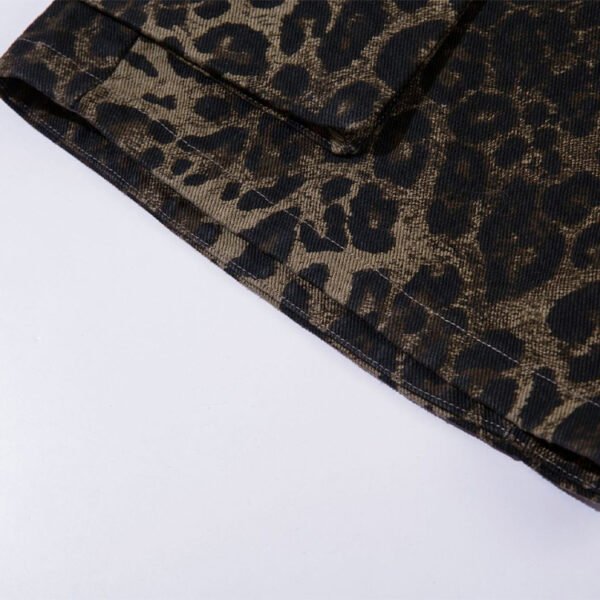


These printed cargo shorts make hem level the central development decision, because the lower edge determines how pocket volume and straight-leg width settle on the body. The supplied image shows a dense leopard pattern, paired cargo pockets, and a single-button waist that require balanced hang rather than isolated measurements.
Why Hem Level Leads This Development
The supplied image shows a straight short whose lower edges appear level despite substantial cargo-pocket detailing. That relationship is the product argument: if one hem drops, twists, or sits unevenly, the printed silhouette and pocket arrangement can make the entire garment look poorly balanced.
Hem level cannot be approved independently from leg opening and pocket placement. VeeWen should evaluate the lower edge on a flat surface, then confirm the same balance on a worn form where body movement, waistband tension, and pocket contents can change the garment hang.
Pocket Weight and Lower-Body Balance
The two large cargo pockets are prominent visual anchors positioned near the lower side panels. Their extension, flap structure, and attachment can pull the fabric outward or downward, especially when the shorts are worn, changing perceived hem height between front and side views.
Pocket patterns should therefore be checked for matching dimensions, aligned top edges, and controlled fullness before the hem is finalized. The buyer should judge whether the pockets support a utility silhouette without causing one leg to hang lower than the other.
Print Continuity at the Hem
The black and brown leopard pattern runs across the legs, pockets, waistband, and lower edges, so the hem acts as a visible boundary within a continuous surface. Uneven turning, inconsistent seam allowance, or print interruption can make the finished edge look irregular.
Before approval, VeeWen should inspect the hem from front, side, and back views, checking whether the pattern remains visually stable around corners and pocket zones. Exact repeat matching may not be required, but the buyer should define acceptable discontinuity.
Waist Tension and Garment Hang
The image shows a single visible button at the waistband and a gathered appearance toward the sides. Waist construction affects the starting point of the hang: excessive tension can lift the center hem, while insufficient control may allow the shorts to slump and widen.
A development sample should compare the intended waistband closure with the finished leg balance, using the same size and a consistent wearing position. This reveals whether hem measurements reflect the pattern or merely compensate for unstable waist behavior.
VeeWen Workflow Checkpoint
VeeWen's workflow should place hem level inside the first technical review, alongside leg opening, inseam, rise, and cargo-pocket dimensions. The purpose is to create a coordinated measurement system where lower-edge balance is designed rather than corrected after sewing.
The sample review should include flat measurement, worn photographs, and a movement check with empty pockets. Buyer approval should identify the preferred hang, because pocket loading, waistband tension, and print scale may each alter how the hem reads commercially.
Buyer Approval and Production Handoff
The final approval record should specify hem circumference, side-to-side level tolerance, pocket placement, waistband closure, print direction, and laundering or finishing instructions where applicable. These linked decisions help production teams preserve the intended stance across the size range.
Before releasing MOQ: 100 pieces per style, the buyer should approve the worn sample with empty pockets and confirm the acceptable lower-edge variation. That checkpoint determines whether the short presents as crisp, relaxed, or intentionally casual in the finished collection.
Buyer Questions
Why is hem level important for these cargo shorts?
The hem determines how straight-leg volume and cargo-pocket weight settle visually, so uneven lower edges can make the printed shorts appear twisted or unbalanced.
Should pockets be filled during approval?
Review empty-pocket hang first for construction consistency, then conduct an optional loaded check to understand practical movement without changing the base approval standard.
Does the image verify waistband construction?
It shows one visible button and gathered side appearance, but exact elastic, waistband structure, rise, and closure specifications require technical confirmation.
What should be approved before bulk production?
Approve hem measurements, worn hang, pocket symmetry, print direction, waistband behavior, and acceptable variation before releasing MOQ: 100 pieces per style.
Approve the Hem and Hang Sample
Share the target size chart, pocket dimensions, print artwork, and desired wearing position with VeeWen, then approve the empty-pocket worn sample before production release.


Reviews
There are no reviews yet.