

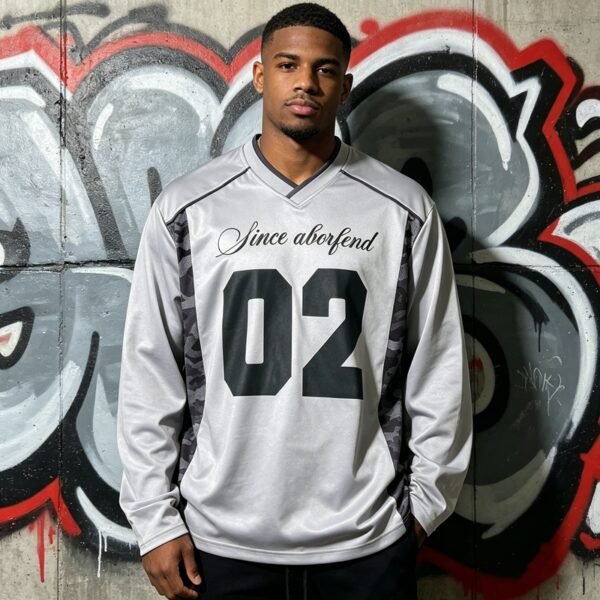


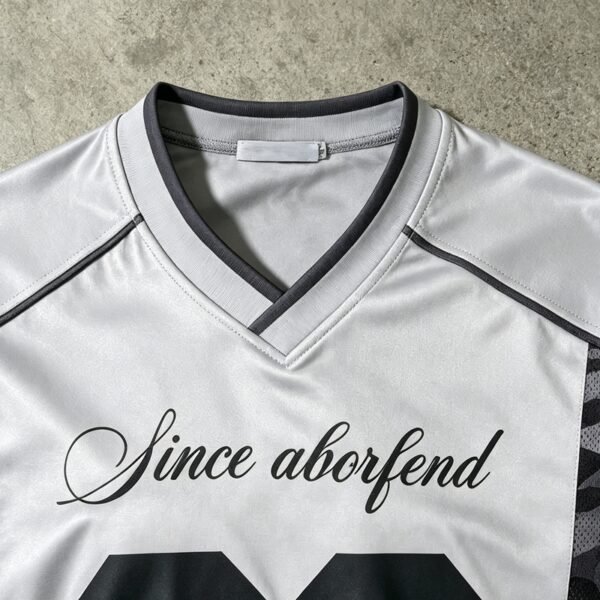


This long sleeve jersey is developed around a visible tension: a clean silver-white surface carries the design, while camouflage side panels occupy movement and contact areas. The approval question is whether the finish remains sharp after abrasion, laundering, and repeated wear without stiffening the jersey.
Surface Finish Must Be Defined Before Sampling
The image presents a smooth silver-white body whose value depends on visual consistency across the front, sleeves, and back. During development, VeeWen should define whether the appearance comes from fabric coloration, coating, sheen, or print, because each route changes handfeel and durability.
A brighter finish may improve shelf impact, yet heavier surface treatment can reduce softness, trap heat, or reveal creasing. The first approval should therefore record the target luster, stretch recovery, opacity, and acceptable shade variation before graphic placement is finalized.
Abrasion Risk Concentrates Along The Panels
The charcoal camouflage inserts visibly track the side and underarm regions, which are likely to flex against the body and rub against outer layers. Their construction should be reviewed for seam bulk, edge stability, and resistance to surface fuzzing where the panels meet the silver jersey.
This arrangement gives the shirt a strong athletic identity, but it creates a direct trade-off between contrast and wear exposure. VeeWen's development review should compare panel binding, seam allowance, and stitch density against the selected knit before approving a production sample.
The Back Graphic Changes Wear Behaviour
The oversized black 02 graphic occupies most of the back, making registration and surface integrity commercially important. A broad printed area can feel different from the surrounding knit and may crack, lift, or distort if the ink system does not accommodate stretch and laundering.
Graphic approval should include the actual production-size transfer or print, not only a small strike-off. The buyer should inspect edge definition, opacity over the silver ground, stretch response, and rubbing resistance while wearing the shirt beneath a jacket or bag.
Seam Framing Needs A Balanced Handfeel
Dark seam lines frame the shoulders and visually connect the side panels to the back. They sharpen the silhouette, but additional stitching or piping can create pressure points and make the garment feel harder than the smooth body around it.
VeeWen should translate the visual seam map into a construction sheet showing stitch type, thread appearance, seam allowance, and reinforcement points. The checkpoint is a worn sample that preserves the framing effect without compromising sleeve mobility or neckline comfort.
VeeWen Workflow: Build A Wear-Focused Sample
For this style, VeeWen's product-development workflow should begin with a material board covering surface routes, panel knit options, and graphic methods. The sample request should isolate abrasion-sensitive zones so the buyer can judge finish retention rather than reviewing decoration and fit as unrelated decisions.
The next approval gate should combine a complete garment fitting with targeted rub and wash observations on the body, panels, seams, and back graphic. Findings should be recorded against the approved appearance and handfeel brief before the style enters bulk production planning.
Approve The Evidence, Then Lock The Specification
The image proves the intended contrast and placement language, but it does not verify fiber percentage, GSM, colorfastness, abrasion cycles, or print performance. Those unknowns are not minor details because they determine whether the premium visual finish survives normal commercial handling.
Before commitment, the buyer should approve a signed specification covering fabric identity, finish route, panel construction, graphic process, measurement tolerances, and care labeling. The final decision is whether the tested sample still delivers the original surface contrast after practical wear.
Buyer Questions
Is the fabric definitely polyester?
The source wording references quick-dry polyester, but the supplied evidence does not verify composition percentage, knit specification, or fabric weight. Confirm these details during material development.
Which area needs the closest abrasion review?
Prioritize the camouflage side and underarm panels, connecting seams, cuffs, and the large back graphic because these areas combine movement, contact, and visible surface treatment.
Can the silver appearance be changed?
Yes, the finish route can be developed toward a flatter, brighter, or more reflective appearance, provided handfeel, stretch response, opacity, and durability are approved together.
What is the commercial minimum?
MOQ: 100 pieces per style. Final quantities, grading, color options, and production requirements should follow the approved technical specification and order documentation.
Approve The Surface And Wear Direction
Send the target measurements, artwork, color references, and fabric expectations to VeeWen for a wear-focused development review, then approve the complete sample against appearance, handfeel, and abrasion priorities.


Reviews
There are no reviews yet.