


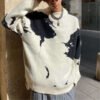

This custom oversized pullover is developed around pocket engineering rather than artwork alone. Its cream-and-black portrait surface and ribbed framing create a strong front field, so bag depth and opening geometry must support utility without interrupting the image's visual center.
Why Pocket Geometry Controls the Front Proportion
An oversized sweater creates extra horizontal and vertical space around the torso. A deep pocket bag can add useful storage, but excessive depth may pull the knit downward, while a wide opening can compete with the portrait artwork and make the front appear visually fragmented.
The supplied image shows no clearly visible front pocket, making the pocket decision an approval point rather than a verified construction detail. VeeWen should map the proposed opening over the artwork repeat, then review hand entry, bag curvature, and local weight distribution.
Opening Angle and Hand Entry
Opening geometry determines whether the pocket feels integrated or appended. A near-horizontal entry can read cleanly across a broad body, while a slightly angled entry may follow natural wrist movement and reduce the reach required when the wearer moves through layered styling.
For this knit silhouette, the sample review should compare entry width and angle on the actual graded pattern. The buyer should assess whether the opening remains accessible without stretching the ribbed body, exposing the bag, or breaking the portrait's dominant facial shapes.
Bag Depth Must Follow Use Case
Pocket-bag depth should be selected from the intended carry requirement, not from the oversized silhouette alone. A shallow bag can stabilize the front and reduce bulk, while a deeper bag can hold larger essentials but may create sagging or visible contour changes.
The correct depth should be checked with representative contents and normal walking posture. Because the image does not verify pocket dimensions or contents, VeeWen can present controlled depth options, allowing the buyer to choose a utility level that matches the collection's styling intent.
Artwork Placement Creates a No-Go Zone
The portrait artwork occupies the central body and extends across the sleeves, creating a dense graphic field. Pocket openings crossing important facial or contrast areas could interrupt recognition, while a bag hidden behind a quiet zone may preserve the intended composition more effectively.
During development, the artwork map and pocket pattern should be reviewed together at full size. VeeWen's pattern team can mark prohibited graphic areas, identify a lower-contrast placement zone, and verify that opening edges remain visually deliberate after grading.
VeeWen Workflow Checkpoint
VeeWen's workflow should begin by locking the front artwork map, oversized measurement set, and pocket brief in one development file. The first sample can then test opening geometry and bag depth simultaneously, preventing artwork approval from outrunning the construction decision.
At the fitting review, the buyer should handle the garment, load the pocket, and inspect the front at rest and in motion. Approval should record opening angle, finished depth, reinforcement approach, and artwork clearance before the specification is released for production.
Approval Before Production Release
The buyer's final decision is whether pocket utility improves the sweater without weakening its oversized visual statement. Review the garment on-body, confirm the opening feels natural, and inspect the portrait composition from normal viewing distance before approving the construction direction.
The commercial brief is MOQ: 100 pieces per style, while composition, gauge, measurements, and production timing remain to confirm. Once the pocket geometry and graded sample are approved, the team can finalize the technical pack and colorway instructions.
Buyer Questions
Is a front pocket confirmed in the supplied sweater evidence?
No. The main image does not clearly show a pocket, so opening placement, bag construction, and dimensions require buyer approval during sampling.
What should determine the pocket-bag depth?
Choose depth from intended contents, on-body stability, and artwork clearance. Test representative items while checking sagging, access comfort, and front visual balance.
Can the portrait artwork remain unchanged around the pocket?
It can be planned that way, but the artwork map and pocket pattern must be reviewed together to establish a clear no-go zone.
What is the minimum order quantity?
The commercial minimum is MOQ: 100 pieces per style. Fiber content, gauge, grading, and production timing remain subject to confirmation.
Approve the Pocket Direction
Send the target measurements, intended pocket contents, and artwork file for a coordinated sample review. VeeWen can then confirm the opening geometry, bag depth, and technical-pack approval path.


Reviews
There are no reviews yet.