
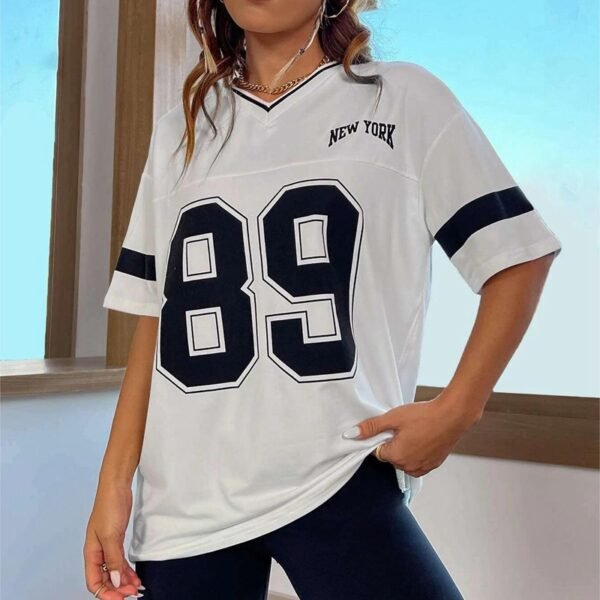


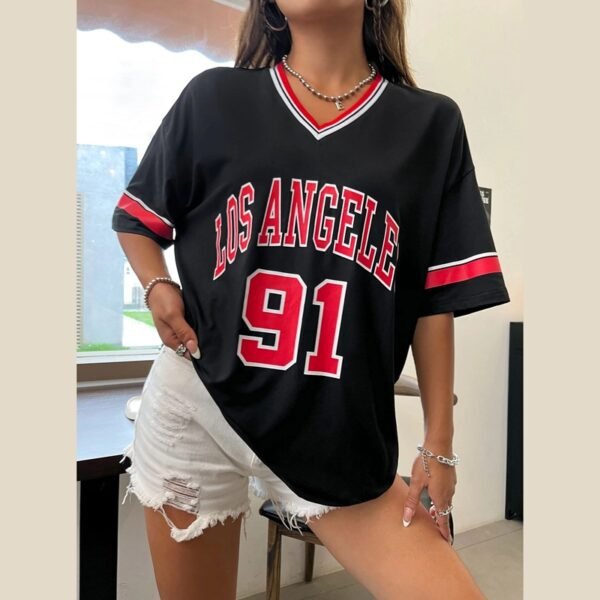

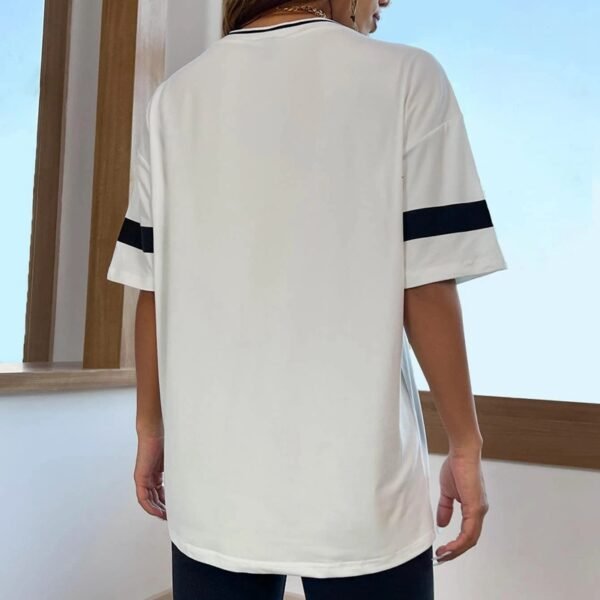






This oversized jersey T-shirt is developed around proportion control rather than decoration alone. Its loose body, short sleeves, contrast edging, and large centered numeral create an athletic silhouette that needs measured rise and hem opening to remain intentional across sizes.
The Proportion Problem
Oversizing changes more than width. Increasing body rise without controlling the hem opening can make a jersey look elongated, while excessive sleeve inseam can erase the intended athletic balance. This reference uses a roomy torso and compact sleeve statement that should be measured as one system.
The visible styling supports that direction: the white body falls well below the natural waist, the sleeves stop above the elbow, and contrast bands sit prominently near each sleeve opening. Those relationships define the sample target more reliably than a generic oversized label.
Rise and Hem Opening
For development, body rise should be set from the high shoulder point to the finished hem, then reviewed against the horizontal hem opening. A longer rise may improve coverage, but a narrow hem can pull inward and disrupt the relaxed fall shown in the reference image.
A wider hem opening can preserve drape and accommodate layered styling, yet too much width may weaken the numbered jersey character. VeeWen should therefore confirm the hem circumference alongside front length during proto review, with the buyer approving the visual balance on a live fit model.
Sleeve Inseam as a Visual Counterweight
The sleeve inseam controls how the oversized torso reads at the upper arm. In this reference, the sleeve is broad but not excessively long, and the dark band creates a clear endpoint. Extending the sleeve without revisiting the body rise could turn athletic volume into unstructured casualwear.
The sleeve opening also affects mobility and graphic visibility. A generous opening supports movement, while a tighter opening sharpens the outline but may feel restrictive. The technical pack should record sleeve length, opening circumference, and band placement as connected measurements rather than isolated details.
Graphic Scale and Body Fall
The large numeral occupies much of the front and reinforces vertical body length. Its scale should be checked after the rise is fixed, because a longer torso can make the same graphic appear visually undersized. Artwork placement should reference the neckline and hem, not only chest width.
Contrast neck binding and sleeve bands provide horizontal anchors that stabilize the loose silhouette. If grading changes these anchors unevenly, the garment may lose its collegiate-sport visual logic. Buyers should review artwork position, band height, and hem distance together in each key sample size.
VeeWen Development Checkpoint
VeeWen can translate this reference into a measurement-led development sequence: establish the base size rise and hem opening, set the sleeve inseam, then grade those dimensions with defined proportional rules. This keeps the silhouette consistent while leaving artwork and color decisions separately controllable.
The approval checkpoint is a fit review using the intended fabric reference and complete trim or graphic treatment. Buyers should assess front length, side fall, sleeve endpoint, and hem sweep in motion before releasing the specification for MOQ: 100 pieces per style.
Trade-Offs Before Approval
A longer body can increase perceived coverage and strengthen the oversized direction, but it may require a larger graphic or adjusted hem placement. A shorter rise feels more energetic, yet can reduce layering flexibility. Neither choice is universally correct; the collection's styling intent should decide.
Similarly, a broad hem improves relaxed drape but can appear boxy, while a controlled opening creates definition but limits volume. Approve the sample by comparing the measured silhouette with the supplied visual evidence, then document the accepted tolerance for production grading.
Buyer Questions
What should be measured first on this jersey T-shirt?
Confirm body rise and finished hem opening first, because those dimensions establish the oversized fall before sleeve and artwork grading decisions.
Can the oversized fit be adapted for different markets?
Yes, the base block can be adjusted, but every rise, sleeve inseam, and hem opening change should be reviewed together for balance.
Is the visible numeral included in development?
The numeral placement is part of the reference direction; final artwork scale, application method, and durability requirements remain subject to buyer approval.
What is the commercial minimum for this style?
The exact commercial minimum is MOQ: 100 pieces per style, with final specifications confirmed before production planning and order acceptance.
Approve the Proportion Block
Send the target size range, artwork files, and preferred jersey reference to VeeWen for a proportion review covering rise, sleeve inseam, and hem opening before sampling.



Reviews
There are no reviews yet.