
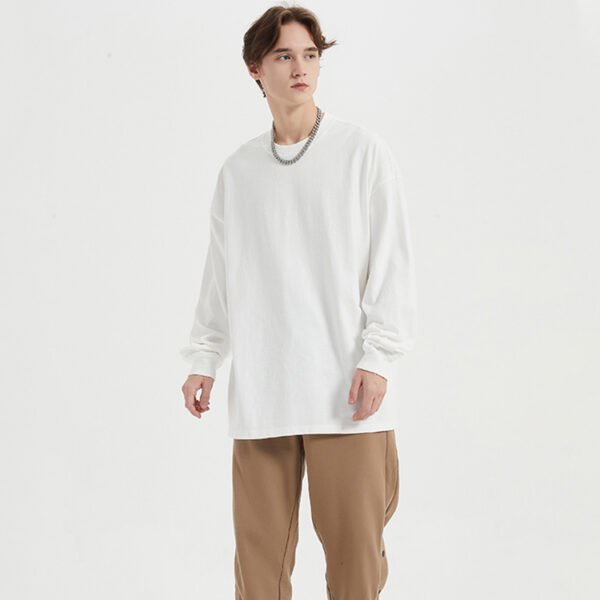








This pullover hoodie development is organized around the relationship between hood volume and neckline pull. The supplied image supports an oversized body, dropped shoulders, extended length, and gathered cuffs, while the source wording identifies a hoodie intended for casual streetwear collections.
Why Hood Volume Changes the Silhouette
A large hood adds visual weight behind the neck and can pull the garment backward when its opening, depth, or seam placement is uncontrolled. On an oversized body, that imbalance makes shoulders appear narrower and causes the front neckline to lift.
The supplied image shows a generous relaxed silhouette, but the visible opening reads closer to a rounded neckline than a confirmed hood opening. That contrast makes hood depth, crown height, and front overlap essential approval measurements before the pattern is released.
Neckline Pull as a Wearability Control
Neckline pull is created by the combined behavior of rib width, recovery, seam allowance, and hood attachment. Excessive tension restricts layering and distorts the front; insufficient tension lets the opening collapse, exposing the upper chest and weakening the intended oversized proportion.
VeeWen's development workflow should isolate these variables through a dedicated neckline and hood-block review. The sample should be assessed standing, seated, and layered over a tee, checking whether the opening stays centered without forcing the shoulder seams backward.
Reading the Supplied Proportion
The main image provides useful proportion evidence: the white top extends below the hips, sleeves remain relaxed through the arms, and ribbed cuffs gather excess length at the wrists. These cues support a roomy silhouette rather than a close athletic fit.
Because the image does not verify internal construction, the pattern team should treat its neckline appearance as a visual reference only. Hood lining, drawcord provisions, seam reinforcement, and rib specifications must remain explicit development decisions rather than assumed details.
Fabric and Recovery Decisions
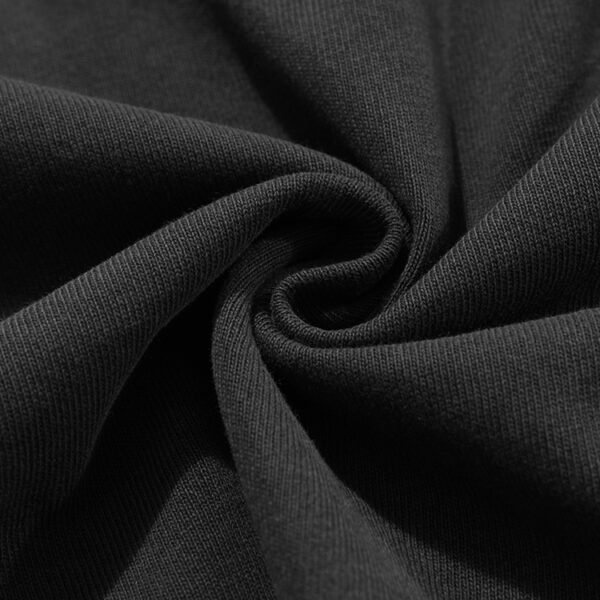
Source wording states 100% cotton, but it does not establish fabric weight, knit structure, brushing, or shrinkage behavior. Those variables directly influence hood collapse, neckline stretch, sleeve drape, and the visual density expected from an oversized pullover.
During VeeWen's product-development workflow, fabric swatches should be reviewed beside the approved silhouette, followed by wash and measurement checks appropriate to the buyer's program. The decision is whether the selected fabric preserves shape without making the hood unnecessarily heavy.
Production Controls for Consistent Balance
Once the hood and neckline are approved, production control depends on keeping attachment points, rib dimensions, seam allowances, and shoulder measurements consistent across sizes. Small deviations can shift the hood backward or change the perceived balance of the whole garment.
VeeWen should convert the approved sample into a measurable construction brief covering hood depth, opening circumference, neckline position, cuff width, and body length. This gives cutting and sewing teams practical checkpoints for maintaining the same upper-body relationship across the order.
Buyer Approval Checkpoint
The buyer should approve the complete upper-body block rather than judging hood size separately. Confirm the wearer's head clearance, front opening position, shoulder drop, body length, and cuff placement, then compare the sample against the intended styling image.
The final checkpoint is a signed measurement and construction approval covering fabric reference, hood architecture, neckline recovery, and size grading. After that approval, color expansion can proceed only if the same balance remains visible across the chosen material and dye options.
Buyer Questions
Is the garment confirmed to have a hood?
The source wording identifies a hoodie, but the supplied main image does not clearly show hood construction. Confirm the hood block, opening, depth, and attachment details through the development sample.
What fabric weight should buyers specify?
Fabric weight is not supplied. Buyers should specify a target hand feel and season, then approve swatches and measurements after VeeWen confirms the available knit structure and composition.
Can this silhouette be graded across sizes?
Yes, grading can be developed, but oversized proportions require separate checks for shoulder drop, body length, sleeve volume, hood opening, and neckline position across the approved size range.
What is the commercial minimum?
The commercial minimum is MOQ: 100 pieces per style. Final color, size ratio, artwork requirements, and construction details should be confirmed before order planning.
Approve the Hood and Neckline Block
Send your target measurements, fabric direction, and reference styling to VeeWen for review. We will align the hood block, neckline pull, oversized proportions, and MOQ: 100 pieces per style checkpoint.


Reviews
There are no reviews yet.