


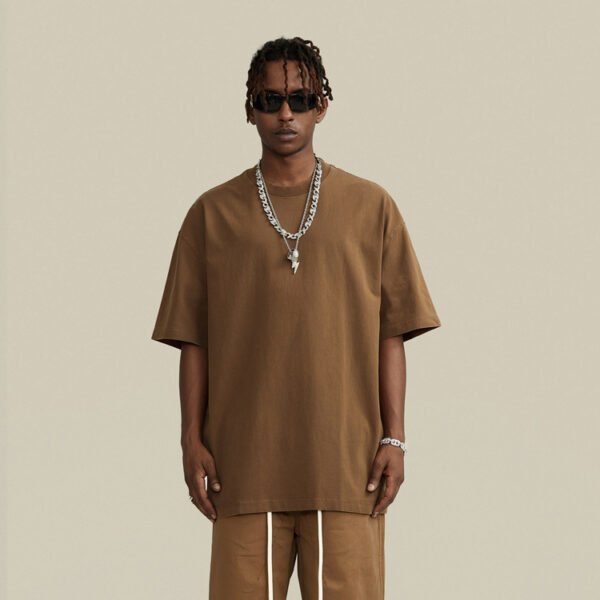

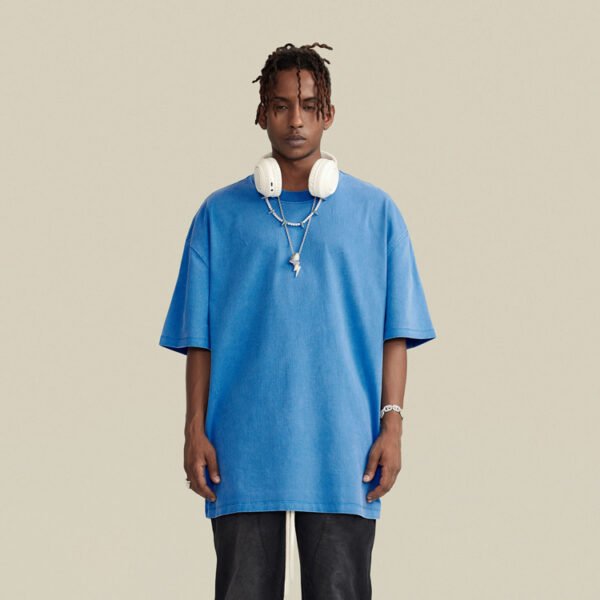









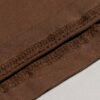
This brown streetwear T-shirt reference turns a subtle construction issue into a measurable development brief: stabilize the front placket, then space buttons so the opening follows the neckline without disturbing the relaxed silhouette or visual proportion.
1. Read the visual evidence before opening development.
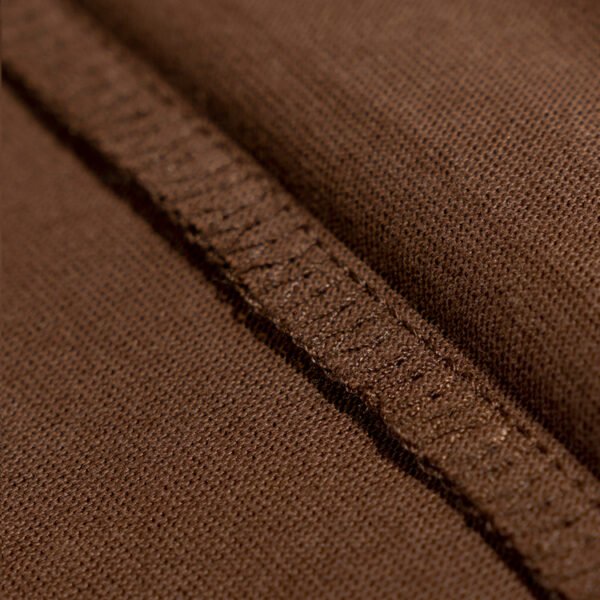
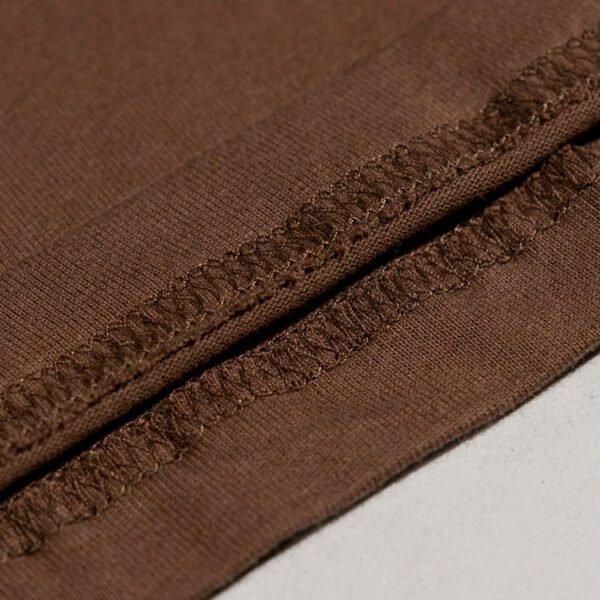
The supplied close-up shows a brown knit face, a curved ribbed collar edge, dense seam stitching, and a smooth body field. Those details support inspection of stitch density and edge alignment, but they do not verify buttons, placket layers, fiber percentage, GSM, or performance claims.
Because the front opening is outside the crop, the placket must be treated as an inferred development axis rather than an observed feature. The buyer should approve the intended opening length, button count, and relationship to the collar before pattern engineering begins.
2. Translate stability into pattern and sewing decisions.
A stable placket depends on controlled extension, suitable interfacing or reinforcement, balanced seam allowances, and stitching that does not pucker the knit. The sample should show whether the front edge remains straight when the garment hangs naturally and after the wearer opens the buttons.
Button spacing affects both load distribution and visual rhythm. Excessive pitch can allow the opening to gape, while tight pitch may crowd the neckline. VeeWen should map the spacing from the collar break downward, then confirm placement against the approved size specification.
3. Protect the neckline-to-placket transition.
The visible collar curve creates a useful proportion reference for the hidden front opening. If the placket begins too high, it may compress the rib edge; if it begins too low, the neckline can appear disconnected. The first sample should therefore assess the complete transition together.
The brown surface and dark seam definition make small alignment errors visually noticeable. Approval should cover collar symmetry, front-edge registration, buttonhole direction, and thread appearance under the intended lighting, with any correction recorded before grading across sizes.
4. Use VeeWen's workflow as a controlled checkpoint.
VeeWen's product-development workflow should convert this reference into an annotated tech pack covering the placket profile, reinforcement locations, button pitch, collar junction, and tolerance points. The pattern room can then prepare a sample that makes the inferred construction visible for buyer review.
After sample review, comments should separate proportion changes from sewing corrections, because changing button spacing can alter the front balance. The approved measurement set should become the production reference, while composition, GSM, and any performance requirement remain explicit confirmation items.
5. Make trade-offs visible before bulk commitment.
Heavier reinforcement can improve edge stability but may create a firmer hand or a visible ridge against the knit. Lighter construction may preserve softness while increasing the risk of rolling, stretching, or button stress. The correct choice depends on the buyer's wear expectation and target cost.
More buttons can distribute tension and create a structured appearance, but they add sewing operations and may conflict with a minimal streetwear direction. Fewer buttons simplify the front while demanding stronger edge control. Record the preferred balance in the approval comments.
6. Define the buyer approval gate.
Approve this style when the opened and closed placket retains its intended line, the button pitch looks even, and the collar-to-front junction remains symmetrical. Review the sample on a hanger and a fit model so static balance and movement behavior are both visible.
The final checkpoint should also confirm the color standard, label placement, button specification, size grading, and manufacturing quantity. The commercial brief is MOQ: 100 pieces per style, while all unverified material and performance details require written confirmation before purchase order release.
Buyer Questions
Does the image confirm a front placket?
No. The supplied crop shows the collar and knit body only, so front-opening length, button count, reinforcement, and button spacing require sample-based confirmation.
What should the first sample prove?
It should prove collar-to-placket alignment, stable front edges, even button pitch, clean buttonholes, acceptable hand, and consistent appearance while opened, closed, and worn.
Can the brown color be approved from this image?
Use the image as a visual direction only. Approve the production shade against a physical color standard, because screen display and lighting can alter brown perception.
What is the minimum commercial quantity?
The stated commercial minimum is MOQ: 100 pieces per style. Final quantities, size breakdown, trims, and any material requirements should be confirmed in the quotation.
Approve the placket direction for sampling.
Send the target measurements, button preference, color standard, and label requirements so VeeWen can prepare a focused sample for placket stability and spacing review.



Reviews
There are no reviews yet.