










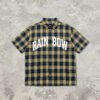
This custom plaid short sleeve shirt is developed around controlled interlining and edge stability. The oversized silhouette depends on relaxed movement, yet its bold plaid lines demand disciplined collar, sleeve, placket, and hem control. VeeWen can translate that balance into a measurable development checkpoint before bulk approval.
Stabilizing Relaxed Shirt Geometry
An oversized shirt distributes more fabric across the body, so unsupported edges can roll, ripple, or lose their intended line. Selective interlining adds controlled resistance where the collar, front opening, and hem must remain legible without making the entire garment rigid.
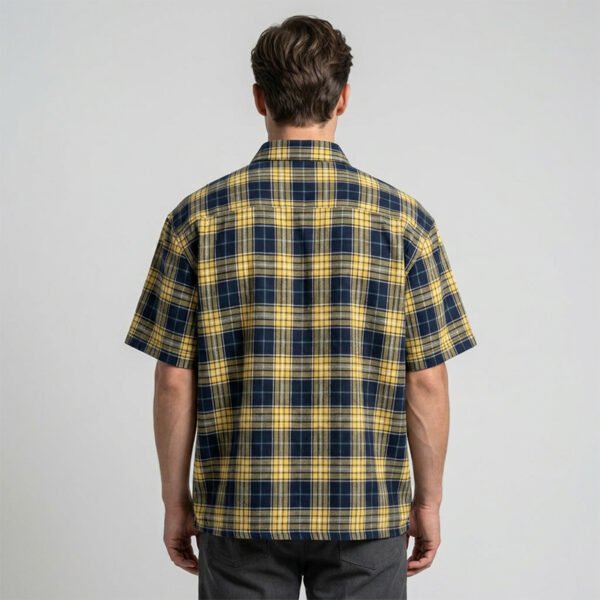
The supplied image shows a relaxed back silhouette framed by straight shoulder, side, and sleeve boundaries. That visual balance suggests a localized support strategy: reinforce turning points and openings, while leaving broad body panels flexible enough to retain casual movement.
Collar And Front Opening Control
The collar is a primary approval area because its visible shape establishes whether the shirt reads structured or slouchy. A light, compatible interlining can support fold recovery and seam clarity, while excessive firmness may conflict with the intentionally relaxed oversized proportion.
For development, VeeWen should compare collar samples using the same shell fabric, stitch density, and finishing route. The buyer should inspect neckline symmetry, front-opening straightness, and post-wash appearance before locking the interlining weight and fusing parameters.
Sleeve And Hem Edge Stability
Short sleeves and a curved shirt hem create separate edge behaviors. Sleeve openings need enough stability to avoid collapsing unpredictably, while the lower hem should follow the approved curve without torque. These areas should be evaluated independently because one support solution may not suit both.
The image presents sleeves ending cleanly against the arms and a rounded lower edge across the back. VeeWen can map reinforcement by panel and seam, then verify that edge control survives pressing, handling, and the proposed surface-finishing sequence.
Protecting Plaid Alignment
Plaid is unforgiving at construction junctions because horizontal and vertical lines make small distortions immediately visible. Interlining cannot correct inaccurate cutting, but stable edges help preserve alignment while panels are joined, pressed, and topstitched during assembly.
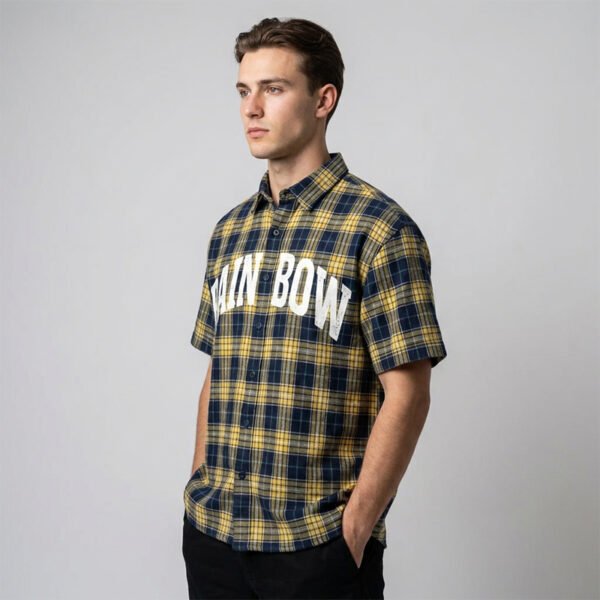
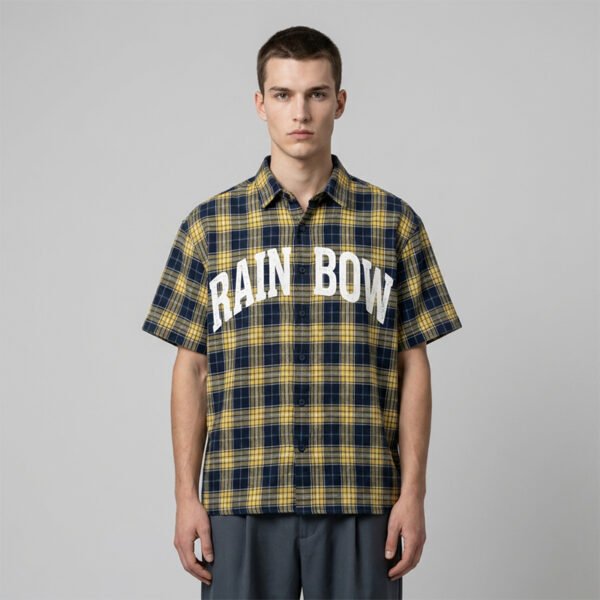
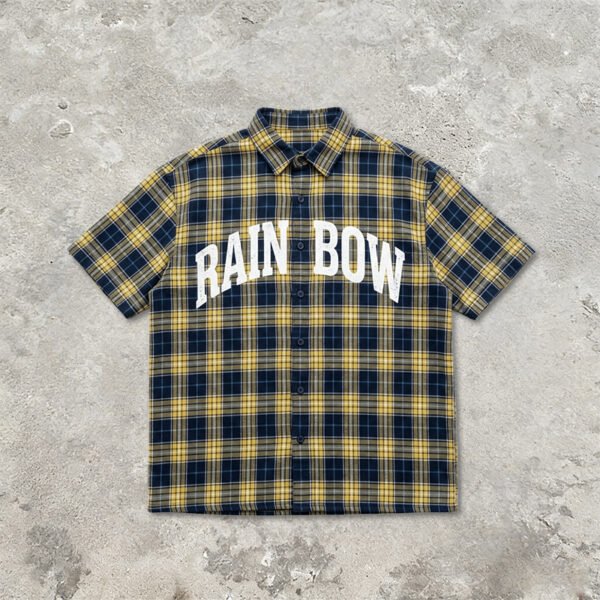
The supplied image shows large intersecting navy and mustard checks continuing across the back and sleeves. The buyer should approve matching tolerance at shoulder joins, side seams, sleeve attachments, and front edges alongside the interlining map.
VeeWen Development Checkpoint
VeeWen's workflow should begin by separating visual evidence from confirmed specifications: establish the approved plaid repeat, silhouette measurements, edge locations, and referenced surface treatments before selecting support materials. This keeps interlining decisions tied to actual construction loads rather than generic shirt assumptions.
During sample review, the development team can record collar roll, opening straightness, sleeve-edge recovery, hem waviness, and plaid alignment as separate observations. The buyer then approves a defined construction package before grading, ensuring the relaxed look remains reproducible across sizes.
Trade-Offs Before Bulk Approval
More interlining can improve edge definition, but it may increase stiffness, alter drape, or create a visible transition between supported and unsupported areas. Less support preserves softness, yet may allow the oversized silhouette to look untidy after finishing or repeated handling.
The decision should therefore be based on the garment's highest-visibility edges and intended wear response. Approve the option that keeps collar, opening, sleeve, and hem behavior consistent while preserving the image-led relaxed proportion and confirmed decoration route.
Buyer Questions
What should be confirmed first for this shirt?
Confirm the approved plaid repeat, shell composition, oversized measurements, collar shape, front opening, surface-treatment route, and interlining map before requesting the final development sample.
Can interlining be used throughout the garment?
It can be considered, but full-body support may reduce drape. A localized map usually deserves comparison across collar, opening, sleeve edges, and hem during sample review.
How should plaid alignment be evaluated?
Review horizontal and vertical continuity at shoulders, side seams, sleeve attachments, front edges, and hem. Record acceptable matching tolerances alongside edge stability observations.
What is the commercial minimum?
The exact commercial minimum is MOQ: 100 pieces per style. Final quantities, colorways, grading, and production planning should follow approved specifications and quotation review.
Approve The Edge-Stability Development Route
Send the target measurements, plaid artwork or repeat, decoration references, and preferred hand feel. VeeWen can organize an interlining comparison sample for review before the style advances toward confirmed production specifications.


Reviews
There are no reviews yet.