
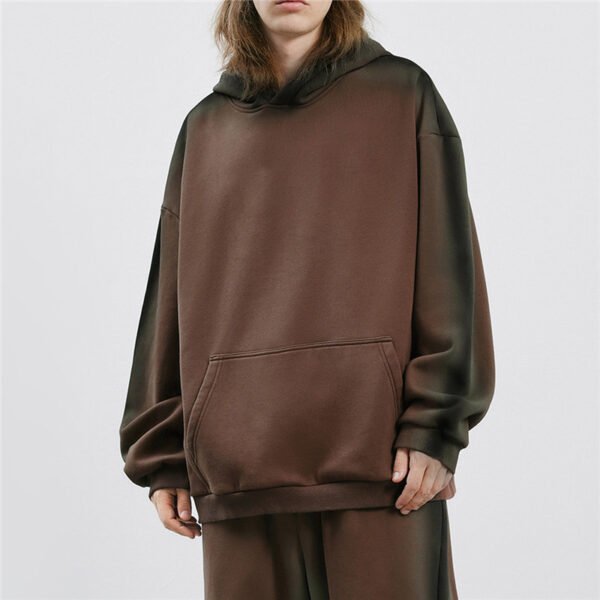




This custom unisex washed pullover hoodie is developed around a practical balance: enough fabric body for structure, but sufficient suppleness for the broad, relaxed drape shown in the supplied image. The approval target is visual movement, not maximum heaviness, across every major panel.
Drape Is the Primary Fabric Decision
A heavier fleece may create a more substantial hand, yet it can restrict the soft collapse visible through the sleeve folds. A lighter construction may improve movement, but could weaken the hood, pocket, and hem presence required by this silhouette.
The image shows fabric gathering naturally at the elbows, cuffs, and lower body rather than standing away from the wearer. That behavior suggests the development review should measure fall, recovery, and fold depth together, instead of approving weight as an isolated specification.
How the Silhouette Distributes Weight
The broad front panel, dropped shoulder, and extended sleeves create a large visual volume. If fabric weight is concentrated only in the body, the hood and sleeves may appear visually disconnected, producing an unbalanced garment during wear and photography.
A coordinated weight across body, hood, sleeves, and pocket supports the continuous rounded outline shown in the supplied image. Pattern measurements should therefore be reviewed alongside fabric behavior, especially around shoulder seams, pocket openings, cuffs, and the lower rib band.
Washed Appearance Requires Controlled Evaluation
The brown surface presents quiet tonal variation rather than a sharply contrasting effect. Because washing can alter softness, dimensions, and surface character, the development sample should evaluate the finished garment after the intended wash process, not only the greige fabric beforehand.
The key trade-off is between a visibly aged surface and dependable dimensional stability. A stronger wash may deepen character while changing drape and shade, whereas a gentler process may preserve structure but reduce the softened appearance expected from this product direction.
Details Must Follow the Intended Fall
The kangaroo pocket sits broadly across the lower front and visually reinforces the hoodie's relaxed scale. Pocket placement, opening tension, and reinforcement should be developed so the component follows the body without pulling the front panel into an unintended stiff or sagging shape.
The hood also affects perceived fabric weight because it frames the neck and shoulders. A hood that is too light may collapse separately from the body, while excessive weight can drag the neckline; sampling should confirm balanced support, opening comfort, and visual continuity.
VeeWen Development Workflow Checkpoint
VeeWen can translate this argument into a controlled development sequence: establish the intended drape through a base pattern, compare fabric options on the complete silhouette, then assess the washed sample for dimensional and visual changes before approving bulk specifications.
The review should record fabric reference, measured weight, wash route, pattern dimensions, and post-wash observations in one approval package. This keeps the commercial decision tied to the actual garment shown, rather than allowing a nominal fabric description to define the product alone.
Bulk Approval Should Follow Wear Behavior
Before bulk confirmation, the buyer should inspect the hoodie on a person or dress form from front, side, and back views. Particular attention belongs on sleeve collapse, hood balance, pocket distortion, hem recovery, and whether the body retains relaxed volume without appearing limp.
The approval checkpoint is a complete washed sample in the intended size range, supported by a final measurement and appearance review. If the drape is too rigid or too collapsed, adjust fabric or pattern before committing to the stated commercial minimum.
Buyer Questions
What fabric weight should this washed hoodie use?
The correct weight depends on approved drape, hood support, sleeve collapse, and wash response; VeeWen should confirm GSM after evaluating the complete sample.
Is the displayed brown shade a fixed production color?
No. The image establishes a brown visual direction with tonal variation; final shade, wash intensity, and tolerance require approval against a physical color standard.
Can the silhouette be adjusted for different markets?
Yes. Body length, sleeve length, shoulder width, hood dimensions, and rib proportions can be developed while preserving the intended relaxed drape.
What is the minimum order quantity?
The commercial minimum is MOQ: 100 pieces per style, with final production details confirmed after specifications, approvals, and order review.
Approve the Drape Before Bulk Development
Send your target measurements, reference handfeel, wash direction, and label requirements so VeeWen can prepare a sample package for structured drape approval.



Reviews
There are no reviews yet.