

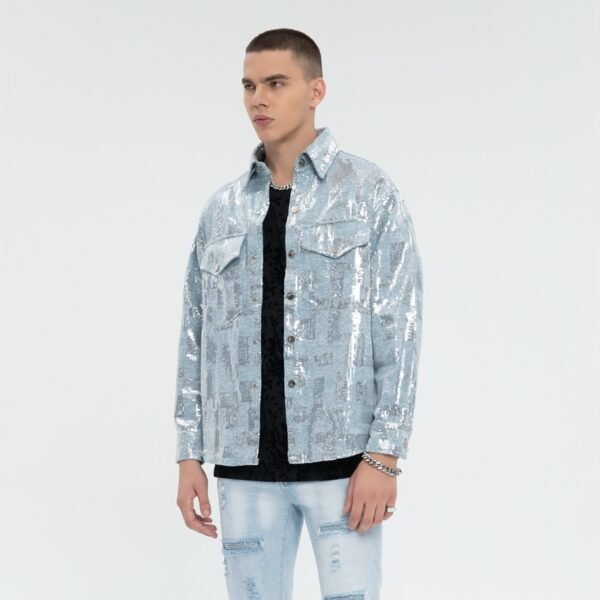


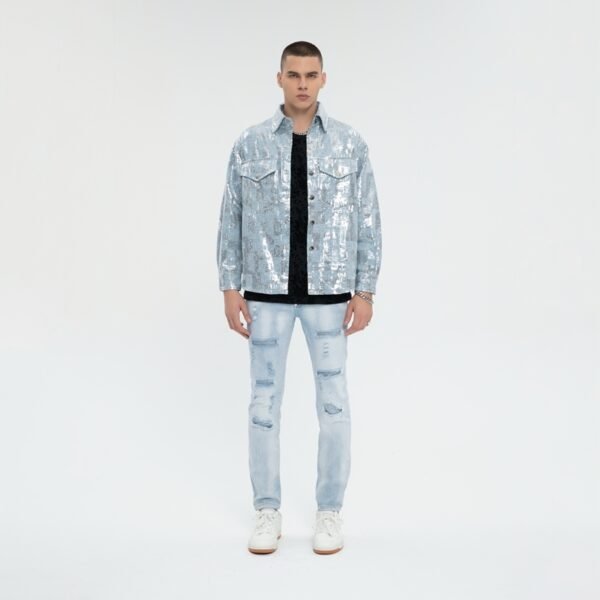

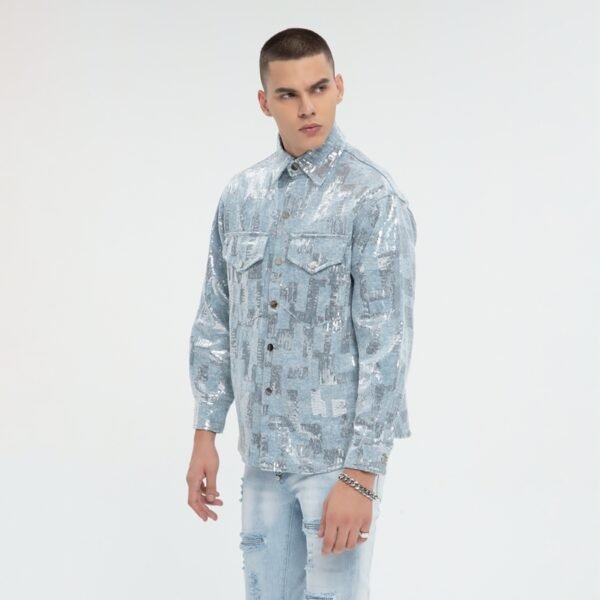









This custom men's reflective sequin denim jacket is developed around pressing method and pile protection. Its directional silver-black surface, structured denim silhouette, chest flap pockets, collar, and metal buttons create a high-impact exterior that depends on careful pressure control during finishing and assembly.
Surface Direction Is a Pattern Concern
The supplied image shows a strong vertical silver-black surface direction across the front, sleeves, and pocket areas. Whether created by sequins, reflective elements, coating, or another treatment, that direction affects cutting, panel matching, and the jacket's finished visual rhythm.
A buyer should define the acceptable orientation before sampling. Randomized placement may create a more irregular effect, while controlled alignment produces a sharper surface. Either route changes marker planning, handling time, and the amount of visible variation between adjacent panels.
Pressure Can Change the Hand
Pressing is not a neutral finishing step for a raised or reflective surface. Excess heat can soften adhesive or alter reflectivity, while excessive pressure can flatten pile, create shine marks, or leave pocket flaps and seam allowances visibly different from the main body.
The development sample should establish a written pressing window with protective interlayers and contact rules. The correct method must preserve the surface effect while still allowing collars, cuffs, hems, and button areas to settle cleanly.
Pocket Flaps Need Local Protection
The two chest flap pockets interrupt the directional surface and add layered construction where pressure is naturally concentrated. Their edges, buttons, and flap folds can expose the pile to crushing during sewing, pressing, inspection, and final packing.
Pocket components should therefore be evaluated separately from the broad front panels. A protected pressing setup may require different contact surfaces or shorter exposure around the flaps, ensuring the utility details remain crisp without creating rectangular flattened impressions.
Denim Structure Balances Surface Drama
A denim jacket needs enough body to support its collar, button stand, pockets, and sleeve shape, yet a heavy or stiff base can intensify pressure marks on a decorative surface. The visible silhouette is structured, but the exact denim weight and finish are unverified.
VeeWen should develop the surface treatment alongside the selected denim rather than afterward. Changes in base stiffness, shrinkage, or seam bulk can alter how the pile lies, so the buyer should approve hand feel and appearance together.
Workflow Protects the Decoration
VeeWen's workflow should map surface direction, seam allowances, pressing zones, protective materials, and packing folds in the technical file. This product needs a handling protocol because the decorative face can be affected before the garment reaches final inspection.
During prototype review, the buyer should inspect collar points, pocket flaps, button stands, cuffs, and folded storage areas under consistent lighting. VeeWen can then refine pressing sequence and packing orientation before the finish is released for production.
Approval Requires Surface Consistency
The images confirm the high-contrast surface appearance and jacket architecture, but they do not verify whether the effect is sequined, reflective, coated, woven, or mechanically raised. Composition, attachment method, abrasion behavior, wash care, and light response remain open specifications.
Approve the style when the surface direction is consistent, the pile remains intact after handling, and pressing leaves no unacceptable marks. Confirm the decorative technique, denim composition, care label, packaging method, and tolerance for panel variation before production.
Buyer Questions
Why is pressing the key development issue?
Raised or reflective surfaces can flatten, shine, shift, or lose contrast under unsuitable heat and pressure, especially around seams, pocket flaps, collars, and folded packaging.
Is the surface definitely made from sequins?
The source wording references sequins and reflective denim, but the supplied image alone cannot verify attachment method, pile structure, coating, or surface composition.
Can the jacket use a different base denim?
Yes, but changes in denim weight, stiffness, shrinkage, and seam bulk may change surface pressure, silhouette, handle, and the approved pressing method.
What is the minimum order quantity?
The exact commercial minimum for this VeeWen development record is MOQ: 100 pieces per style, subject to finalized materials and approved surface standards.
Approve the Surface-Protection Protocol
Share the target denim hand, surface technique, lighting standard, and care expectations. VeeWen will coordinate pressing protection with pattern construction before the decorated prototype reaches approval.


Reviews
There are no reviews yet.