
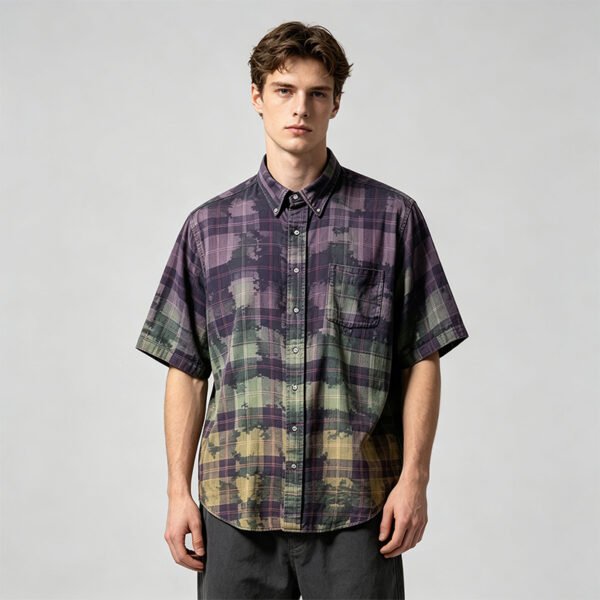

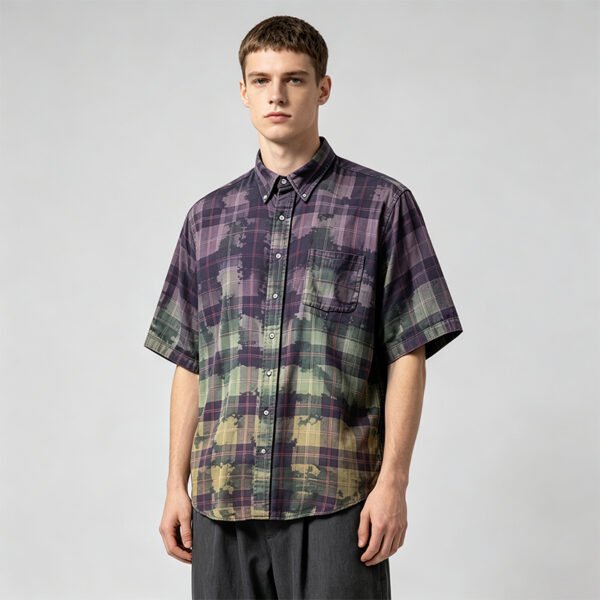


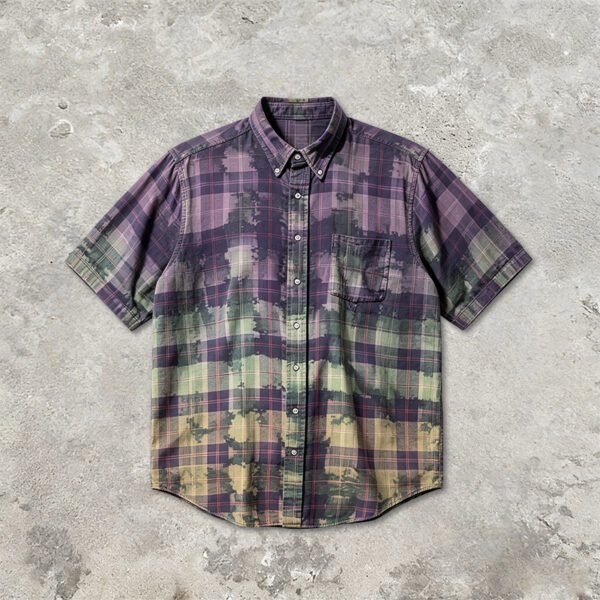
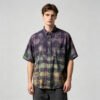
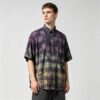
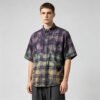



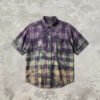
This custom short-sleeve shirt is developed around plaid registration across cut panels. Its visual impact comes from keeping an irregular spray-dye grid coherent through the button placket, chest pocket, sleeves, side seams, and curved hem while preserving the intentionally varied coloration.
Registration Starts With the Plaid Map
This shirt depends on a planned relationship between plaid direction, panel grain, and seam allowances. The image shows horizontal and vertical lines spanning the front, sleeves, and lower body, so cutting must preserve a repeat map before assembly begins.
A registration map should identify the dominant line, acceptable offset, and visual priority at each junction. The front placket and chest pocket deserve the tightest review because their interruptions are positioned in the most noticeable viewing area.
The Pocket Is a Visible Approval Checkpoint
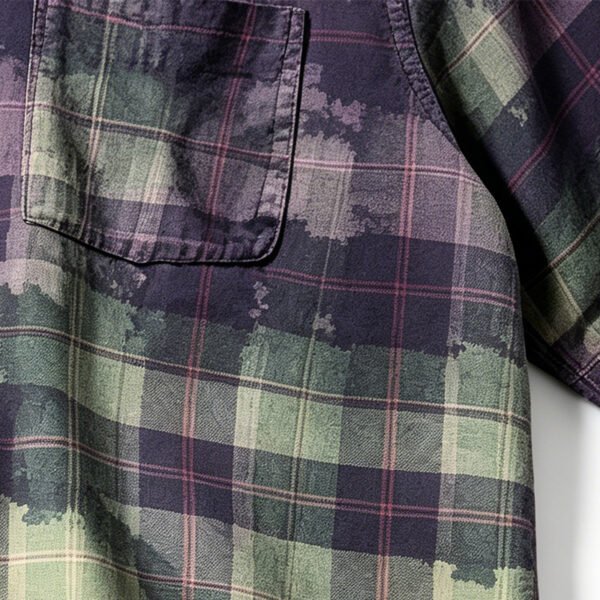
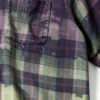
The single chest pocket is not merely storage; it is a small alignment test placed on the upper front. The supplied image shows surrounding plaid lines approaching its edges, making pocket placement and matching materially affect the shirt's perceived precision.
During development, the pocket template should be checked against the body repeat before stitching. Buyers should review whether the pocket blends into the plaid, remains deliberately outlined, or uses a controlled offset that supports the spray-dye character.
Placket Continuity Controls the Center
The button placket divides the shirt into two visual fields while the plaid continues around it. Any change in width, button spacing, or fold position can make the pattern appear shifted, even when individual panels were cut accurately.
VeeWen's development review should lock the placket width, button positions, and front-panel matching together. A paper or digital placement approval can establish the centerline before the first sample is judged for visual continuity.
Sleeves and Side Seams Need Separate Rules
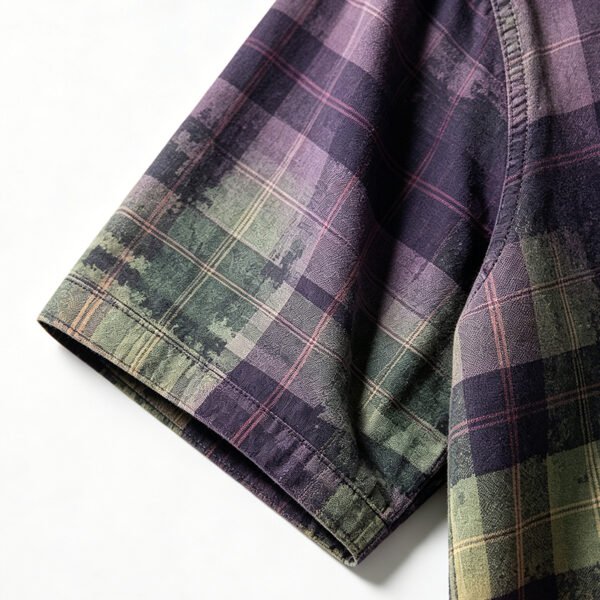
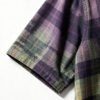
Short sleeves introduce cross-grain and circumference changes that can disrupt a flat plaid repeat. In the supplied image, the sleeve plaid remains part of the overall story, but its relationship to the body and underarm seam requires its own tolerance.
The side seam should be reviewed from the front and profile views, not only on a flat table. VeeWen can use the approved pattern, marker direction, and sample photographs to distinguish unavoidable shaping from preventable registration drift.
Spray-Dye Variation Must Stay Intentional
Spray-dye coloration adds irregular tonal movement over the plaid, so registration cannot be judged only by exact color blocks. The image shows plum, charcoal, olive, and mustard areas changing softly across the shirt while the underlying grid remains recognizable.
The buyer should approve a visual range for tonal variation alongside the plaid map. This separates acceptable surface character from accidental imbalance and gives sampling teams a shared basis for reviewing front, back, sleeves, pocket, and hem.
VeeWen Workflow and Production Gate
VeeWen can translate this axis into a focused development sequence: confirm source composition, map the plaid, mark matching priorities, review the first assembled sample, and record corrections by panel before production approval.
The commercial checkpoint is specific: approve the registration tolerance, spray-dye appearance, and construction sample together. VeeWen's MOQ: 100 pieces per style applies when the style is released for manufacturing consideration.
Buyer Questions
Is the shirt confirmed as cotton?
The supplied source title states 100% cotton. Fiber verification, weave structure, fabric weight, shrinkage behavior, and final finishing should be confirmed during development.
Why does plaid registration matter here?
The plaid crosses the front, sleeves, pocket area, placket, and hem. Misalignment can make the garment look careless, while controlled matching supports a deliberate custom appearance.
Can the spray-dye effect vary?
Yes, visual variation may be developed, but the buyer should define acceptable tonal range and balance before sampling so irregularity remains intentional across production panels.
What is the minimum order?
VeeWen's exact commercial minimum is MOQ: 100 pieces per style. Final feasibility remains subject to approved materials, artwork, patterns, construction, and production review.
Approve the Plaid Registration Map
Send your artwork, target measurements, and preferred registration priorities to begin review. VeeWen will develop the matching checkpoints and assess the style for MOQ: 100 pieces per style.



Reviews
There are no reviews yet.