






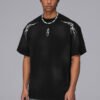


This custom oversized black graphic tee is built around seam-bulk management at the shoulders, where substantial fabric and concentrated artwork can change drape. The development goal is a broad, structured silhouette that still lies cleanly through layered intersections and remains comfortable in wear.
Why Heavy Fabric Magnifies Seam Bulk
At 240GSM, the source-referenced cotton jersey carries more body than a lightweight tee, so stacked seam allowances become easier to see and feel. Where shoulder panels, bindings, reinforcements, or graphic supports converge, small excesses can interrupt the intended oversized drape.
The objective is not simply to reduce material. It is to distribute layers so the shoulder remains stable without creating a rigid ridge. Buyers should judge the garment on-body and laid flat, checking whether the intersection supports shape while remaining visually controlled.
Reading the Shoulder Intersections
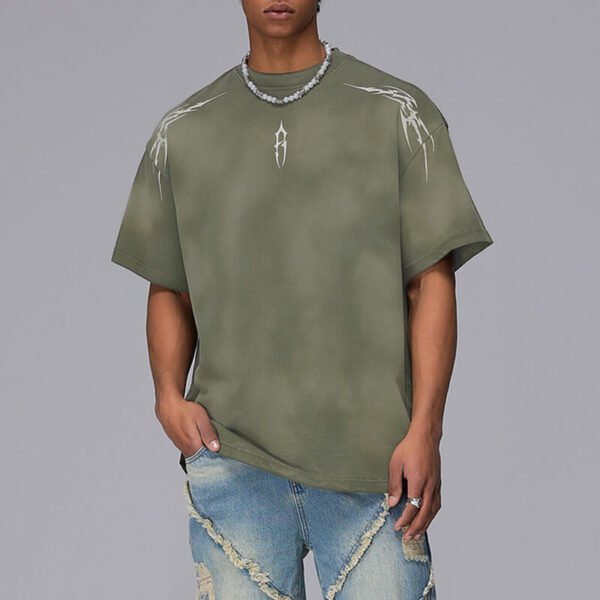
The main image shows light graphic elements extending across both shoulder areas, with a separate vertical chest symbol. These placements make the upper body a focal zone, so uneven seam height or puckering can become more noticeable against the black ground.
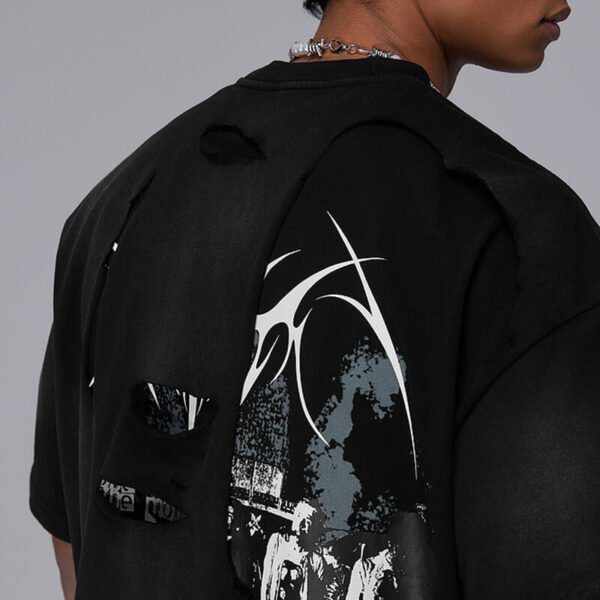
A practical review should inspect shoulder-to-sleeve joins, neckline reinforcement, and any internal support beneath decorated zones. Each intersection needs enough allowance for strength, but not so much stacked thickness that the graphic field appears lifted or the sleeve hangs unevenly.
Graphic Placement and Construction Order
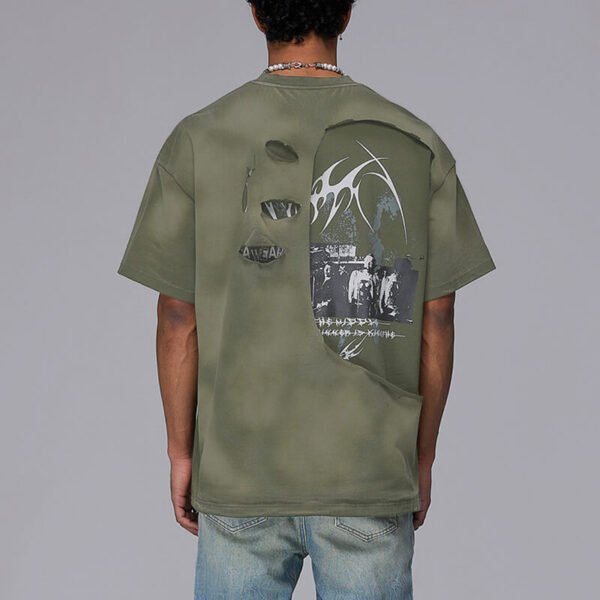
Artwork and sewing sequence influence one another when decoration approaches a seam. Printing or embroidery too close to a thick junction can reduce flatness, while sewing first may limit access or create registration challenges. The sample must establish safe artwork boundaries around every bulky intersection.
The trade-off is placement impact versus manufacturing tolerance. A graphic can extend farther across the shoulder for stronger visual identity, but tighter margins demand more controlled handling. Confirm the approved artwork map only after the construction sequence has been reviewed with the sample.
Drape, Comfort, and Layer Distribution
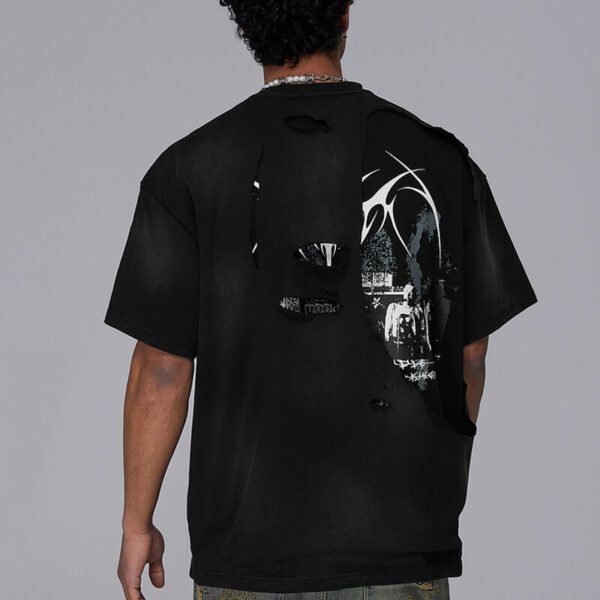
An oversized fit depends on controlled volume rather than random looseness. Excess seam bulk at the shoulder can make the garment stand away from the body, add pressure under movement, or create a stiff transition from sleeve to torso.
VeeWen should assess the sample through arm elevation, forward reach, and relaxed standing positions. These simple movements reveal whether the shoulder intersection flexes naturally, whether the sleeve pivots correctly, and whether internal layers create discomfort that a flat inspection might miss.
VeeWen Development Workflow
For this style, VeeWen's workflow should map every high-layer intersection before sampling, identifying seam allowances, reinforcement pieces, decoration limits, and pressing requirements. This converts the visual concern into a construction review that pattern, cutting, sewing, and decoration teams can follow.
The sample checkpoint should compare seam profile, shoulder balance, graphic registration, and movement together. Once the buyer approves those relationships, the construction notes can be carried into the production file with clear tolerance points for repeatable execution.
Buyer Approval Checkpoint
Approve the style only after checking the shoulder seams from front, side, and inside views. Look for ridges, puckering, uneven sleeve pitch, trapped seam allowances, or visible distortion beneath the shoulder graphics and centered chest symbol.
The decision should record acceptable bulk, drape, artwork boundaries, and reinforcement details. If the upper body still feels overloaded, revise the layer stack or placement before confirming the sample, because later corrections may affect multiple operations.
Buyer Questions
Why is 240GSM relevant to seam design?
Heavier jersey creates more stacked thickness at intersections, making ridges, stiffness, and uneven drape more visible than on lightweight constructions.
Which areas need the closest inspection?
Inspect shoulder-to-sleeve joins, neckline reinforcement, artwork edges near seams, and any internal supports concentrated beneath the upper-body graphics.
Can oversized fit hide construction problems?
No. Extra volume can amplify uneven shoulder pitch, rigid transitions, and hanging differences, so movement and side-view checks remain essential.
What is the commercial minimum?
MOQ: 100 pieces per style. Confirm fabric, artwork, seam allowances, decoration limits, grading, and approved bulk tolerances before ordering.
Approve the Seam-Bulk Profile
Share the artwork map and target measurements with VeeWen, then review the shoulder sample for layer thickness, drape, movement, and registration before approving production.


Reviews
There are no reviews yet.