
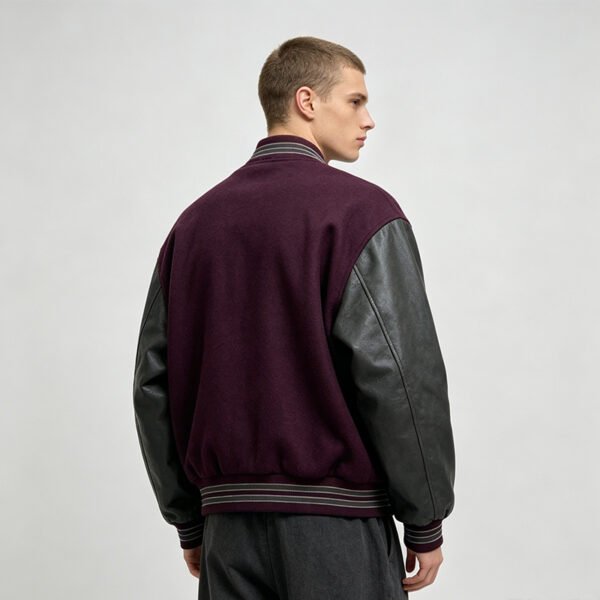


This custom contrast sleeve varsity jacket is built around color discipline. The supplied rear image shows a deep burgundy body, black sleeves, and striped rib trims whose relationship defines the garment. Because broad panels and smaller trims reflect light differently, color approval must be based on controlled viewing conditions.
Why Lighting Changes Color Decisions
The supplied image shows a burgundy back panel beside black sleeves, but color perception depends on surface texture, gloss, camera exposure, and surrounding neutrals. A shade that appears balanced in one studio setup may look redder, darker, or flatter elsewhere.
For this jacket, lighting is therefore part of the technical standard rather than a presentation detail. Buyers should define the viewing environment, compare approved references under that environment, and record whether body, sleeve, and rib colors remain visually coordinated.
Large Panels Make Drift Visible
The rear view exposes a broad burgundy field with few interruptions, making any shade shift immediately noticeable. The black sleeves frame that field and intensify perceived contrast, so even moderate variation can alter the jacket's visual balance across different production lots.
VeeWen should sample body and sleeve materials together rather than approving them independently. The review should include folded and worn positions, because shadows around the shoulder and lower back can exaggerate differences that are less obvious on flat material swatches.
Rib Trims Need Their Own Reference
The collar, cuffs, and waistband use striped rib details that repeat the dark palette in narrower bands. Their smaller scale does not make them less important; stripe spacing, yarn reflection, and compression can change how burgundy and black are perceived.
Trim approval should use physical rib samples beside the chosen body and sleeve materials. Buyers should confirm stripe order, width, repeat, and color relationship before cutting, because replacing a rib later can shift the entire jacket's apparent contrast.
Material Texture Influences Matching
The image suggests a different visual surface between the body and sleeves, which may result from material choice, coating, grain, or lighting response. Two components can share a nominal color while appearing unrelated when one absorbs light and the other reflects it.
Color development should consequently assess hue, value, and surface response together. VeeWen's review can compare materials at multiple angles and distances, helping buyers decide whether the intended contrast is crisp, muted, or deliberately tonal.
Translating the Argument Into VeeWen Workflow
VeeWen's workflow should establish a color package containing body fabric, sleeve material, rib, thread, labels, and any screen patch reference. The first gate is a controlled lightbox or equivalent review where each component is viewed beside the others.
After the color package is approved, production documentation should preserve the lighting condition, reference samples, acceptable tolerances, and component identities. A pre-production review can then verify that cut panels, assembled sections, and finished garments continue to match the approved relationship.
Buyer Approval Checkpoint
Approve this jacket when the burgundy body, black sleeves, and striped ribs hold their intended hierarchy under the agreed lighting conditions. The supplied image confirms the design relationship, but it cannot establish colorfastness, coating behavior, or production consistency.
Before bulk release, inspect assembled samples from multiple angles and compare them against retained references. Confirm the source material basis, patch or decoration method, rib specification, care labeling, and color tolerances so the approval remains actionable.
Buyer Questions
Why is controlled lighting important for this jacket?
Body, sleeves, and rib trims may reflect or absorb light differently. Controlled viewing helps buyers judge their true relationship and prevents approval decisions based only on photography.
Can the burgundy and black colors be changed?
Yes, VeeWen can develop alternative color combinations, but every body, sleeve, and rib pairing requires coordinated material sampling and lighting-based approval.
Does the source reference confirm the material composition?
It references a 70P/30PU construction, but exact fiber terminology, substrate details, and component allocation require confirmation during material development.
What is the minimum order quantity?
The commercial minimum is MOQ: 100 pieces per style. Confirm colorways, size ratio, trims, decoration, labeling, and packaging before production release.
Set the Color Approval Standard
Share your color references, preferred lighting conditions, and trim requirements with VeeWen for coordinated panel sampling, assembled review, and a documented pre-production approval checkpoint.



Reviews
There are no reviews yet.