






This custom cargo short is built around utility-pocket architecture, but its defining development question occurs after sewing: how packaging folds affect presentation. VeeWen's focus is preserving pocket relief, zipper visibility, waistband alignment, and a clean black surface from finished inspection through buyer unpacking.
Folding Changes The Product
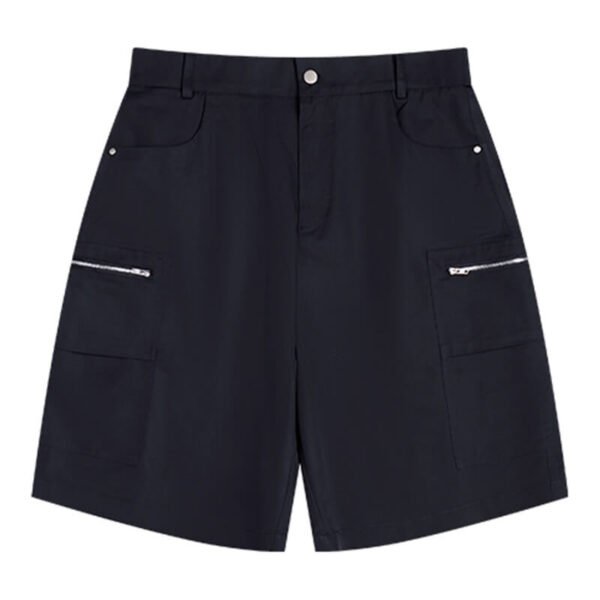
Cargo shorts contain more raised components than plain shorts, especially around side pockets, flaps, zippers, and reinforcement points. The supplied image shows a broad, clean front presentation; folding across that pocket architecture can compress volume and create lines that were absent during final inspection.
Packaging therefore becomes part of product development rather than a warehouse afterthought. The team should record the natural fold path, identify hardware contact points, and decide whether pocket flaps lie flat, remain lightly raised, or receive protective separation during packing and transit.
Pocket Relief And Hardware
The visible side pocket combines a flap compartment with a horizontal zipper above it, creating different thicknesses within one compact area. If folded directly against the opposite panel, the zipper pull may emboss the fabric, while the flap can acquire a sharp unwanted crease.
A packing trial should inspect the shorts immediately after folding and again after resting under normal carton pressure. Confirm that the zipper closes smoothly, the flap returns to its intended shape, and no hardware edge leaves a visible mark on the black surface.
Black Surface Presentation
Black fabric makes folding defects especially noticeable because pressure can create directional shine, pale abrasion, or irregular light reflection. The image presents a restrained matte appearance, so excessive compression may change how the shorts read even when the cloth remains physically undamaged.
VeeWen's development sample should be reviewed under consistent lighting from folded, hanging, and worn positions. Buyers should distinguish removable packing creases from permanent surface change, then set handling and folding instructions that protect the approved visual character.
Waistband And Leg Geometry
The waistband, front closure, and loose straight legs create a compact upper fold but a wider lower footprint. If the legs are stacked unevenly, the garment can arrive with a skewed top edge or one side seam pushed forward, weakening the first presentation.
Measure the folded package as well as the open garment, because carton efficiency can compete with shape retention. The right fold should keep the waistband square, prevent leg twisting, and avoid placing the cargo pocket directly beneath concentrated pressure whenever possible.
VeeWen Development Workflow
VeeWen should translate the packaging thesis into a packing specification linked to the tech pack, including fold dimensions, hardware orientation, pocket positioning, protective materials, and unpacking inspection points. This connects sewing, finishing, packing, and logistics decisions to the actual pocket construction.
During sample review, buyers should test the proposed fold with the approved garment, not a simplified substitute. Record photographs and dimensional checks before packing, after controlled compression, and after unpacking, so revisions target the exact presentation failure rather than altering the cargo design unnecessarily.
Approval And Production Handoff
The final approval checkpoint should compare the packed and unpacked shorts for pocket definition, zipper function, surface appearance, waistband squareness, and leg symmetry. The supplied image confirms a black utility direction, but final acceptance should use an approved physical garment under agreed lighting.
Release the style when the packing method protects both the garment and its visual message. Document carton orientation, fold sequence, hardware safeguards, and acceptable recovery time, then carry those instructions into production so presentation remains repeatable at commercial scale.
Buyer Questions
Why does folding matter for these cargo shorts?
Cargo pockets, flaps, and zippers create uneven thickness. Folding across them can flatten utility details, mark the surface, shift seams, or leave presentation creases that affect buyer and retail inspection.
Is the nylon-spandex composition verified?
No. The source wording states a nylon-spandex blend, but the exact percentages should remain provisional until VeeWen receives material documentation and confirms the approved fabric.
What should the packing trial measure?
Measure folded dimensions, waistband squareness, pocket recovery, zipper protection, surface appearance, leg alignment, and the garment's condition immediately after unpacking and after resting.
What is the order minimum?
The commercial minimum is MOQ: 100 pieces per style. Production remains subject to approved materials, specifications, sample acceptance, packaging instructions, and documented purchase-order requirements.
Approve The Presentation Packing Trial
Send the pocket layout, packaging preference, carton constraints, and presentation standard to VeeWen for a controlled fold trial covering recovery, hardware protection, surface appearance, and unpacked shape.


Reviews
There are no reviews yet.