
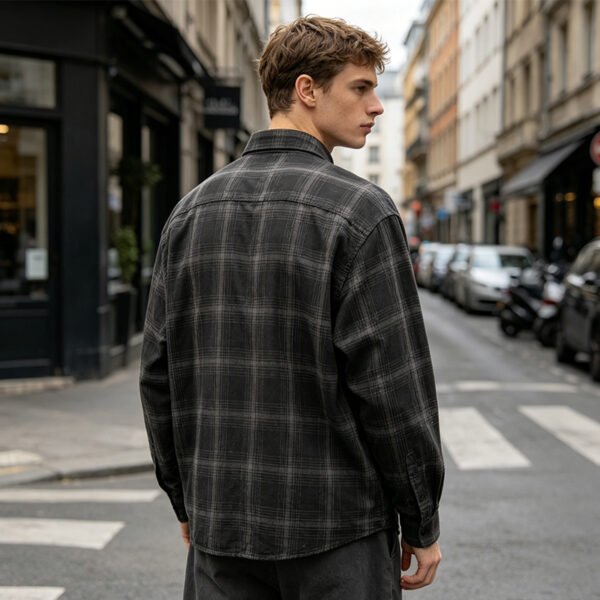
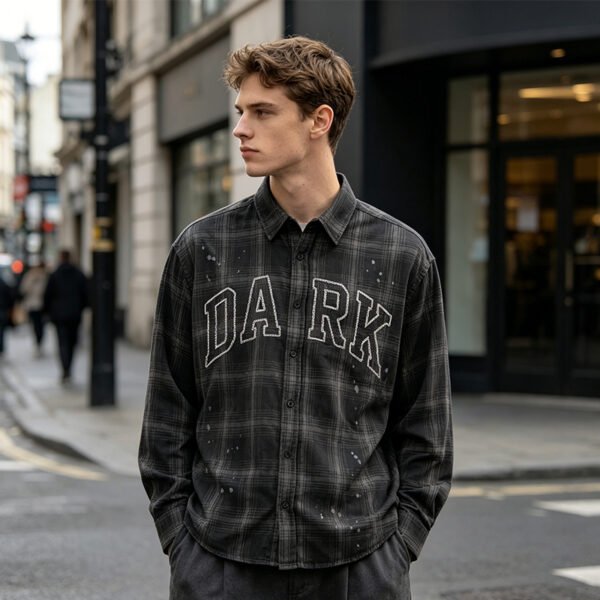


This custom plaid zip-front overshirt is developed around one decisive junction: where the collar stand meets the zipper top. Controlling that intersection supports a level neckline, clean plaid presentation, and comfortable layering while retaining the relaxed, softly structured character visible in the supplied rear view.
Why the Junction Controls the Garment.
The zipper cannot simply finish beneath a completed collar without coordinated pattern engineering. Its top stops, tape bulk, seam allowances, and facing layers converge near the collar stand, creating a concentrated area where excess thickness can lift one collar point or twist the neckline.
The supplied rear view shows a level collar line resting close to the neck despite the garment's generous body. That balance becomes the approval reference: the proposed front closure must maintain the same controlled seating after the zipper, facings, and topstitching are introduced.
Engineering the Collar-to-Zipper Intersection.
VeeWen would establish the collar stand height and finished neckline circumference before locking the zipper length. The zipper top should terminate at a defined relationship to the stand seam, allowing the collar to close cleanly without the puller crowding the throat or exposing facing edges.
A sampling checkpoint should inspect both fully closed and partially open positions. When closed, the neckline should remain symmetrical; when open, the collar should fall naturally rather than spring outward. Zipper tape extension, seam grading, and localized reinforcement can then be adjusted deliberately.
Plaid Makes Alignment Measurable.
The charcoal plaid provides an immediate visual audit of assembly accuracy. Horizontal lines can expose unequal collar points, while vertical references can reveal a shifted closure. Because the back appears uninterrupted and orderly, front development should preserve similarly intentional registration wherever production geometry reasonably permits.
Exact matching at every seam may increase fabric consumption and cutting complexity, especially if the plaid repeat is large or irregular. The buyer should therefore rank closure center, collar edges, chest area, and side seams by importance before markers and cutting tolerances are finalized.
Preserving the Relaxed Layering Shape.
Dropped shoulder seams, broad sleeves, and a straight lower body create the easy proportion visible in the image. The collar and zipper junction must support that silhouette without making the upper chest rigid, so reinforcement should remain localized rather than spreading unnecessary stiffness across the front.
Fit approval should include the intended underlayer because added bulk changes neckline circumference and zipper behavior. Buyers should evaluate shoulder drop, sleeve mobility, collar comfort, and front hang on the target size, then confirm whether the garment functions as a shirt or light overshirt.
Material and Finish Trade-Offs.
The image suggests a soft, brushed or washed woven surface, but fiber content, fabric weight, and finishing process are not verified. A softer cloth may improve drape and vintage character, yet it can also require additional stabilization near the zipper to resist rippling or stretching.
A firmer woven may produce cleaner plaid registration and a sharper collar, although it could reduce the relaxed hand implied by the photograph. Development should compare appearance, recovery, seam response, and collar roll using the nominated bulk fabric rather than relying only on a visual reference.
VeeWen Development and Approval Gate.
VeeWen would translate the approved design direction into pattern geometry that coordinates neckline shape, collar stand, facing, zipper allowance, and plaid placement. The first sample should document the intersection from inside and outside, making construction consequences visible before trims or cutting assumptions become fixed.
Bulk approval should follow a sealed sample confirming collar symmetry, zipper operation, front plaid priority, and layered fit. The buyer's decisive checkpoint is the closed neckline: approve only when the zipper sits flat, both collar points balance, and the relaxed body remains undisturbed.
Buyer Questions
Why approve the collar and zipper together?
Their seam allowances, reinforcement, and finished positions occupy the same compact area. Separate approvals can create crowding, uneven collar points, exposed zipper tape, or a neckline that no longer closes comfortably.
Can the plaid match at every seam?
Matching priorities depend on repeat dimensions, fabric stability, pattern shapes, and acceptable consumption. Buyers should identify the most visible zones first, typically the closure center, collar edges, pockets, and upper body.
What should the fit sample be worn over?
Use the intended commercial underlayer during fitting. A T-shirt, sweatshirt, or knit changes chest bulk, neckline comfort, sleeve mobility, and zipper tension, so the approval condition should match expected customer use.
Which details remain To Confirm?
Fiber composition, fabric weight, zipper specification, internal reinforcement, wash method, measurements, and plaid repeat remain unverified. These details should be recorded in the technical package and confirmed on the development sample.
Approve the Junction Before Finalizing the Overshirt.
Send VeeWen your target measurements, nominated fabric, plaid matching priorities, zipper reference, and intended underlayer. We will develop the collar-to-zipper relationship for review, with MOQ: 100 pieces per style after specifications and the sealed sample are approved.


Reviews
There are no reviews yet.