


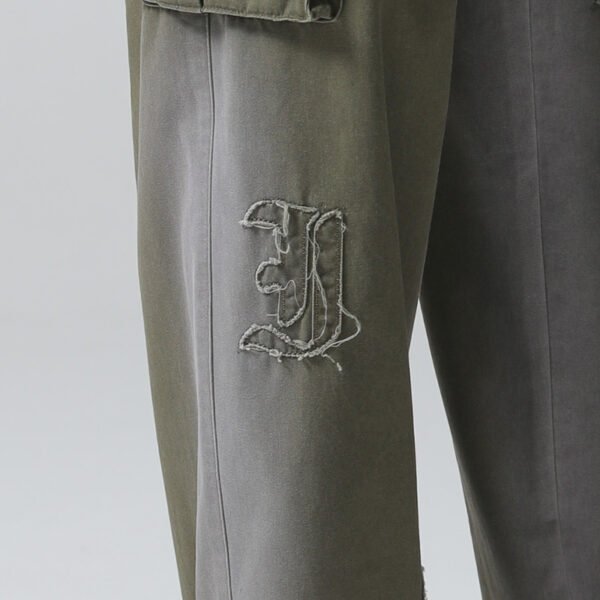


This cargo pant is developed around the interaction between vintage washing and distributed letter decoration. The olive surface, layered utility pockets, and raised motifs create a clear approval challenge: preserve intentional aging while keeping every graphic legible, balanced, and securely integrated.
Why Wash Timing Controls the Graphic Result
The supplied image shows a softened olive ground with tonal lettering that reads through texture rather than sharp color contrast. That effect depends on whether motifs are applied before or after washing, because abrasion, moisture, and seam movement can change their edges and surface visibility.
Applying decoration before a stronger wash may create naturally integrated aging, but it can reduce relief, fray boundaries, or shift tonal balance. Applying it afterward protects graphic definition, yet may make the motifs look newly added against an older body.
Reading the Pocket and Panel Evidence
The cargo layout adds two large side pockets and smaller layered compartments, producing interruptions across the thigh. These areas can shield fabric from abrasion or create extra rubbing at pocket edges, so a wash recipe must be evaluated on panels, pocket flaps, and attachment seams.
Letter motifs appear on the upper thigh, below the pockets, and near the lower legs, distributing attention across changing surfaces. The development target is not identical fading everywhere; it is a controlled relationship between pocket utility, panel aging, and graphic recognition.
Decoration Construction and Risk Points
The visible letters have a raised, stitched or applied appearance rather than a simple flat print. That observation suggests checking attachment method, edge security, and surface response after washing, especially where motifs sit near pocket openings, crease lines, or high-contact lower-leg areas.
A heavier decoration can improve tactile impact but may stiffen the panel or emphasize puckering after laundering. A lighter construction may preserve drape and reduce stress, although it can lose visual authority. The sample review should compare both outcomes against the intended retail positioning.
Silhouette After Laundering
The pant presents a relaxed leg that narrows visually at gathered ankle openings. Because washing can affect hand, dimensional stability, and seam behavior, the approved silhouette should be measured before and after the selected recipe, with particular attention to inseam appearance and ankle concentration.
The elasticized or gathered hem gives the product a contained finish that balances roomy cargo proportions. Excessive shrinkage could make the leg look shorter and heavier, while insufficient recovery could weaken the intended shape. Fit approval therefore belongs inside the wash decision, not after it.
VeeWen Development Checkpoint
VeeWen can structure this style as a paired development review: first map the wash intensity across body, pockets, and seams, then test decoration placement and attachment on the same washed construction. The useful output is a side-by-side sample set showing how timing changes appearance.
At the approval meeting, the buyer should mark acceptable variation for olive fading, motif contrast, pocket balance, and ankle shape. VeeWen's product-development workflow can then lock the selected sequence into the technical file before size grading and production preparation begin.
Commercial Approval Questions
Before committing, confirm whether the target customer values visibly irregular aging or a more repeatable tonal surface. That choice affects wash tolerance, inspection language, and the amount of acceptable variation around each raised letter and pocket boundary.
The commercial gate is a finished-garment review after the chosen wash sequence, not a fabric-only review. Approve only when the lettering remains recognizable, the cargo architecture stays balanced, and the relaxed silhouette still communicates the intended vintage utility direction.
Buyer Questions
Can the lettering be changed for a private-label collection?
Yes, lettering placement, artwork, scale, and construction can be developed for your collection, subject to artwork review, sample approval, and production feasibility.
Should decoration be applied before washing?
Not automatically. The correct sequence depends on desired aging, edge definition, attachment security, and acceptable variation, so both timing options should be sampled.
Is the listed cotton composition confirmed?
The source wording states 100% cotton woven fabric. VeeWen should confirm composition, fabric hand, and dimensional behavior against the approved development material.
What is the minimum order quantity?
MOQ: 100 pieces per style. Final ordering terms, size breakdown, color allocation, and production details should be confirmed during quotation and approval.
Approve the Wash-and-Decoration Trial
Send your artwork direction, target wash character, size range, and reference measurements to begin a coordinated cargo-pant development review with VeeWen.


Reviews
There are no reviews yet.