




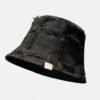


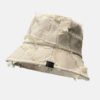
This custom fisherman hat is developed around a visible tension: a washed, raw-edge surface creates character, while everyday headwear must withstand rubbing, handling, and repeated wear. The development decision is to control abrasion exposure through edge construction, panel reinforcement, and finish approval without erasing the distressed visual language.
The Washed Surface Creates an Abrasion-Control Problem
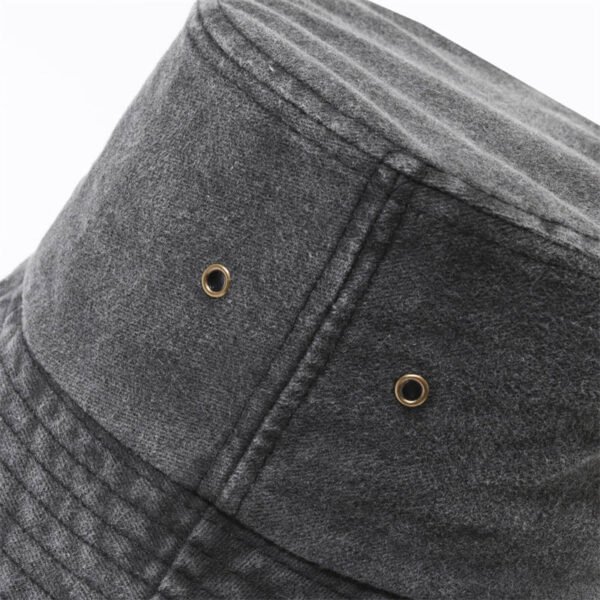
The surface is not merely decorative; washing lowers visual uniformity and exposes the hat to friction-sensitive points. In the image, charcoal textile shows tonal variation, soft nap, double-stitched panel seams, and two eyelets. Those details establish the finish target, not a verified fiber or performance claim.
That distinction changes how abrasion should be managed. A raw edge can fray further where the brim meets tables, bags, or interiors, while stabilization may make the garment look too clean. The approval question is balanced: preserve irregularity at the perimeter, while securing stress points beneath it.
Raw Edge Placement Determines the Wear Story
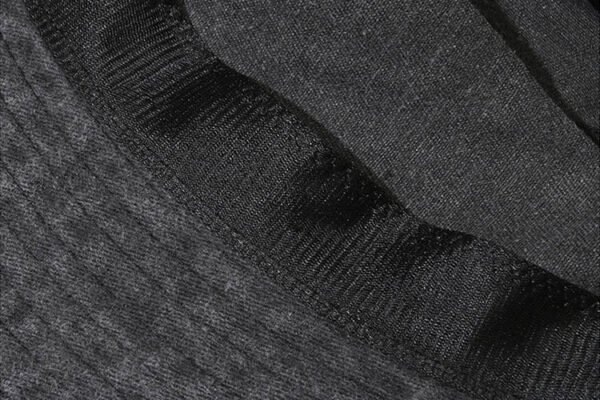
The brim edge is the strongest visual signal of the design, because its unfinished-looking perimeter communicates age and informality immediately. It is also the most exposed boundary during packing, handling, and wear. Edge treatment should therefore be mapped separately from hidden seam allowances and interior finishing.
A buyer should decide whether the raw effect means loose threads, a softened cut line, or controlled tonal abrasion. Each interpretation produces different maintenance and repeatability risks. The supplied image confirms an irregular appearance, but the acceptable fray length and edge stability remain development decisions.
Seam Lines Can Carry the Reinforcement Strategy
The close view shows stitched divisions running along the crown and around the brim, creating natural locations for controlled reinforcement. Stitch density, seam allowance, and underlayer support can improve resistance where panels flex, without adding visible patches that would interrupt the washed appearance.
However, reinforcement can alter hand feel and change how the hat collapses during storage. Overbuilding the crown may create unwanted stiffness, while under-supporting the brim can accelerate distortion. Sampling should compare seam security, edge movement, and visual softness after the intended wash process is applied.
Eyelets Add Detail but Introduce Local Stress
Two round eyelets puncture the side panel and appear in a contrasting warm metallic tone. They provide a recognizable ventilation feature, yet each opening removes material and concentrates movement around its perimeter. The backing, hole preparation, and setting pressure should be reviewed as part of abrasion control.
The trade-off is tactile and visual as well as structural. A firm eyelet installation can protect the opening, but excessive pressure may mark the washed fabric or flatten nearby texture. Approval should include close inspection of the eyelet surround after finishing, handling, and simulated packing.
VeeWen Workflow Converts Finish Intent into Checkpoints
VeeWen can translate this argument into a focused development sequence: first define the approved charcoal wash range, then mark the exact raw-edge boundary, followed by a construction sample that isolates brim, crown seam, and eyelet behavior. This keeps finish approval connected to measurable production choices.
At the sample review, buyers should examine edge stability beside color variation, rather than approving appearance alone. Comments can specify where irregularity must remain visible and where reinforcement may stay concealed. The resulting record supports repeatable handoff for MOQ: 100 pieces per style.
Approve the Distressed Character with Its Limits
This hat succeeds when the surface looks lived-in but the product still feels intentionally made. The image supports a charcoal washed effect, visible panel construction, eyelet detailing, and a raw perimeter. It does not establish composition, abrasion testing, wash fastness, or guaranteed service life.
The final checkpoint is a paired approval: sign off the appearance reference and the construction tolerance sheet together. Confirm acceptable edge variation, loose-thread limits, eyelet backing, seam reinforcement, and care direction before production planning. That decision protects the design idea from uncontrolled wear.
Buyer Questions
Can the raw edge be made less distressed?
Yes. The edge can be refined through cutting, washing, and thread-control decisions, but the preferred boundary and acceptable variation should be approved on a physical sample.
Are the eyelets confirmed as functional ventilation?
The image shows two installed eyelets, but airflow performance is not verified. Confirm backing, opening dimensions, setting method, and functional intent during technical sample review.
Can the charcoal wash vary between production pieces?
Some variation may occur with washed finishes. Establish an approved color and texture tolerance using physical references before production, while defining unacceptable streaking or patchiness.
What is the minimum order for this hat?
The commercial minimum is MOQ: 100 pieces per style. Final material, trim, finish, and packaging requirements should be approved before production planning begins.
Approve the Edge and Reinforcement Direction
Send your target measurements, artwork, material reference, and preferred distressing boundary to VeeWen. We will align the sample review around edge stability, seam support, eyelet setting, and MOQ: 100 pieces per style.


Reviews
There are no reviews yet.