


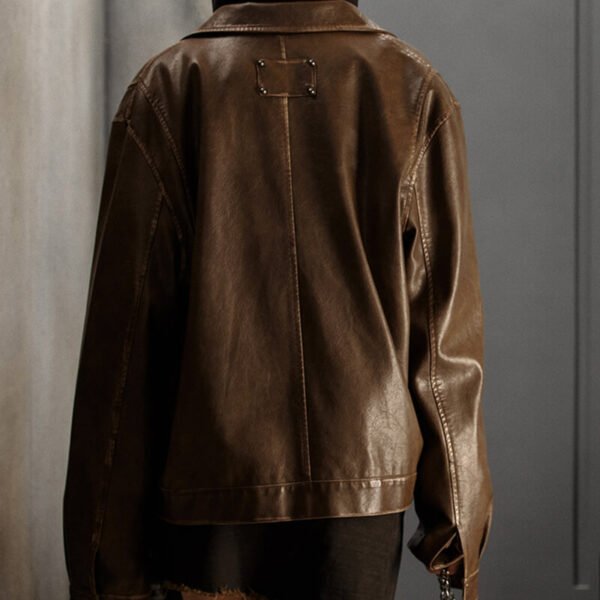
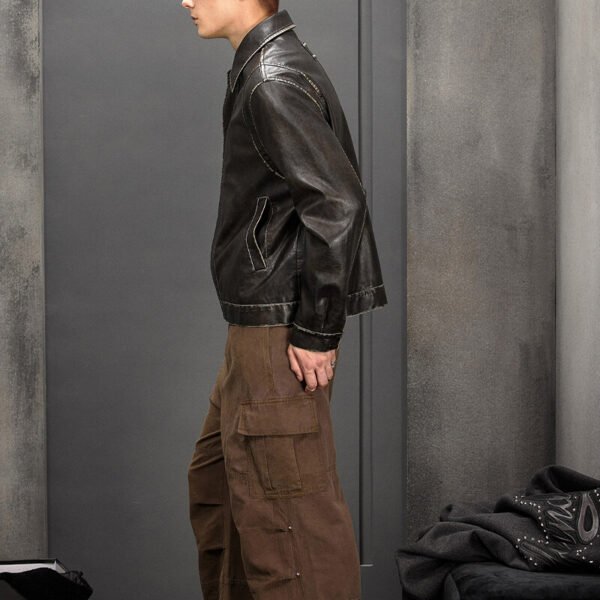








This jacket brief is built around color-block seam accuracy. The supplied image shows a dark brown washed body against black sleeves, trim, collar, cuffs, and pocket details, so even small registration shifts can change the garment's visual balance. Development should lock panel geometry before distressing or bulk production.
Why Seam Registration Controls the Look
The image presents contrast as a construction language rather than decoration. Brown front panels sit beside black sleeves, piping, cuffs, and opening edges, creating multiple visual checkpoints where seam placement must remain consistent from the collar downward.
Because the jacket is short and broad through the shoulders, the eye reads the front as one compact graphic field. A misplaced seam can widen one side, disturb pocket balance, or make the collar appear rotated, even when individual sewing lines remain technically closed.
Panel Mapping Before Washing
The first development approval should establish a full color map showing every brown and black component, including facings, pocket bags, cuff extensions, and hidden seam allowances. The supplied image supports the visible arrangement, while concealed components require a confirmed technical drawing.
Washing changes hand, shade, and edge definition, which can make a small panel discrepancy appear larger after finishing. VeeWen's workflow should therefore approve an unwashed construction sample first, then repeat the same inspection after the selected wash process.
Construction Risks at Intersections
The front zipper, pointed collar, shoulder seams, cuff joins, and pocket edges create concentrated alignment points. At each intersection, seam allowance thickness and feeding direction can pull adjacent panels out of register, especially when the surface is less stable than woven cloth.
Oversized sleeves add another risk because their extra volume can rotate the armhole seam during fitting. The pattern review should compare left and right landmarks, confirm notch continuity, and define acceptable visual tolerance before grading begins.
Finish Development and Trade-Offs
A stronger washed effect may create desirable tonal depth, but it can also soften sharp color boundaries and expose uneven abrasion along seam edges. A lighter treatment preserves cleaner blocking while delivering less pronounced vintage character, so the finish must support the approved panel hierarchy.
The visible image suggests aged variation rather than a flat uniform color. Buyers should decide whether consistency across units or natural-looking variation has priority, then specify inspection references that separate intentional shade movement from incorrect panel placement.
VeeWen Development Checkpoint
VeeWen should translate the image evidence into a color-blocked pattern file, seam-line map, and measurement landmarks for the short body, collar, cuffs, and sleeves. The critical handoff is a construction review that isolates registration before surface finishing obscures the evidence.
After the construction sample is accepted, the workflow should evaluate the chosen washed appearance on the same panel layout and compare both states side by side. The buyer then approves the combined result, focusing on seam continuity rather than treating finish and sewing as separate decisions.
Buyer Approval Gate
Approval should cover the front color map, collar symmetry, sleeve-to-body registration, cuff alignment, pocket positioning, and visible zipper relationship. These details determine whether the garment reads as controlled color blocking or as irregular pieces assembled under a distressed surface.
Before confirming production, the buyer should sign off the graded pattern, seam tolerance, wash reference, and component composition status. The commercial decision is ready only when the visual hierarchy survives both construction and finishing review without unexplained shifts.
Buyer Questions
Is the jacket confirmed to be leather?
No. The image shows a leather-like surface, but fiber content, substrate, coating, backing, and material classification require source confirmation before costing or production.
What should the first sample prove?
The first sample should prove panel registration, collar symmetry, zipper alignment, sleeve balance, and pocket placement before any washed or distressed treatment is approved.
Can the washed effect vary between garments?
Yes, variation may be possible, but the buyer must define an acceptable range distinguishing intentional tonal movement from unacceptable seam contrast or panel inconsistency.
What is the commercial minimum?
The stated commercial minimum is MOQ: 100 pieces per style. Final material, trim, color, grading, and finishing approvals should precede order confirmation.
Approve the Color-Block Development Brief
Send the target color map, preferred surface reference, size range, and trim direction so VeeWen can prepare the registration-focused pattern review and sampling checkpoint.



Reviews
There are no reviews yet.