

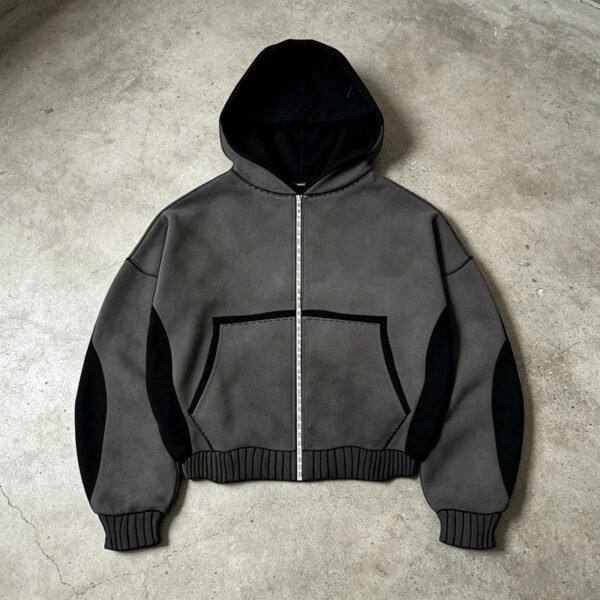













This zip hoodie turns restrained color blocking into a production-control challenge: charcoal, black, and washed surfaces must remain visually balanced. The development priority is a lighting-defined approval standard that protects panel contrast, trim consistency, and the garment's deliberate patchwork rhythm across repeat orders.
Why Color Is the Construction Risk
The front presents several charcoal surfaces beside black inserts, including the hood interior, sleeve panels, pocket border, cuffs, and lower trim. Because these components meet at seams, even small tonal changes can make the patchwork appear accidental instead of intentionally engineered.
The central zipper provides a useful visual anchor, but it also makes surrounding color differences easier to notice. A shade that looks balanced under diffuse studio light may read warmer, cooler, lighter, or flatter in retail lighting, photography, and buyer showroom conditions.
Lighting Standard for Panel Approval
VeeWen development should define the approval review using consistent, documented lighting and fixed comparison references. The front body, sleeves, hood, pocket, rib, zipper tape, and drawcord should be assessed together rather than approving each component independently.
The standard should record acceptable relationships between charcoal and black, not only isolated swatches. Review images should include the complete zipped garment, because the white zipper and black pocket outline expose mismatches that may remain hidden when panels are examined separately.
Wash Character Without Losing Separation
The source wording identifies a vintage-washed direction, while the image shows a softened charcoal surface rather than a uniformly flat dark tone. Washing therefore needs to create character without erasing the distinction between the main body and black contrast components.
The practical trade-off is visible aging versus repeatability. More aggressive wash treatment may increase tonal variation and softness, but it can also reduce panel separation or alter rib appearance. The buyer should approve a wash reference alongside the lighting standard before confirming the sample.
Trim and Pocket Geometry
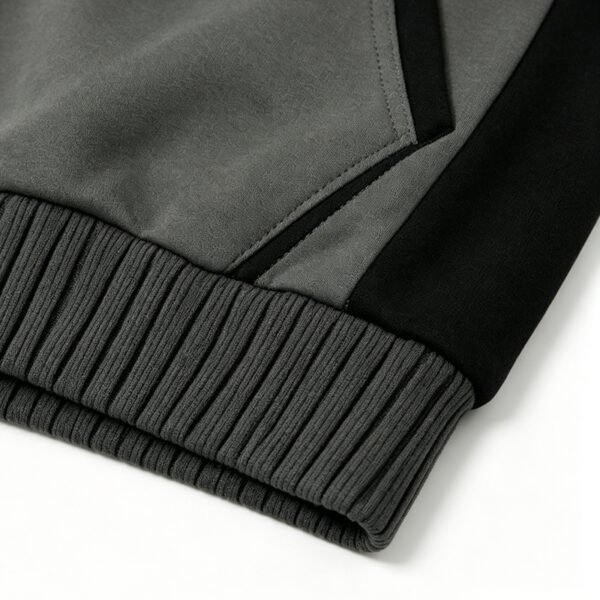
The pocket is not merely functional; its broad black outline frames the lower front and reinforces the garment's graphic structure. Its width, corner shape, attachment position, and binding tone should be checked with the body color under the same lighting conditions.
The ribbed hem and cuffs introduce another dark surface with vertical texture that changes how color is perceived. Matching their tone too closely to the black panels can compress the design, while excessive contrast can make the lower body feel visually disconnected.
VeeWen Development Checkpoint
At VeeWen, this style should enter development with a component color map tied to the pattern pieces and trim list. The sample review then evaluates the zipped front, sleeve inserts, pocket border, rib, and hood together under the agreed lighting setup.
The buyer checkpoint is a signed color-and-wash approval that identifies the accepted charcoal reference, black reference, zipper appearance, and allowable visual variation. This converts a subjective patchwork impression into a repeatable production brief for the MOQ of 100 pieces per style.
Buyer Approval and Trade-Off
The commercial value is a recognizable patchwork zip hoodie whose restraint depends on disciplined contrast rather than excessive decoration. Its strongest selling point is the organized relationship between charcoal and black, supported by the centered zipper and framed pocket.
The trade-off is development attention: color review takes longer when washed surfaces and multiple components interact. Approve this style when the team accepts a documented lighting review and can prioritize consistent tonal relationships over uncontrolled vintage variation.
Buyer Questions
Can the charcoal and black panels be changed?
Yes, the panel map can be revised during development, but each replacement shade should be reviewed under consistent lighting with trims attached.
Is the cotton blend composition verified?
No. The source wording identifies a cotton blend, while the exact fiber percentages and supporting material details remain To Confirm before approval.
What should the first sample prove?
The first sample should prove panel placement, zipper contrast, pocket geometry, rib appearance, and the accepted charcoal-to-black relationship under agreed lighting.
What is the minimum order quantity?
The commercial minimum is MOQ: 100 pieces per style, with final production proceeding after color, wash, construction, and measurement approvals.
Approve the Color-Controlled Sample
Send the target shade references and intended quantity to VeeWen. The next checkpoint is a complete zipped sample reviewed under consistent lighting, with panel, trim, and wash decisions recorded.


Reviews
There are no reviews yet.