

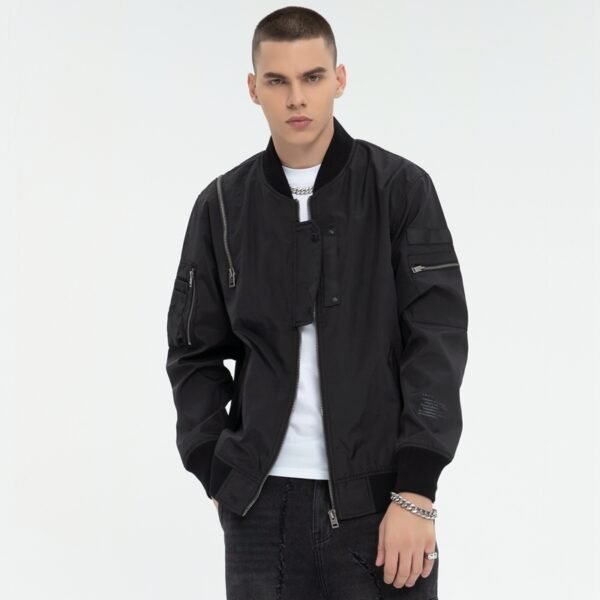


This bomber is developed around black-color control, because its clean visual impact depends on the shell, rib trims, pocket panels, and hardware reading as one deliberate system. The supplied image shows several surfaces and zippers that expose shade drift quickly, making lighting discipline a practical approval gate.
Black Is a Multi-Surface Approval Problem
The image presents black across a smooth-looking body, ribbed cuffs, ribbed collar, pocket panels, and sleeve compartments. Each surface can reflect light differently, so a single digital swatch cannot define the complete appearance. The approval target should cover every visible component together.
The silver zipper teeth and pulls sharpen the risk of perceived shade variation, especially beside matte-looking black fabric. Buyers should assess shell, rib, thread, and pocket construction under the same light source, then record acceptable visual tolerance before approving the development sample.
Build the Color-Control Checkpoint
VeeWen's development workflow should translate the selected black into a controlled reference set covering shell fabric, rib trim, sewing thread, labels, and hardware surroundings. The purpose is not simply matching a color code; it is documenting how each component appears beside reflective closures.
At sample review, the buyer should inspect the jacket under the agreed lighting condition from front, side, and sleeve views. Any mismatch should be logged by component, because correcting only the main body can leave cuffs, pockets, or flap layers visibly disconnected in production.
Hardware Changes Perceived Black
The front closure, upper flap, sleeve zippers, and lower pocket zippers create repeated lines of brightness across the garment. Their spacing makes the black field easy to scan, so inconsistent tape, thread, or panel shade may appear as interruption rather than a subtle textile difference.
Metal finish should therefore be approved alongside the black standard, even though hardware is not a fabric color. A brighter pull can make adjacent fabric appear deeper, while darker hardware reduces contrast. This interaction belongs in the same visual sign-off record.
Panel and Rib Consistency
Ribbed components compress and catch light differently from the smoother shell shown across the torso and sleeves. That physical texture can make a nominally matching black appear lighter or denser. The sample review must judge the worn garment, not isolated swatches, before final component approval.
The lower rib hem and cuffs are especially important because they frame the jacket's silhouette and remain visible during movement. VeeWen can use the approved sample as the comparison reference for panel cutting, rib selection, and sewing review, while unresolved composition stays documented.
Streetwear Utility Requires Visual Order
The garment's utility character comes from multiple zippers, a sleeve pocket, angled hand pockets, and a layered upper front. These details are effective because they remain visually organized against the black ground. Shade drift between adjoining pieces could weaken that engineered appearance.
For product development, confirm zipper placement, flap overlap, pocket orientation, and stitch visibility at the same time as color. A technically correct pocket can still look misaligned if its surrounding panels reflect differently, so construction and color observations should share one approval checklist.
Bulk Release Decision
The buyer's release decision should confirm the physical black standard, component comparison method, lighting condition, and acceptable deviation for repeat orders. This is the central checkpoint for a jacket whose design uses black continuity to make complex hardware feel intentional.
Before issuing bulk instructions, review a complete sample with the selected shell reference, rib, thread, zipper finish, and labels together. Record any To Confirm items, including composition and performance claims, then release only after the visual standard is signed for this style.
Buyer Questions
What should be approved first for this bomber?
Approve a complete physical color standard under consistent lighting, including shell, rib trims, thread, zipper surroundings, and hardware contrast before evaluating bulk readiness.
Is the shell confirmed as nylon?
The source title references nylon and separately states polyester, creating conflicting evidence. Treat the fiber composition as unconfirmed until VeeWen verifies the selected fabric.
How does the design affect color review?
Multiple zippers, pockets, rib sections, and layered panels create repeated visual comparisons, making shade differences easier to notice across the finished garment.
What is the minimum order quantity?
The commercial minimum is MOQ: 100 pieces per style. Final ordering remains subject to confirmed specifications and an approved development sample.
Approve the Black Standard
Send the target shade, lighting requirements, hardware preference, and measurement brief to VeeWen. We will organize the development checkpoint around the complete bomber, not the shell fabric alone.



Reviews
There are no reviews yet.