


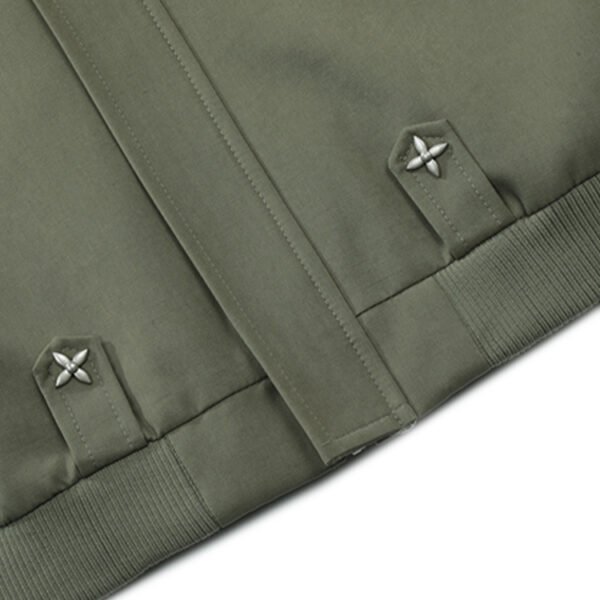
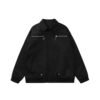


This custom black flight jacket is developed around a pressing-control problem: shape the loose silhouette and zipper zones without crushing a pile or brushed surface. The visible pocket layout, concealed front closure, ribbed trims, and monochrome finish create a clear approval brief for sampling.
Pressing Is a Surface-Control Decision
A pile or brushed fabric can lose loft when pressure, heat, or dwell time is excessive. The target is a shaped jacket with stable seam lines, not a uniformly flattened face, so pressing must be specified by panel and operation.
The image shows a black surface whose visual depth comes from subtle light absorption rather than decoration. That makes shine, nap direction, and crushed areas commercially important, especially across the broad front panels surrounding the chest zippers.
Hardware Zones Need Local Protection
The two horizontal chest zippers and two angled lower pockets concentrate seam intersections, tape edges, and pressing risk. A development sample should test pressing order around each opening so pocket mouths remain straight without imprinting hardware into the shell.
The concealed center zipper adds another pressure-sensitive line beneath the front placket. Its alignment should be checked after pressing and again after the garment is relaxed, because front distortion can change perceived balance across the monochrome body.
Rib Trims Change the Pressing Sequence
Ribbed cuffs and the lower hem need enough shaping to sit evenly, but direct high pressure can flatten their elasticity or leave a hard transition at the seam. Pressing instructions should therefore separate shell panels from knitted trim operations.
The visible hem is broad and structured, while the sleeves finish with gathered-looking cuffs. This contrast means the sample review should inspect recovery, edge roll, and sleeve balance after pressing rather than approving appearance immediately on the table.
Trade-Offs Buyers Should Approve
Lower pressure can protect surface texture but may leave seam allowances less settled, particularly near pocket bags and the concealed closure. Higher pressure improves visual sharpness but increases the chance of gloss, nap crushing, or a permanent impression.
The correct decision depends on the selected shell fabric and any pile height, neither of which is verified here. Buyers should compare the intended appearance against a controlled press trial, accepting minor texture variation where it protects the garment's surface character.
VeeWen Development Checkpoint
VeeWen can translate this axis into a construction brief that maps pressing risk by panel, zipper location, rib attachment, and finishing operation. The useful output is an approval sample with marked pressure-sensitive zones, not a generic workmanship request.
During review, the buyer should sign off the shell hand, nap direction if applicable, pocket alignment, front placket flatness, cuff recovery, and hem shape together. Those checks connect the visual reference to a repeatable development instruction before the MOQ is released.
Collection Role and Wearer Use
The loose black silhouette can function as a versatile outer layer because the front is restrained while the zipper layout supplies utility and visual definition. Its strongest commercial role is a clean streetwear jacket with controlled technical detailing.
The trade-off is that an all-black surface exposes pressing inconsistency more readily than a busy print. Approve the style when the sample maintains an even visual face, balanced hardware placement, and comfortable movement through the relaxed sleeve shape.
Buyer Questions
Is a pile fabric confirmed for this jacket?
No. The image suggests a smooth, low-sheen surface, but pile type and presence are not verified; confirm fiber, finish, nap direction, and recovery during material approval.
What should the first sample test?
Test panel appearance after pressing, zipper alignment, pocket-mouth stability, rib recovery, front-placket flatness, and any gloss or crushed texture around concentrated hardware zones.
Can the silhouette be adjusted for another market?
Yes. VeeWen can develop revised body length, sleeve volume, hem proportion, pocket placement, and grading after the buyer approves the target block and measurement chart.
What is the minimum order?
The commercial minimum is MOQ: 100 pieces per style. Final material, color, trim, labeling, and production specifications remain subject to development approval.
Approve the Pressing Trial
Send the target shell fabric, measurement chart, and trim direction for a focused sample review covering pile protection, zipper geometry, rib recovery, and black-surface consistency.

Reviews
There are no reviews yet.