
Private Label Dress Manufacturers for Branded Collections
VeeWen turns your dress concept into approved, branded bulk garments with sampling, fabric sourcing, quality checks and private-label packaging from 100 pieces per style.
Featured Products for private label dress manufacturers Development


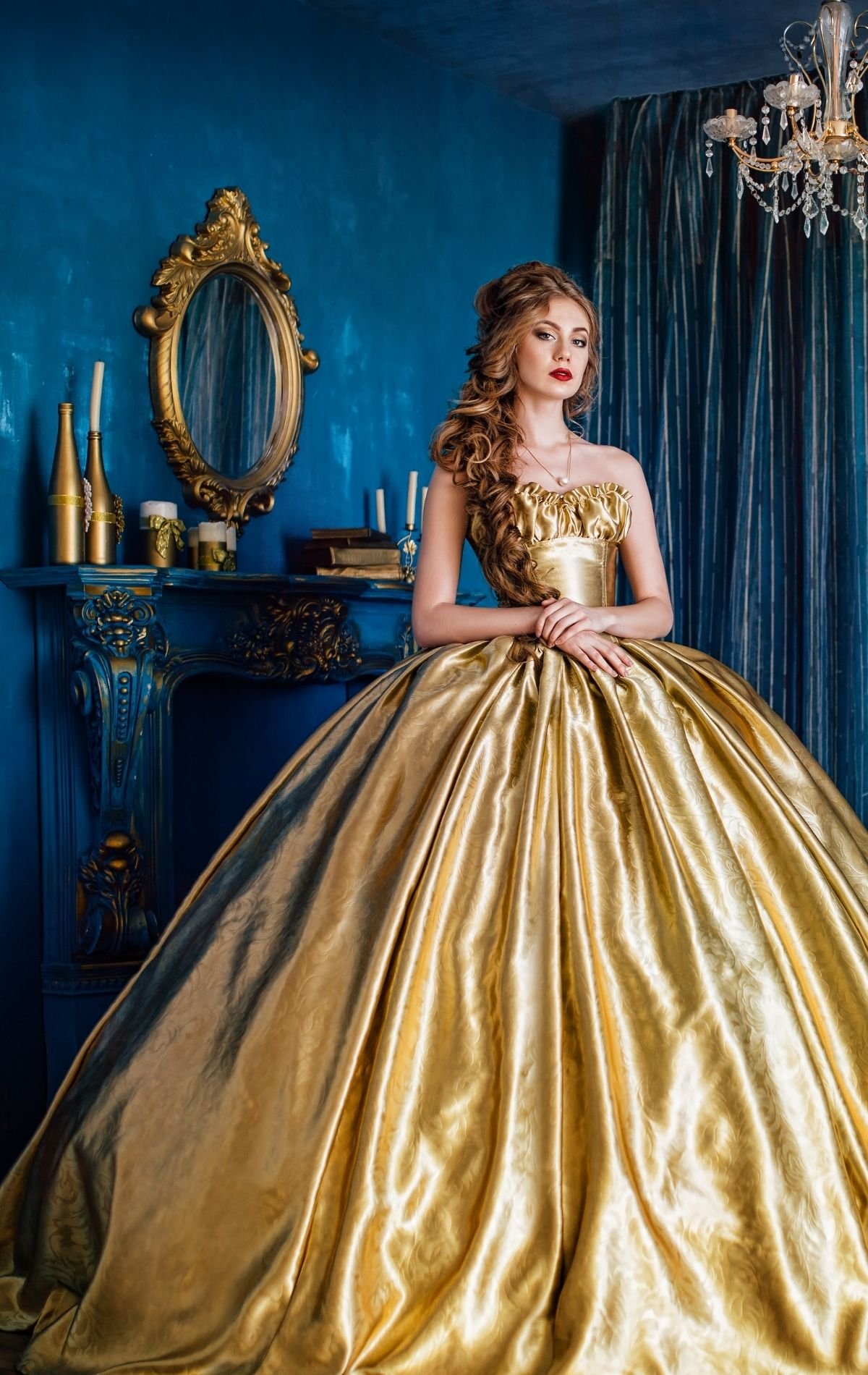

What Sets Our Private Label Dress Manufacturing Apart
VeeWen turns your dress concept into an approved, branded bulk program with practical development support from fabric selection through final packing.
100-Piece Style MOQ
Launch a focused private-label dress style from 100 pieces, then refine proven specifications for repeat orders and broader collection growth.
Fabric Matched to Use
Select fabric weight, drape, stretch and finish around the intended silhouette, hand feel, target price and end-use requirements.
Fit Development Support
Translate sketches or references into production-ready patterns, graded measurements and sample revisions that support consistent fit across the size range.
Complete Branding Details
Coordinate woven labels, care labels, hangtags, buttons, zipper pulls, packaging and selected trims for a cohesive private-label dress presentation.
Controlled Bulk Production
Move from approved sample to bulk manufacturing with documented checkpoints, in-line inspection, final quality checks and shipment-ready packing.
More Private Label Dress Manufacturers Options and Guides
Compare adjacent product categories, manufacturing options and practical buyer resources from the VeeWen architecture.

OEM, ODM & Private Label
OEM clothing manufacturing from 100 pieces per style, with sampling, fabric sourcing, private labels, QC and packed bulk goods. Request a custom quote.
Explore Category
Private Label Leather Jackets
Private label leather jackets start at 100 pieces per style, with custom patterns, trims and branded packaging. Send your tech pack and request a quote.
Explore Category
Private Label Clothing Manufacturer
Private label clothing manufacturer for OEM/ODM collections from 100 pieces per style, with sample approval, labels, and packing in one workflow. Request quote.
Explore Category
Private Label Swimwear Manufacturers
Private label swimwear manufacturers with a 100-piece-per-style MOQ, from fabric sourcing and fit samples to branded bulk packing. Request a custom quote.
Explore Category
Mens Cinch White Label Jeans
Men’s cinch white label jeans start at 100 pieces per style, with custom fit, denim washes, labels and packing managed in one workflow. Request a quote.
Explore Category
Private Label Wide Leg Jeans Supplier
Private label wide leg jeans supplier with a 100-piece-per-style MOQ, custom washes, fit development and branded trims. Request a tailored quote today.
Explore Category
Private Label Women Clothing
Private label women clothing starts at 100 pieces per style, with sampling, labels and packing managed in one workflow. Request a custom quote today.
Explore Category
Private Label Sportswear Manufacturers
Private label sportswear manufacturers with 100-piece-per-style MOQ for custom teamwear and performance collections. Request a custom quote today.
Explore CategoryWhy Choose VeeWen for Private Label Dresses
Founded in 2016 by ChangKeng Luo in Dongguan, China, VeeWen helps global brands turn dress concepts into production-ready private-label collections. As private label dress manufacturers, we begin with your tech pack, sketch, reference sample, or initial idea and clarify the specifications needed for confident development.
Our full-category workflow brings fabric sourcing, pattern development, sampling, fit review, decoration testing, bulk production, quality checks, labels, packaging, and shipment coordination under one accountable partner. The standard 100-piece-per-style MOQ gives emerging labels room to test a focused dress drop while building repeatable specifications for reorders.
VeeWen is known first for menswear and streetwear, with the supply-chain flexibility to develop dresses and complete collections for women, men, and children. We earn trust through approved samples, documented checkpoints, practical material guidance, and direct communication about how fabric, trims, washes, and details affect the finished garment.
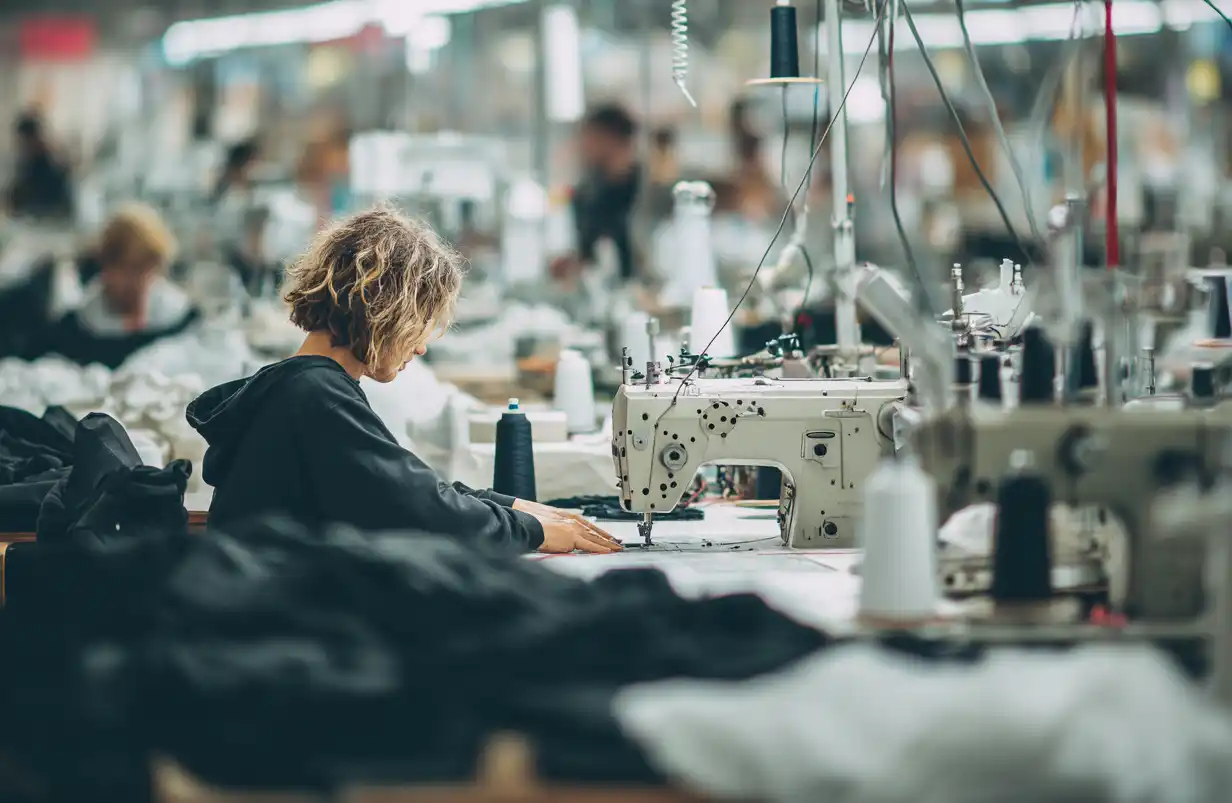
Private Label Dress Manufacturers: Details That Define the Collection
Fabric Hand Feel
VeeWen sources dress fabrics around the intended silhouette, hand feel, opacity, drape, wash behavior and target price. From crisp poplin and structured twill to satin, viscose and stretch blends, each choice is reviewed against the finished garment’s purpose.
- Match fabric weight to structure and movement
- Review opacity, recovery and wash performance
- Align material choices with target pricing
- Confirm swatches before sampling

Fit Blocks and Grading
A strong dress program begins with a practical fit block. Our team translates sketches and references into measurable specifications for bust, waist, hip, length, neckline, sleeve shape and ease, then reviews graded measurements so the garment remains balanced across sizes.
- Define key body measurements and ease
- Set neckline, armhole and sleeve proportions
- Review fit samples before bulk approval
- Document graded size specifications

Construction That Holds Up
Private label dress manufacturers must resolve construction choices before bulk production. VeeWen reviews seam type, lining, closures, hem finish, reinforcement and trim placement during development, helping brands balance a clean finish, garment durability and production practicality.
- Select seams for fabric and silhouette
- Plan lining, facings and hem finishes
- Test zippers, buttons and other closures
- Confirm trim placement at pre-production
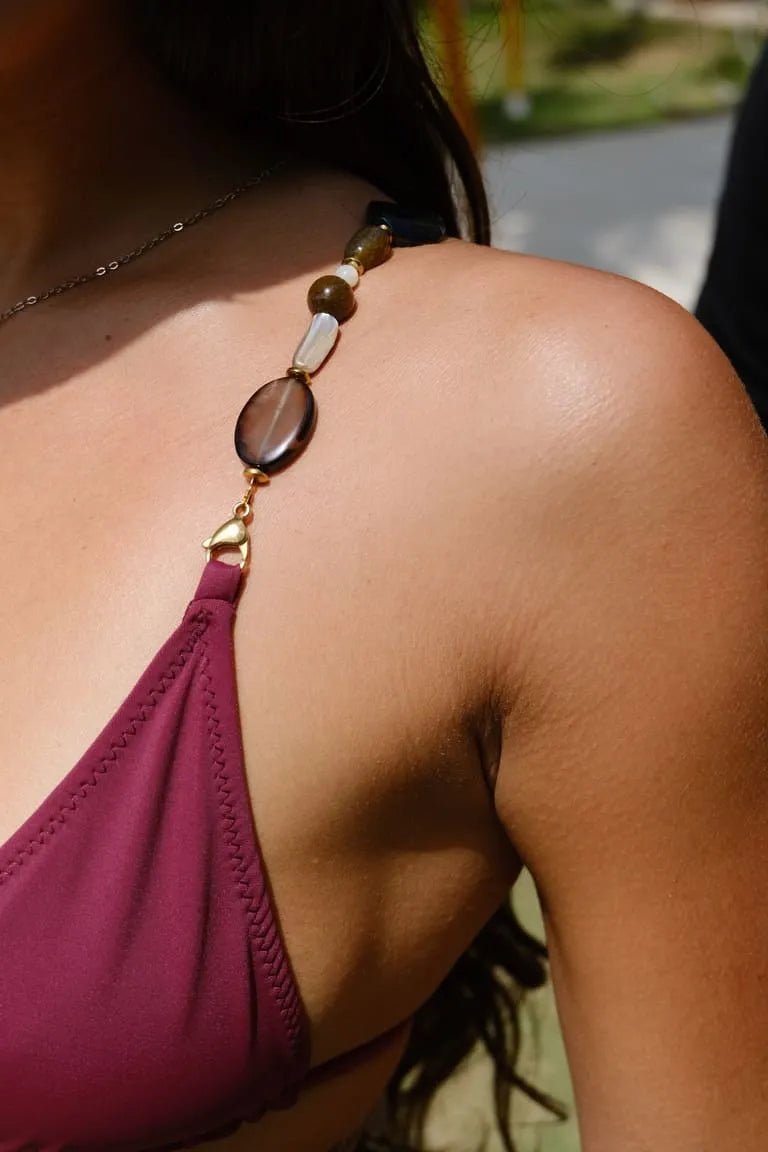
Labels and Ready-to-Sell Packaging
Turn approved dresses into a recognizable retail program with coordinated private-label details. VeeWen can organize woven labels, care and size labels, hangtags, custom hardware, polybags and packing requirements, with each item confirmed against the approved production specification.
- Add woven, care and size labels
- Coordinate hangtags and branded trims
- Specify polybags and packing methods
- Keep private-label details documented

Private Label Dress Manufacturers vs. OEM Dress Manufacturing
Compare the fastest route to branded dress production with a fully custom OEM program before selecting your development path.
← Swipe left or right to view →
Private Label Dress Manufacturers: Production Process
A production-minded workflow that turns approved dress specifications into consistent, shipment-ready private-label goods.
Clarify Design Direction
Share a tech pack, sketch, reference sample, or inspiration images. VeeWen confirms silhouette, fit intent, target price, decoration, and private-label requirements.
Source Fabrics and Trims
Select fabrics, linings, zippers, buttons, labels, and packaging around hand feel, drape, weight, wash behavior, performance needs, and planned retail positioning.
Develop Pattern and Sample
Our team develops patterns and a fit sample, reviewing graded measurements, construction details, seam placement, closures, and any print, embroidery, or wash effects.
Approve Pre-Production Details
After fit and material revisions are confirmed, approve the final sample, color standards, labels, trims, packing method, and production specifications before bulk cutting begins.
Inspect, Pack, and Ship
VeeWen monitors bulk production with in-line inspection and final quality checks, then coordinates branded packing, carton preparation, and shipment handoff for your order.
Start With Private Label Dress Manufacturers
Send the details that let VeeWen turn your dress concept into an approved, production-ready program.
Share Your Dress Direction
Send a tech pack, sketch, reference sample, inspiration images, measurements, fabric direction, labels, colorways, target quantity, and target price for your collection.
Confirm Specifications Together
Review silhouette, fit block, graded measurements, fabric weight, trims, decoration, wash effects, packaging, and 100-piece-per-style MOQ with VeeWen’s production team.
Approve Development Samples
Assess the sample for fit, hand feel, construction, shade, labeling, and finishing. Record revisions clearly before approving the final pre-production specifications.
Launch Controlled Bulk Production
VeeWen coordinates sourcing, cutting, sewing, in-line inspection, final quality checks, private-label packing, and shipment preparation so your approved dress specifications carry into bulk goods.
Private Label Dress Manufacturers: Client Results
VeeWen converted our reference dress into an approved fit after two sample rounds. The graded size run stayed consistent from XS to XL, and our first 300-piece launch arrived with every care label and hangtag correctly applied.
We needed a 120-piece capsule with custom satin labels, branded polybags, and a defined delivery window. VeeWen kept the fabric, trim, and pre-production details organized, so the bulk order was ready for our campaign shoot on schedule.
Our team brought sketches and a target price, not a finished tech pack. VeeWen helped clarify the pattern, fabric weight, and measurements, then delivered 200 dresses with repeatable sizing for our online store’s first reorder.
Private Label Dress Manufacturers FAQ
Clear answers on dress development, sampling, branding and production with VeeWen.
What is the MOQ for private label dress manufacturers?
What fabrics can private label dress manufacturers use for custom dresses?
Can private label dress manufacturers provide size grading and fit samples?
Can I add my own labels, hangtags and packaging to custom dresses?
Which decoration methods work on private-label dresses?
What artwork files do I need for dress prints, embroidery or labels?
How do sampling and bulk production work for a private-label dress order?
Can VeeWen make dresses if your main focus is menswear and streetwear?
The Complete Guide to private label dress manufacturers
Use this decision framework to evaluate supplier capabilities, fabrics, quality controls, minimums, pricing, and launch readiness—while avoiding costly sourcing mistakes when selecting a private-label dress production partner.
1. What Are private label dress manufacturers?
100-piece minimums make private-label dress manufacturing a production model in which a brand sells dresses under its own name, labels, specifications, and retail positioning. Unlike wholesale resale, the buyer controls the finished identity rather than simply reselling a supplier’s stock.
OEM follows the buyer’s approved tech pack; ODM adapts a manufacturer-developed base; white label usually adds branding to an existing product; fully custom work creates the pattern and details from zero. A capable partner coordinates material selection, sampling, fit approval, trims, bulk cutting, inspection, packing, and shipment.
VeeWen suits labels, retailers, and e-commerce sellers needing accountable development for focused launches or repeatable dress programs.
2. Evolution of Private-Label Dress Production
1970s catalog retail relied on seasonal buying calendars, large factory runs, and standardized size ranges; private-label dresses were commonly sourced months before store delivery. Buyers prioritized unit cost and repeatable construction over rapid design changes.
2000s global supply chains and e-commerce shortened trend cycles, letting digital-native labels test narrower collections and use product data to guide reorders. Faster sampling made a 100-piece MOQ practical for focused launches, but required clearer tech packs, Pantone references, graded measurements, and approval records.
2020s sustainability expectations added traceability, material choices, and realistic production planning to the brief. Responsive private label dress manufacturers now earn trust through transparent trade-offs, documented sample approvals, quality checkpoints, and direct communication from development through packed goods.
3. Types of private label dress manufacturers
Five supplier models serve different risk levels. Choose based on who owns the design, how much development you need, and whether speed or exclusivity matters.
| Model | Design And Customization | Best Fit | Trade-Off |
|---|---|---|---|
| OEM cut-and-sew | Buyer-owned; highest latitude | Established labels | More sampling time |
| ODM catalog | Supplier base; moderate changes | Fast launches | Lower uniqueness |
| Full-package | Shared development; high latitude | New brands | Higher development cost |
| Occasionwear specialist | Category expertise; focused changes | Formalwear labels | Narrower range |
| Low-MOQ producer | Variable support; limited complexity | Market tests | Higher unit cost |
Factory Model Trade-Offs
100-piece programs suit OEM or full-package partners when fit, fabric, trims, and approvals need control.
2–4 week catalog adaptations can help test demand, but offer less exclusivity.
4. Dress Fabrics and Materials to Specify
120–180 GSM woven cloth suits structured day dresses; 180–260 GSM knits suit body-skimming styles. Private label dress manufacturers should approve hand feel, opacity, care, and target retail before sampling.
| Material | Best Use | Key Risk |
|---|---|---|
| Cotton/linen | Airy casual | Shrinkage, wrinkles |
| Viscose/Tencel | Fluid dresses | Wet strength |
| Polyester/nylon | Performance dresses | Pilling |
Seasonal Wovens

90–140 GSM cotton and linen fit warm-weather shirts and sundresses but may shrink 3–5%. Viscose/rayon and Tencel drape cleanly for fluid midis; test wet strength and shade consistency.
Performance And Sheer Fabrics
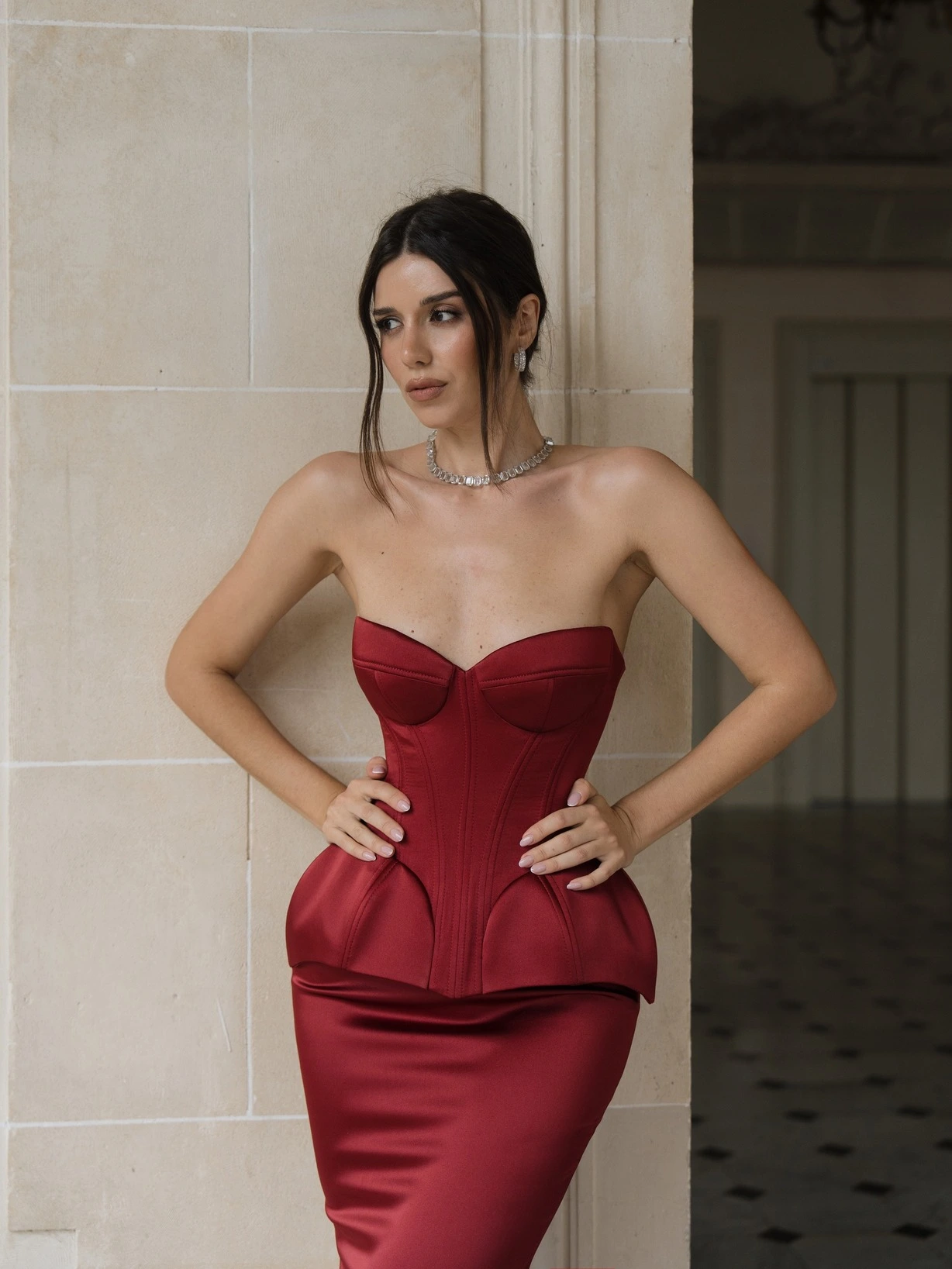
75–120 GSM chiffon needs lining; satin shows seam tension. Polyester and nylon blends improve colorfastness, while jersey or rib knits need stretch-recovery and pilling tests.
Documentation Before Bulk
Request fiber-content records, recycled-content proof, and OEKO-TEX Standard 100 or GOTS documentation when applicable. Confirm lightfastness, wash fastness, and supplier lot continuity before bulk.
5. Customization and Branding Options
VeeWen can turn a dress concept into a repeatable private-label program from a tech pack, sketch, sample, or reference image. Lock fit, color, decoration, trims, and packaging before bulk approval.
| Option | Manufacturing Effect | Approval |
|---|---|---|
| Screen print | Flexible graphic coverage | Print strike-off |
| Embroidery | Adds texture and weight | Stitch sample |
| Garment wash | Changes shade and shrinkage | Washed sample |
Fit And Color Control
100-piece MOQ programs should confirm graded measurements, neckline, hem, sleeve, and Pantone shade on a fitted sample before production.
Branding And Finish
Prints, embroidery, labels, hangtags, zipper pulls, polybags, and wash effects add distinction; dense embroidery and garment dye can change drape, shrinkage, shade, and lead time.
Artwork And Approval
Submit vector artwork, placement dimensions, color callouts, and a construction tech pack. Approve decoration strike-offs and the pre-production sample; these checkpoints protect durability and reorder consistency.
6. Dress Construction Quality Essentials
A dress sample should be approved against measurable construction points, not a photo. Private label dress manufacturers should record tolerances before bulk cutting, then inspect each size against the approved standard.
Pattern And Fit Control
At least five points—bust, waist, hip, length, and armhole—need graded measurements with ±0.5 cm tolerances. Mark dart apex, seam allowance, balance, and zipper position on the tech pack.
- Fit on the intended size model
- Check front-to-back hem balance
- Confirm grading at every size
Seams And Finishing

A 2.5–3.5 mm stitch length suits most woven dresses; match seam type to fabric and stress point. Specify lining attachment, faced neckline width, hem depth, closure brand, bartacks, and final inspection criteria in the sample checklist.
- Inspect skipped stitches and puckering
- Test zipper glide and closure security
- Compare bulk pieces to sealed sample
7. Choosing private label dress manufacturers
Three comparable quotes reveal more than the lowest unit price. Assess private label dress manufacturers against approved-sample discipline, dress-category evidence, and their ability to export the agreed specification.
| Check | Verify | Warning Sign |
|---|---|---|
| Quality | Inspection records | No checkpoints |
| Compliance | Relevant certificates | Expired copies |
| Lead Time | Production calendar | Guaranteed dates |
Verify Category Evidence
2 recent dress programs should show graded measurement charts, fit samples, seam photos, and fabric test reports.
- Ask for comparable silhouettes
- Review sample revisions
- Confirm size-range grading
Test Operating Discipline
100-piece MOQ flexibility matters only when sampling, communication, capacity, inspections, and shipment support are documented.
- Request critical-path timing
- Confirm payment milestones
- Ask who handles export documents
Spot Quote Risks
30% cheaper pricing can signal omitted testing, substitutions, weak packing, or unrealistic lead times. Compare total landed readiness, not fabric cost alone.
- Avoid vague composition
- Reject unapproved substitutions
- Escalate delayed replies
8. Common Private-Label Sourcing Mistakes
100-piece dress programs fail most often before bulk cutting: specifications, approvals, and ownership are left implicit. Treat each handoff as a documented production decision.
Define The Tech Pack
1 complete tech pack should state graded measurements, fabric composition and GSM, Pantone colors, trims, artwork placement, and packaging. Confirm MOQ and calendar milestones in writing before sampling.
Test Before Approval

2 sample rounds are often safer than approving a rushed first fit. Test shrinkage, colorfastness, opacity, seam strength, and wash appearance; approve a signed pre-production sample, not photos alone.
Control Commercial Risk
3 quotes should be compared by fabric, construction, trims, inspection scope, and lead time—not unit price alone. Reserve inspection, confirm ownership of patterns and artwork, and allow time for material booking and production.
9. Launching a Private-Label Dress Brand
100-piece test drops let founders validate a defined customer, price point and three-to-five-style assortment before deeper inventory commitments. Build the launch calendar backward from freight arrival and campaign date.
Brief And Factory Selection
1 product brief should lock silhouette, target retail, fabric, colors, measurements, BOM and budget.
3 factories should receive the same tech pack; compare communication, sample quality and quoted assumptions.
Sample Approval Gate
1 fit sample must confirm graded measurements, construction, Pantone color, shrinkage and decoration placement.
0 bulk orders should proceed until the revised sample and private-label packaging are approved in writing.
Bulk And Launch Readiness
100-piece production begins only after a signed PO, pre-production sample and inspection plan.
2 checks—in-line and final—should precede freight booking; reserve launch inventory for exchanges, content and replenishment.
10. Private Label Dress Pricing and Costs
100-piece programs meet VeeWen’s standard MOQ, but fixed pattern, sample, print-screen, and freight costs sit across fewer units. Exact quotes require the tech pack, size range, fabric, trims, decoration, packaging, destination, and target delivery date.
200–500 pieces usually lower unit cost by spreading setup and improving fabric utilization. Heavier satin, linen blends, custom Pantone dyeing, embroidery, sequins, molded hardware, and individual gift boxes raise cost and may extend approval time.
2–4 weeks for development and 3–6 weeks for bulk are common planning ranges after approvals. Build margin from landed cost: garment, labels, polybag, inspection, freight, duty, and a realistic allowance for shade variation or rework.
| Order tier | Cost implication | Planning focus |
|---|---|---|
| 100 pieces | Highest setup cost per unit | Test fit and demand |
| 200–500 pieces | Lower setup cost per unit | Improve landed margin |
| 500+ pieces | Better material efficiency | Confirm reorder forecast |
Partner With Private Label Dress Manufacturers Built for Your Next Collection
Send your dress concepts or tech packs for a tailored quote, sampling plan, and production recommendation from VeeWen.