
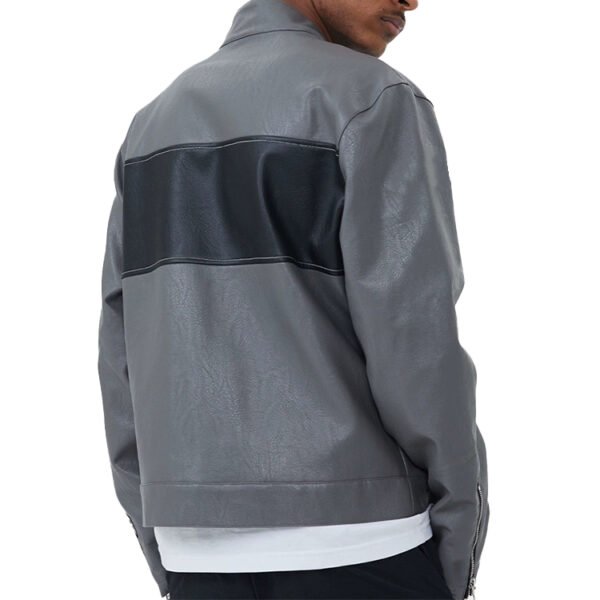





This two-tone biker jacket is developed around a visible black back marker set into a charcoal-gray leather body. The commercial question is not decoration alone: directional material, panel nesting, and seam placement must preserve the graphic break without creating avoidable waste or inconsistent surface orientation.
The Visual Argument Is the Back Marker
The supplied rear view makes the black horizontal panel the jacket's dominant identifier. It sits between the upper gray yoke area and lower gray body, so its width, levelness, and corner transitions must remain stable across sizes.
Because the marker crosses the back, small grading changes can visibly alter its proportion. The development target should therefore define panel height from fixed landmarks, including shoulder seam, armhole, and hem, before cutting is approved.
Nap Direction Changes Consumption
Leather-like surfaces can show directional grain, sheen, or nap, even when the image does not verify a specific hide construction. Every major piece should be oriented consistently, then nested against the approved marker map to measure usable yield rather than assumed efficiency.
A one-way marker may protect appearance but consume more material than reversible nesting. A mixed-direction layout may reduce consumption while creating visible shade or texture changes, so the buyer must select the acceptable trade-off before bulk marker engineering.
Panel Seams Need Physical Control
The image shows a broad back panel bounded by horizontal seam lines, with curved transitions near the shoulders. Those junctions should be checked for puckering, stretching, and alignment because leather substitutes or soft hides can react differently under pressing and stitching.
Approval should include a sewn back-panel sample photographed flat and on-body. Compare the panel's upper and lower edges across the base size and graded sizes, then record tolerance limits for seam displacement before the marker is released.
Sleeve Hardware Adds Localized Consumption
A zipper is visible near the lower sleeve, creating a concentrated construction zone separate from the back marker. Its opening, facing, seam allowance, and reinforcement should be mapped independently so hardware requirements do not distort the sleeve marker or compromise mobility.
The sleeve zipper may improve the biker cue, but it also adds components, operations, and inspection points. Buyers should decide whether the opening is functional or visual, then confirm zipper length and placement against the approved sleeve pattern.
VeeWen Workflow for This Axis
VeeWen's product-development workflow should begin with a marker-direction brief containing the back-panel landmarks, surface-orientation rule, and acceptable nesting alternatives. This turns the image's graphic division into a measurable cutting instruction rather than a styling reference.
At sample review, VeeWen can compare the physical panel map, surface direction, seam alignment, and estimated material use together. The buyer's checkpoint is approval of the marker and consumption logic before grading, size expansion, and production planning proceed.
Approval Checkpoint and Trade-Off
The strongest version preserves a calm gray field around a sharply legible black back panel. Prioritizing perfect directional consistency may increase material use, while aggressive nesting may introduce surface variation that weakens the intended two-tone architecture.
Approve this style when the buyer accepts the selected surface-direction rule, panel tolerances, sleeve-zipper specification, and consumption estimate. If those variables remain open, the garment is visually promising but not yet production-ready.
Buyer Questions
Is the jacket genuine leather?
The source wording describes soft leather, but the supplied evidence does not verify hide type, composition, grade, or backing. Confirm the material specification before sampling.
What makes the marker direction important?
Directional grain or sheen can change across panels when pieces are rotated. A documented one-way rule protects visual consistency, while the buyer evaluates its material-consumption trade-off.
Can the back panel change color?
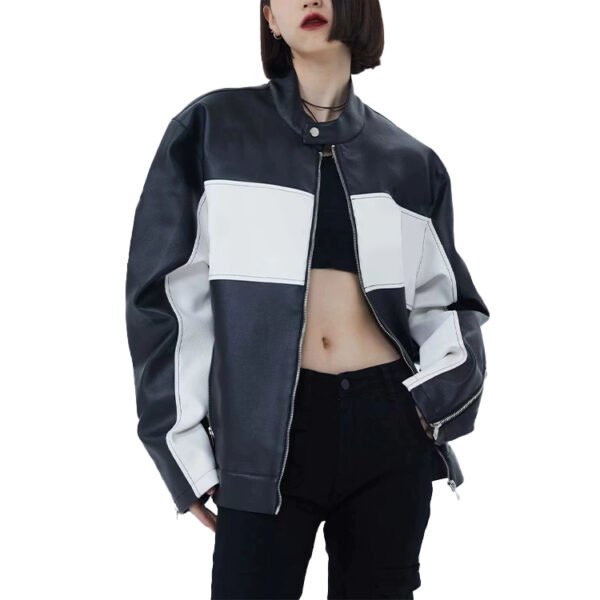
Yes, the contrast panel can be developed in another approved material or color, subject to seam behavior, surface matching, and consumption review during sampling.
What is the minimum order?
The commercial minimum is MOQ: 100 pieces per style. Final material, color, size, and construction approvals should be completed before production planning.
Approve the Marker Map
Send the preferred material reference, color standards, size range, and panel dimensions for a focused development review. VeeWen can then align cutting direction, consumption, and construction checkpoints.


Reviews
There are no reviews yet.